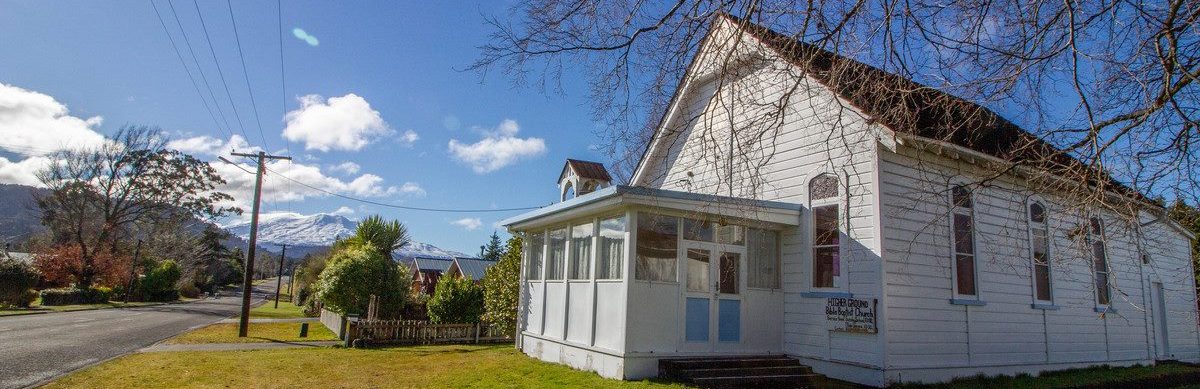
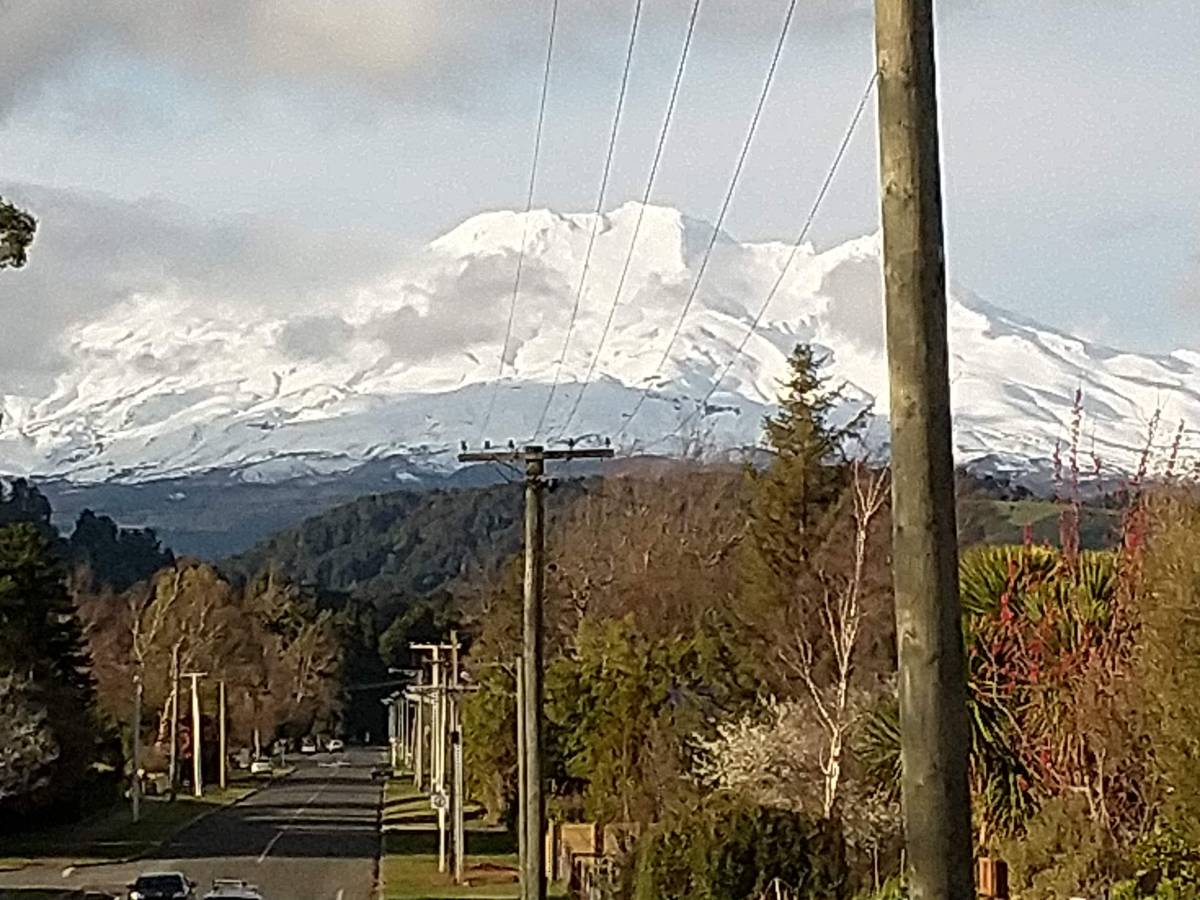
The above view is taken from the berm outside of the church. The maunga dominates the landscape.
One of the advantages of buying at auction is that the settlement process is truncated so the date for possession comes around pretty quickly! I’d arranged to meet my architect onsite at 11am so it was an early start to the day with a drive from my rented townhouse in Wellington. I’d refueled the car the night before so all I needed was a coffee refuel at Sublime Coffee in Bulls to be at the church with plenty of time to spare.
I’ve never worked with an architect before, so the extensiveness of the site visit and survey was a bit of an eye-opener. Andy from Alpine Security Services saw me at the building and stopped by to discuss panel and sensor placement. Patrick who looks after the grounds of the beautifully restored St Joseph’s Catholic Church on Arawa Street called in to say hello en-route to his church. I quickly figured out that they’re a friendly bunch here – with a permanent population of about 1,100 it seems like everyone knows each other.
With the site visit and building survey done, I waved goodbye to Elinor and headed to Utopia Cafe for a late lunch and to await confirmation of settlement. It was now later than the estimated time given by my lawyers. The last working day of the month being a Friday probably didn’t help! I finally got the call just before 3pm, and went into the real estate agents to collect the keys. But there were no keys to be found! Fortunately I still had the code for the front door from the site visit, so let myself in for a ceremonial ringing of the church bell.
I’d planned to spend the afternoon moving the left-over furniture out of the vestry and removing the shelves, cupboard and internal doors added in the 80s or 90s. I’d achieved the first task and was celebrating with a late afternoon tea when my sister called to say that the vet nurse couldn’t get access to my townhouse. After 30 minutes trying to track down my spare house keys I gave up, packed up, and headed back to Wellington for the night.
Owning an old building is liking owning an aging cat. There are some things that are inherently flawed based on the genetics of the building or breed. In the case of my Burmese they are prone to lots of (expensive) health issues with a shorter life-expectancy than other breeds. One of them needs twice-daily medication so I have the expense of a vet nurse to keep an eye on them when I’m away in the weekends. Working in Wellington during the week and being in Ohakune in the weekends is going to be an expensive necessity.
Possessing a 100-year-old church also comes with some expensive necessities. From the borer-invested native timbers to the pinex and plywood-clad nave – most of the recent ‘improvements’ will need to be carefully unpicked to reveal the beauty of the original structure and construction methods. Not having any water or sewerage connected is going to prove another expensive necessity.
My return to Ohakune the following morning saw me stripping out the shelves, cupboard and internal doors. I’d borrowed a girly-drill from my sister but it was no match for the efforts of the builders and parish workers who’d put the units together. I managed to get the screws out that secured the bookshelves to the wall, measured it up, and posted it in the Ohakune Buy & Sell group for removal. Fingers crossed I’d be able to find someone willing to take it.
Feeling a bit tired after my drive I amused myself by removing all the blinds, hooks and other bits and bobs in the vestry. I also removed the trim around the ‘false’ doorway in the vestry to discover it was blocked rather than false. I also discovered ‘customwood’ and thus my obsession started.
What’s with ‘customwood’? It’s neither custom nor wood but some mass-produced abomination of a by-product that appears to have infested the vestry. Ok, I get that it’s cheap and looks like wood once painted. But it’s full of chemicals and a bugger to remove when you’re trying to restore the original character of a building. Removing it from the scene of a slater cemetery was a particularly disgusting experience.
A lovely couple from Tangiwai had contacted me about the bookshelves and I’d arranged to meet them at the church on Sunday morning. They came with a large trailer, a friend, and a large drill so I offered the cupboards and internal doors to them as well. Fortunately they were keen and after about 30 minutes all three items were loaded onto the trailer. What was left was the following inscription on the plasterboard behind the cupboard:
Lined Oct 1994: N Black, P Chapman, C Bradley, & N and I Horne. Terry Cowland Parish Assistant, Terry Sua Minister for Combined Waimarino Taihape Parish.
I celebrated the revelation of the inscription with a coffee and a sit-down. A visitor from out of town knocked on the door and asked about services at the church. From my neighbour Janelle I was aware that there had been weekly services held there until the church was sold in May. Unfortunately my knowledge of current church services were limited to my neighbouring Catholic church which didn’t seem to appeal to my visitor.
Coffee and chat done, it was back to the customwood removal and seeing what lay beneath. Removing the plasterboard above the blocked doorway revealed what I has suspected – native rimu tongue and groove wall boards lined the walls below the false ceiling. I knew from the property inspection report that the walls and ceiling above the false ceiling were of the same materials. 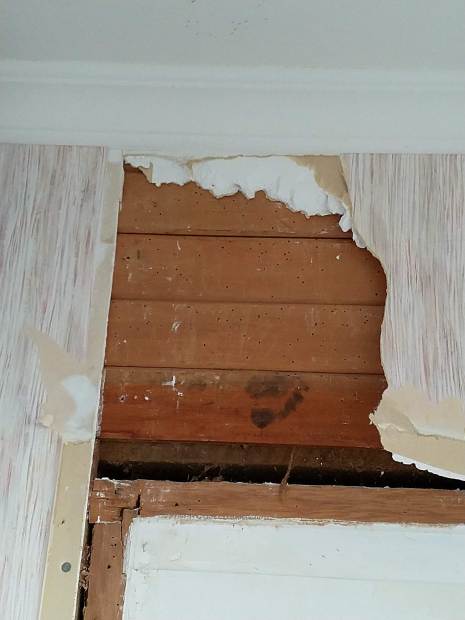
The shelves and cupboard had hidden wide native timber floorboards. With the false ceiling to be removed during the week, I would have a good sense of the space next weekend.
Next time: Check yo’self before yo’ wreck yo’self
 theoldkirknz.blog