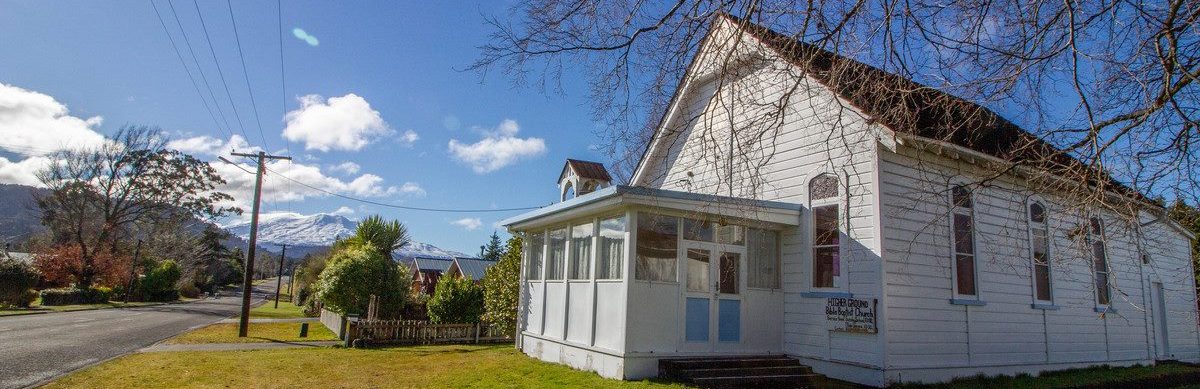
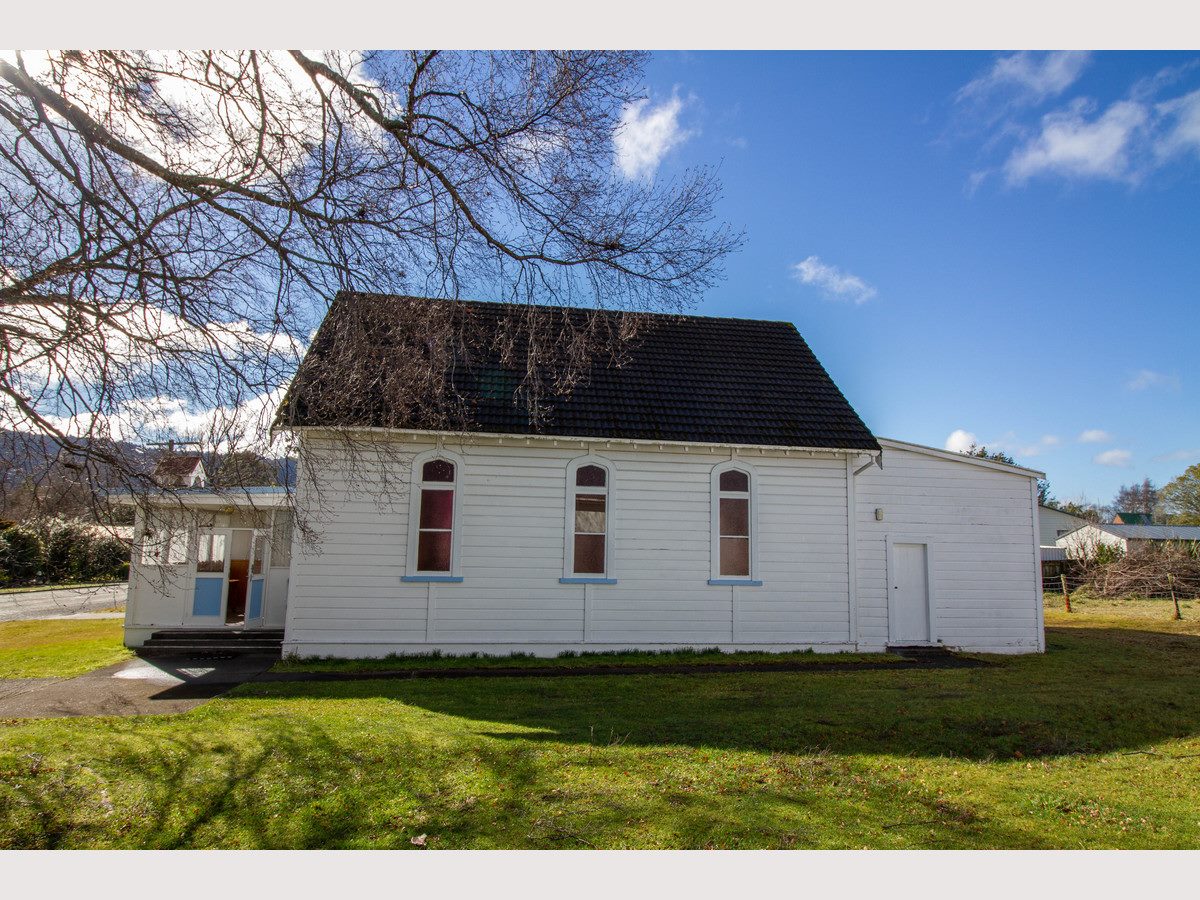
View of the church from the south-west aspect. Vestibule at the front, nave in the middle, and vestry at the back.
I’m a middle-aged woman who rents a townhouse with no lawn and doesn’t like gardening. I am a stranger to strenuous activity, preferring gentle exercise like walking and cycling to maintain my fitness. I’ve done strenuous exercise like fitness classes, running and weights and found I injure easily.
I’ve also been a health and safety manager on a brown-fields exhibition site so know the risks associated with old buildings and construction activities. Taking on the renovation of a 144 m2 building could be injurious to my health and well-being if I’m not careful. So early on I decided to get others into to do the ‘heavy lifting’ of my demolition and renovation project.
The first cab off the rank was the removal of the false ceiling in the vestry. I knew from the building inspection report that it hid a reasonably-sized space with the original ceiling and walls lined in native timber. It also covered the top part of the original double-hung sash windows on the south-eastern wall. I’m all for using professionals so called in a Licensed Building Practitioner to remove the false ceiling and remove the rubbish.
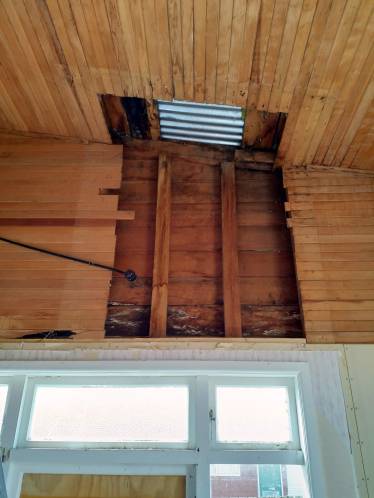
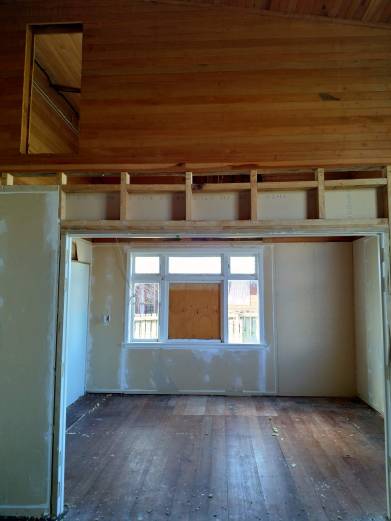
Removing the false ceiling revealed the space where this window is was a previously a fireplace – you can see where the chimney went through the roof. You can also see where the window hasn’t been sealed properly by the wet weatherboards and white mould. The original electrical wiring in black metal conduits was thoughtfully bent up out of the way of the false ceiling. The central window pane was the only casualty of the ceiling removal.
Also on show was the original ceiling height of 4.15m at the nave wall and 3.5m at the external wall – plenty of ceiling height for the architect to work with! The other bonus was the discovery of the original internal doors in the ceiling cavity. Made of native timber complete with borer holes, they would create an interesting addition to the vestry space.
My return to the church the second weekend was accompanied by my brother and a wallpaper steamer. My brother is used to hard physical work having worked in orchards during his school years, and more recently establishing and maintaining his own garden on the Kapiti Coast. I’d identified in my first weekend that working above my head and going up and down ladders was too difficult for me, so I needed someone else to do that work.
We quickly set to work, with me stripping wallpaper from the floor up, whilst he worked from the top of the plasterboard down. We were paid a visit during the afternoon by a guy who had tried to buy the church when it came back onto the market in early August. Despite me introducing myself as the owner he appeared to ignore me and address my brother. What is it with some people who assume that it’s the male who’s in charge?
Sunday saw another visitor looking for a church service. My knowledge of local services was no further advanced, and I’d been unsuccessful at removing the signage near the vestibule. Orange duct tape didn’t obliterate the details, but at least it indicated that they weren’t current.
The final priority for the weekend was removing the plasterboard in the area that would form the downstairs bathroom, and lift the old carpet.
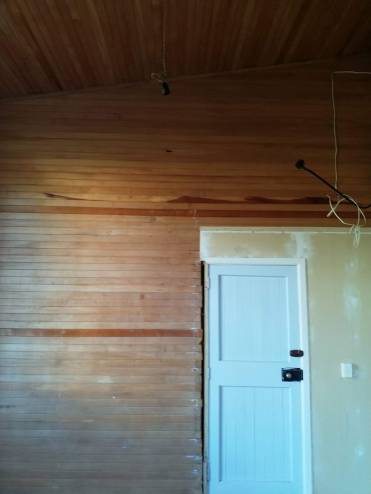
This picture shows the external door with the original light switch in it’s black metal conduit bent up out of the way. You may be able to just make out the original black light fitting hanging down against the background of the rimu wall lining. As the wall to the left will form part of the bathroom, I’ll be removing the original timber and using it to patch other sections that will be on show.
Removing the carpet revealed where the floorboards have probably been patched after the fireplace was removed. You can make out the different colour of the floorboards in the photo above. The builder who removed the false ceiling identified that there were floorboards missing from under the raised platform in the nave. Hopefully the hole and the patched floor match and the boards can be re-instated to their rightful place in the future. I’ll be leaving it to my architect to work out how to do that!
Next time: Money’s too tight to mention
 theoldkirknz.blog