Buying stuff via online auction sites is a bit like online dating: you sees it, you wants it, but sometimes it’s just not that practical or plays hard to get………………..
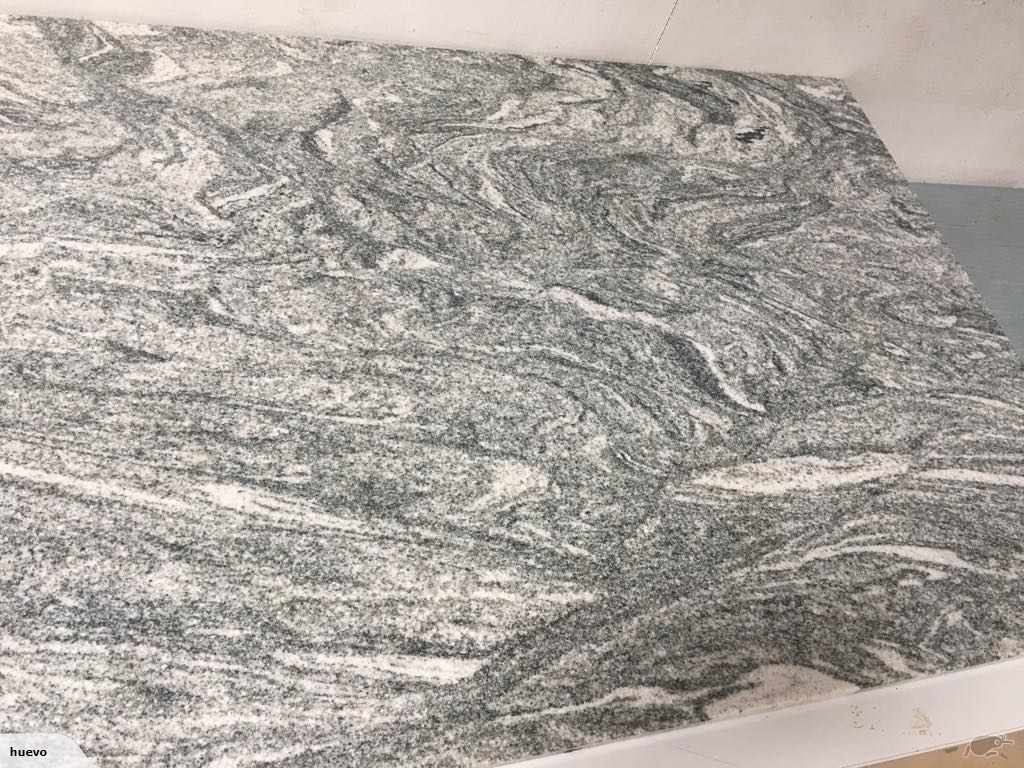
This was the case with this lovely piece of granite I found. Buying it was not the problem. Finding someone who would cut it for me was. First I tried advertising on BuildersCrack – no response. Then the lovely people at BuidersCrack sent me a list of people to contact. One I contacted didn’t do that sort of work and the other two didn’t return my calls. A bit like online dating really.
Maybe it wasn’t to be. I decided to try something else. Something that was available. Something that was willing and able to be cut up and shaped how I wanted it to be. So off to a granite bench-top place I went to find something that would work. But instead of finding a tall, dark and handsome piece of granite, all I could find was some wishy washy piece of blergh. And then I got the quote to cut, shape and install the piece of blergh. It would be twice as much as the vanity, tap, and basin combined. Blergh!
I decided to try a different tack. Approach another bench-top supplier to see if they could supply me with my shower tray and cut my granite as a side job. First they wanted to know if it was Chinese. A bit racist I thought. I reassured them that it was an European import, but of an undetermined vintage. They would love to help, but a bit busy after Christmas, here’s someone else you could try, come back to us if you’re unsuccessful. I’ve heard those lines before!
Fortunately the person they referred me to was able to help. My dream of a sexy piece of granite in my shower-room will be realised!
Next time: Call me (call me) on the line. Call me, call me any, anytime……………
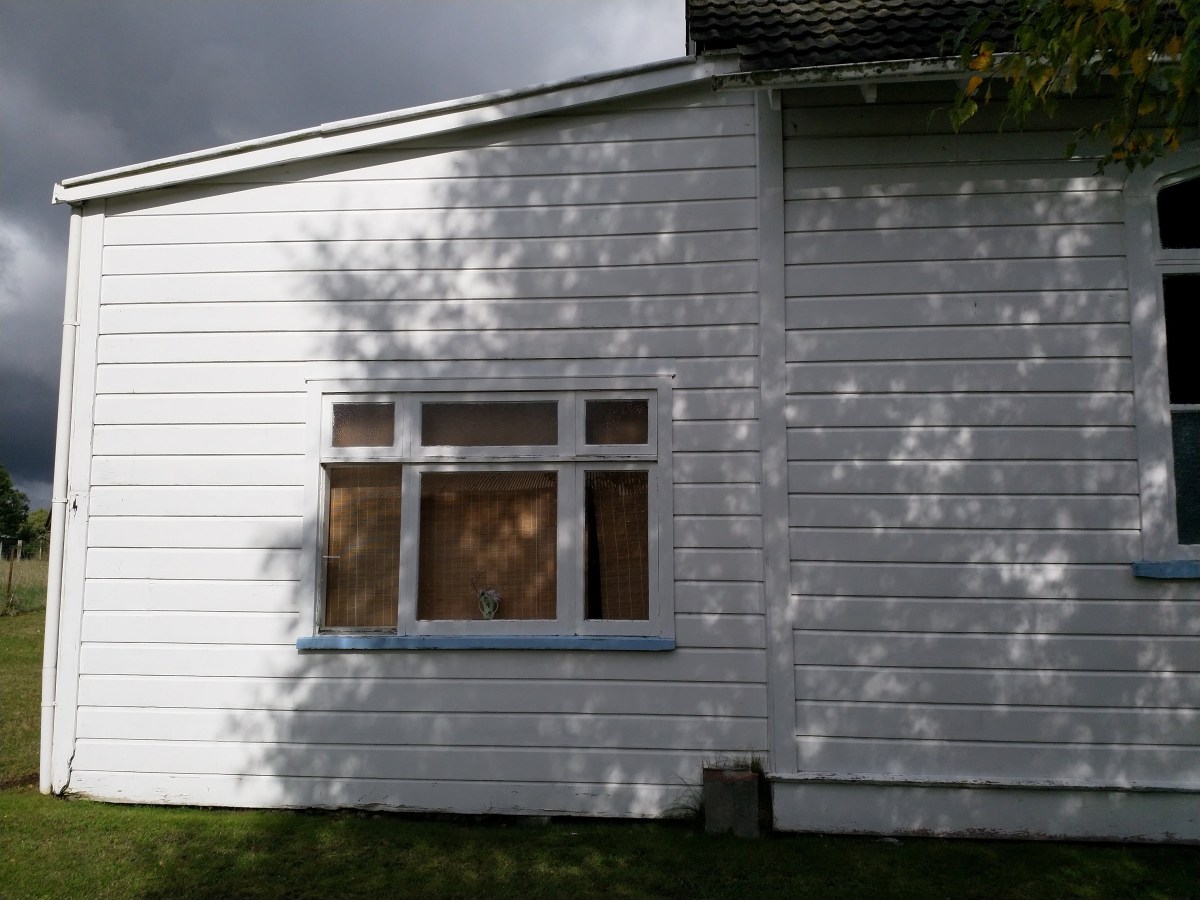
This photo of the eastern aspect shows the window that’s will be replaced by french doors onto a small deck. Note the concrete roof tile slacking around on the ground rather than hanging out on the roof where it belongs.
I started investigating what I’d need to do to get a change of use approved in April 2018. The ever-helpful Ruapehu District Council told me about things like having all windows double-glazed, and fully-insulating the exterior walls. They also told me about having to connect to the water and sewerage system despite my preference to collect water and recycle my own sewerage.
The Building Act specifies what work you don’t need a consent for. That’s mostly stuff that goes on within the building envelope. Anything in the building envelope requires a consent, unless it’s an existing element.
Ok, I can live with that. Until I realised that pretty much everything I wanted to do within the building envelope was dependent on doing stuff to the building envelope first. Sigh.
Then there’s a whole lot of stuff that you don’t need a consent for, but councils will still want to know about. Stuff like heating. You don’t need a building consent to install a heat-pump, but councils still want to know that you’ll have heating. Ditto ventilation like bathroom and kitchen extraction fans. You need to get those drawn in as well.
They want to know where you’re going to install your gas cylinders for your hot water system, what they’ll be mounted on, and how you’re going to stop them from being nicked. And yes they do get nicked!
They also want to know what products you’re going to use for specific applications such as shower wall water-proofing, insulation, and new door and window fittings. You have to obtain producer statements from your proposed suppliers and submit them to your council. They then get officially stamped and you have to have them on site at all times together with your approved plans. You also have go back to council to get new ones approved if you change your mind or the supplier goes out of business. Double-sigh.
Since I’m putting french doors where the east-facing window is, that needs to have safety glass and a deck installed below it. The main entry needs to comply with the slip-resistance performance of NZBC d1.3.3 (d) – whatever the hell that is! And I have to get the road access re-done to meet another standard.
Councils have 20 days to approve building consent applications. They stop the clock as soon as they have any queries. They also stop the clock for their end-of-year three-week close-down. I lodged my application on 30 November 2018. The council requested additional information on 18 December and it was supplied on 20 December. On 9 January I got the call to say it was approved. I think we can call that some kind of record!
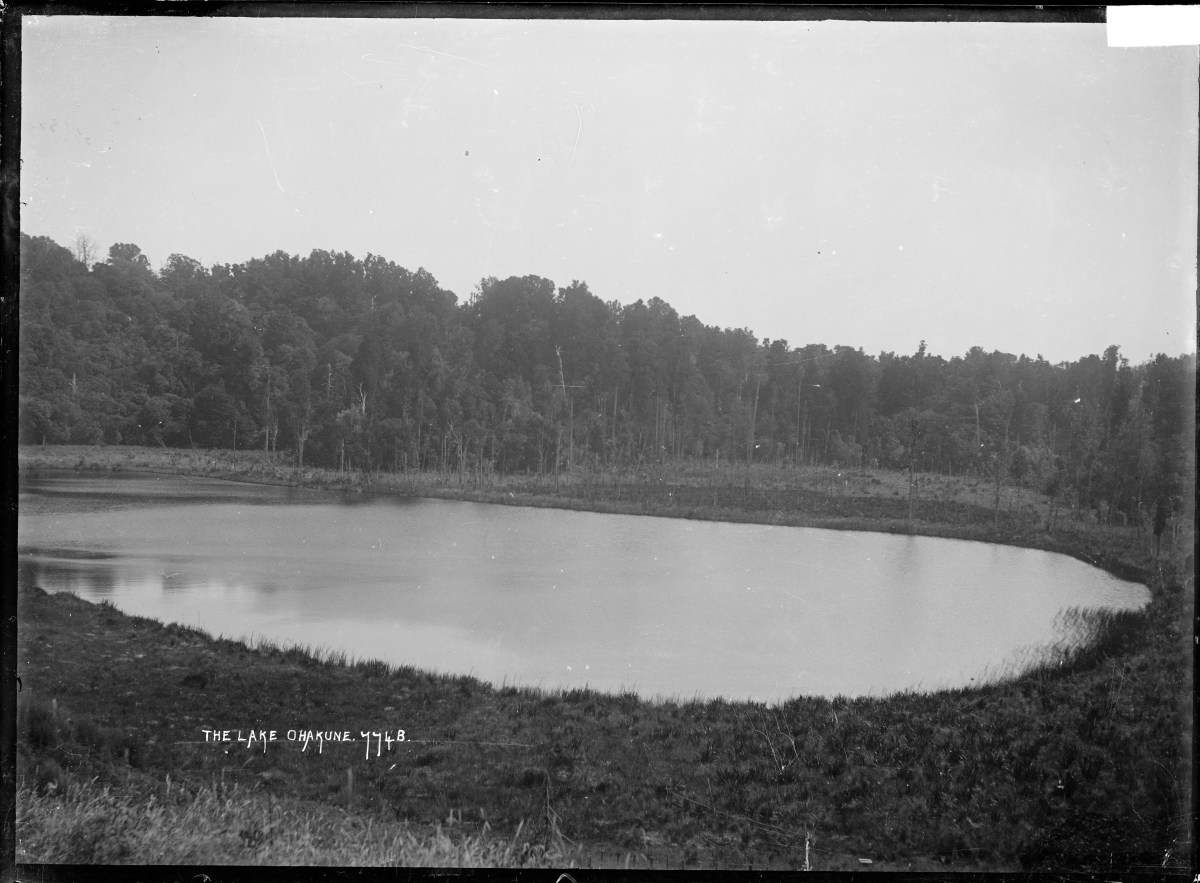
This photo of a lake near Ohakune was taken around 1910. It may be in the scenic reserve on Lakes Road.
December went by in a rush. After submitting my building consent application at the end of November it was taken up with resolving design queries from the council and paying the bills. Unfortunately I was three days late submitting to get my consent approved before their Christmas close-down.
I finished work mid-December, so with a month off it was time to start researching products, estimating costs, and finalising design elements. The costs soon stack up even when you’re looking at stock bog-standard items.
The heated toilet seat with the anti-bacterial nozzle, pressure wash, deodorisation, warm water bidet function, and remote control was quickly taken off the list. Now I just have to decide if I want a retro toilet or something more modern. Decisions, decisions.
Next time: All you wanted to know about getting a change of use approved but were too afraid to ask
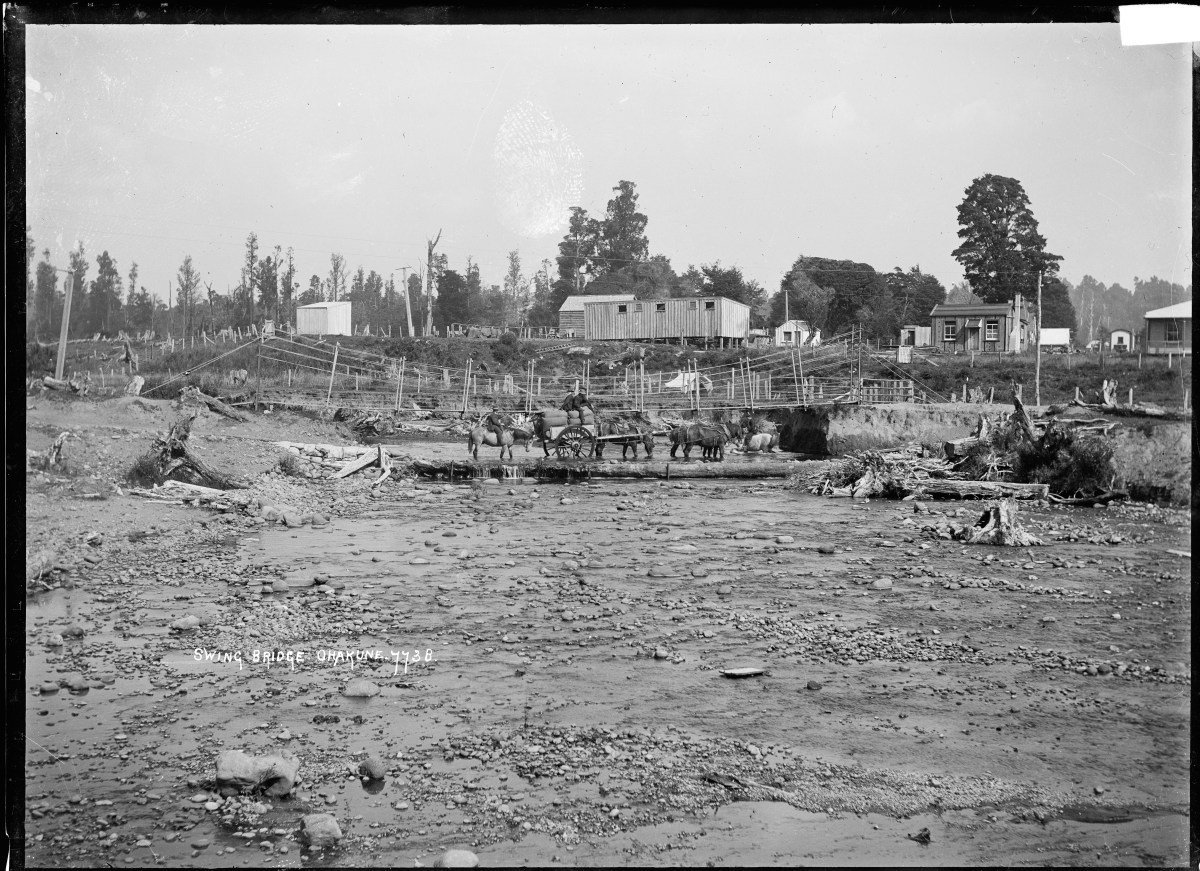
This photo of the swing bridge over the river was taken around 1910. Like the wagoner crossing via the ford I usually have to take the long way around.
Okay, so the heading might be a slight exaggeration, but it seems that way at times. Take my purchase of the church. I paid nearly 35% more for it in August than when I tried to buy it in May.
The kitchen cabinets are costing me 33% more because I need to get the more expensive oak cabinets sanded and spray-painted. The spray-painting is costing me 50% more than estimated as the spray-painter has to do a special clean of his equipment before and after he uses the paint products I’ve specified. The cabinets are imported and despite ordering them in September I won’t get them until late January.
The roof window in the kitchenette is going to cost me more because the company I wanted to use no longer makes them, and I now may need to get it fabricated to order. The french doors will also be a special order so that they fit the width of the existing window. I will need to order both of them soon so that I can get them fabricated in the new year, but I need to wait for building consent approval before I can do that.
Installing insulation will be more expensive as I have to remove the floorboards to install it underneath. At least that will make it easier for the plumber to install the plumbing to the kitchenette! It will be more expensive to install insulation in the walls as I will need to pump it in for most areas. I need to add new rafters to create enough depth in the roof cavity to install insulation. And so it goes on.
I got a great piece of advice when I started out contracting and consulting – “work out how long you think it ought to take, then double it”. That’s proven to be the case for the design and drawings, and I’m following that mantra for the consent and building phases.
Let the fun begin!
Next time: December disappears into a haze of waiting
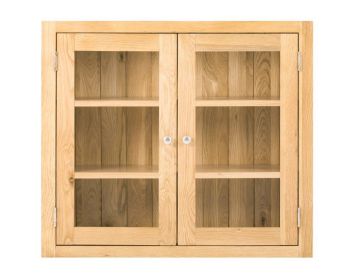
Glass-fronted wall cabinet – coming to my kitchenette soon! I like being able to see where things are without having to open numerous cupboard doors.
I’ve loved the BespOak NZ kitchen cabinets since I first saw them. However, with wooden floors, walls, and ceilings in my church this natural white oak product may have been a wood too far. I was delighted to discover that they also had a painted product using acacia wood for the external panels, and white oak for the internal panels and shelves.
Being the mildly OCD person that I am, I decided to order the cabinets in September which was a couple of months in advance of when I anticipated the kitchen and bathroom would be put together. (Little did I know then what I know now.) I duly went online to get the product numbers only to discover that the painted versions were no longer listed.
Inquiries to BespOak NZ revealed that the manufacturer had discontinued the product line due to a lack of demand. However, I could purchase the oak cabinets and have them treated and painted so that I would achieve a similar effect. And so commenced my next mission.
Products ordered, BespOak NZ put me in touch with a spray-painter who had already worked with their products, but not my preferred paint products. The Natural Paint Company had supplied their products to another client for painting BespOak NZ products. They were awesome at liaising with the spray-painter and talking through their products, how best to use them, and paint options.
Meanwhile, I had worked out my colour scheme for the bathroom and kitchen, and ordered a colour chart from The Natural Paint Company. Rather than printing their colours on glossy cards they actually paint them onto cardboard so you get a ‘real’ sample. They have an awesome service which gives you your first 10 colour chips free.
Colour ‘chart’ in hand, I’d tested the colours in the natural light of the vestry earlier in the month and narrowed it down to white and three shades of grey. The second part of The Natural Paint Company’s awesome service is that they will send you four 85ml test pots and a brush for under $20.
I’d managed to scavenge some unused plasterboard from my sister so painted three of them up with a base coat and two top coats of the greys. I figured white is white, right? I couldn’t choose between the three colours so it was time to test them in-situ.
That called for another road trip, this time with one of my sisters and a niece in tow. My sister is renovating her 1930’s ‘railway cottage’ and kindly lent me some of her DIY tools in the demo phase. (I may have ‘killed’ her girly-drill in the process.) My niece has been keen on interior design for a few years now so I’ve enlisted her help in choosing fixtures and fittings for the bathroom and kitchen, and choosing the bedroom decor.
I’d arranged to meet with the person doing the detailed drawings council need to support my change of use and building consent application. It was a good opportunity for my sister and niece to look around whilst I talked my plans over with the designer.
Choosing the colour for the cabinets was much harder than I thought. I wanted to have the same colour in the bathroom and kitchen which will have different light sources. The bathroom window faces south-east, whilst the kitchen will be lit by a roof window and artificial light.
I’d recently seen the Grand Designs NZ episode where they renovated a historic building in Christchurch and used dark colours with the original native wood. Whilst I’m not a fan of black or blue, I was struck by how rich the dark colours and native wood looked together. I was very tempted to paint the cabinets a dark grey, but decided that I needed something lighter.
My final choice was between two light greys – one cool in tone whilst the other was a bit warmer. They both looked fine in the bathroom area, but the warmer tone looked better in the kitchen area. Job done.
Back in Wellington, it was time to order the paint for delivery to the spray-painter in Mt Maunganui, only to discover that there was going to be a delay in the cabinets arriving in the country. Ah well, it’s not like I’ve got building consent to be able to install them before the new year!
Next time: Everything takes twice as long and costs twice as much
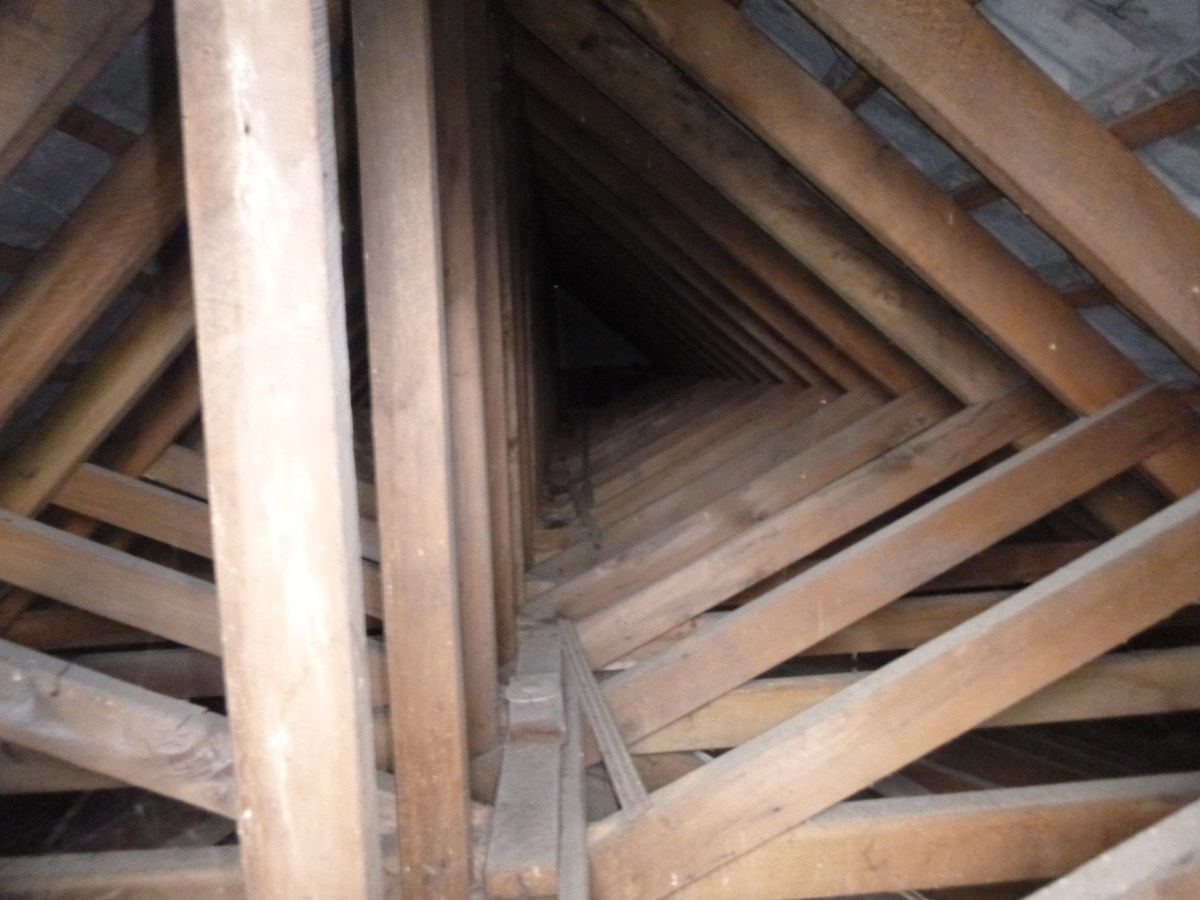
This photo of my roof ‘scissor’ trusses shows the underneath of the post-WW2 concrete tiles and the complete absence of insulation or a moisture barrier. The strong winds associated with the March 1918 fires nearby pushed the original building over and removed the roof! I wonder if the random bits of wood lying alongside the king posts are still good?
The construction industry works like many others – it goes through periods of boom and bust. It was the final years of the first World War at the time my church was being built. Market gardening and milling native trees were the key industries – it’s hard to gauge if there were labour shortages in the area caused by the war. I’m hoping some historical research I’m conducting next month will reveal more about how the church was funded and built.
I grew up in an immediate and extended family involved in the construction trades. Most of them worked on new-builds or in commercial construction. I learned that competent trades professionals are more likely to survive bust cycles, and you’re more likely to get shoddy work or tradies doing ‘foreign orders’ in boom cycles.
I also learned that there are two methods of charging – colloquially known as ‘do and charge’ or ‘job and knock’. The former is paying for all hours worked, the latter is paying for work as quoted regardless of how long it takes.
I went overseas in 1985 when the industrial landscape was one of paying for all hours worked. It changed whilst I was overseas, and I returned in 1993 to a more competitive environment. Unfortunately that competitive environment has seen a lot of price undercutting in order to secure work. I’ve observed family members losing money on jobs they sub-contracted to as the main contractor went bust.
I’m fortunate as a self-employed contractor to be paid for the hours I work. I believe that I should respect the trades professionals I engage by paying them for the work they do. I know that there will always be some ‘surprises’ with an old building, and I don’t want to compromise the quality of the work.
Every project is subject to time, cost and quality constraints. I would prefer that tradespeople under-promised and over-delivered than the other way around!
Next time: Mostly old, sometimes new, occasionally borrowed, never blue (or black)
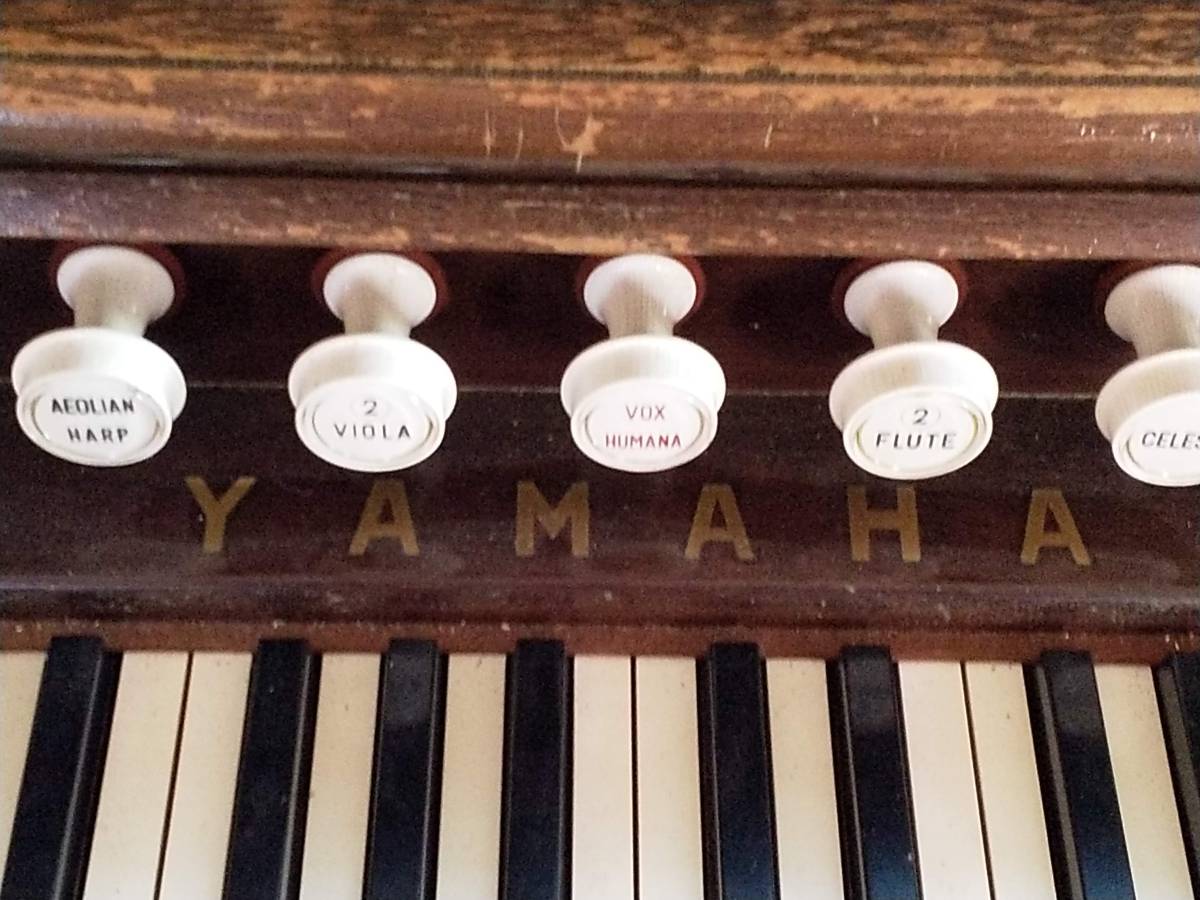
Every church should come with it’s own organ. I have no idea what the different knobs mean in case you’re wondering.
The title of this blog is adapted from a document I wrote nearly twenty years ago. It was a guide for franchise owners on how to find and choose great people for their business. The document’s purpose was to provide small business owners with corporate expertise on employing people.
It reinforced three key things:
People tend to associate with others who hold similar values, attributes, and beliefs as themselves
The best recommendations for your job are people already working there
People are more likely to refer people who will reflect well on them
I believe in evidence-based practice in my professional life – focusing on data-driven decision-making. My search for an architect was a very rational approach. I looked at the NZ Register of Architects and the NZ Institute of Architects websites to identify someone with the skills and experience I was looking for.
My search for other professionals was quite different. I’ve used a mix of recommendations from work colleagues with connections to the area, referrals from my new neighbours, and real estate agents. I knew from my upbringing that working on a building site can be quite a tense environment. Construction professionals want to work with people that they get on with, so referrals from one professional for another was another important part of my approach.
Just like the knobs on the old organ that came with the church, every construction professional adds their unique ‘note’ to a build. Getting everyone playing in time and harmoniously is the objective.
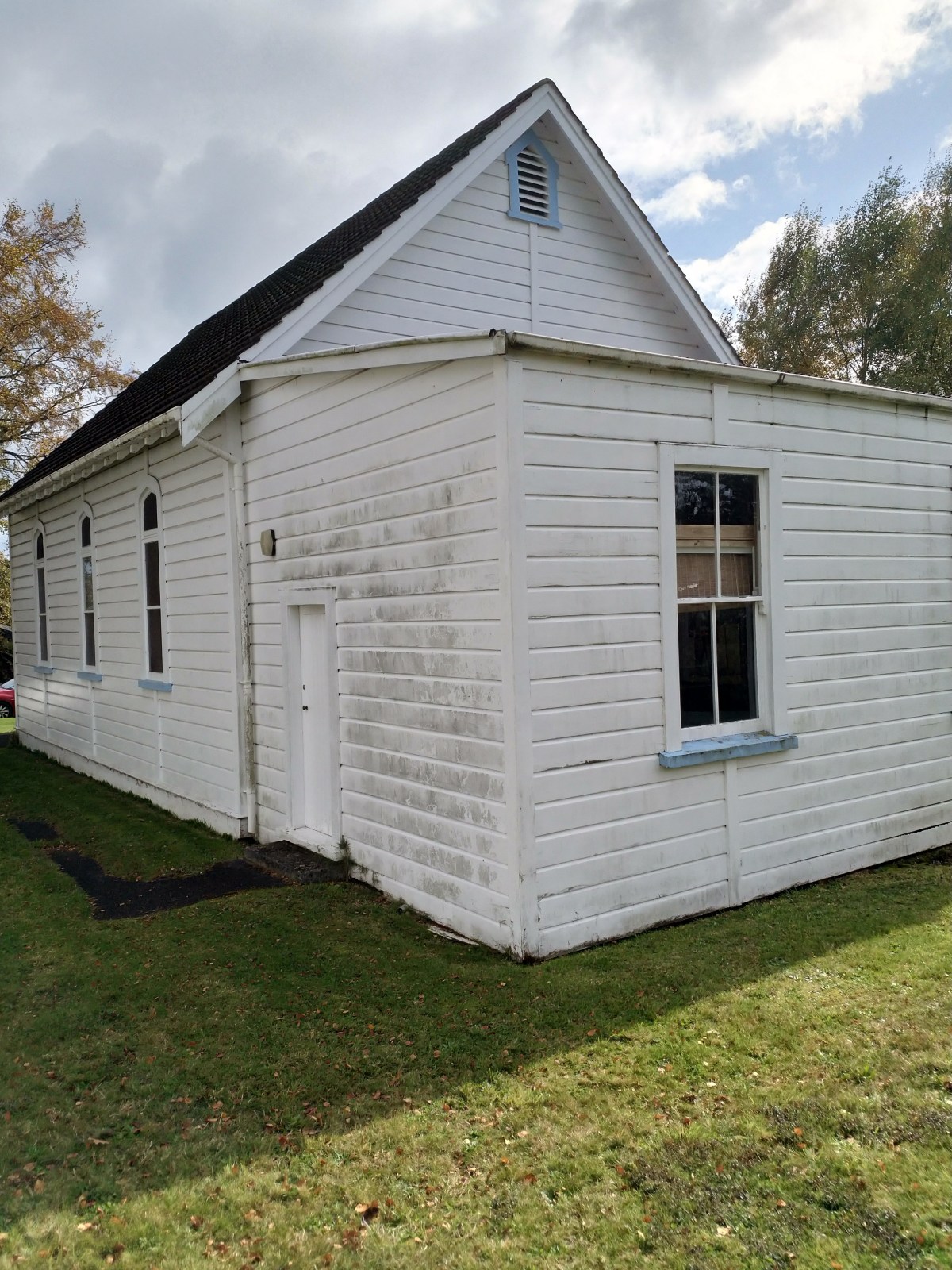
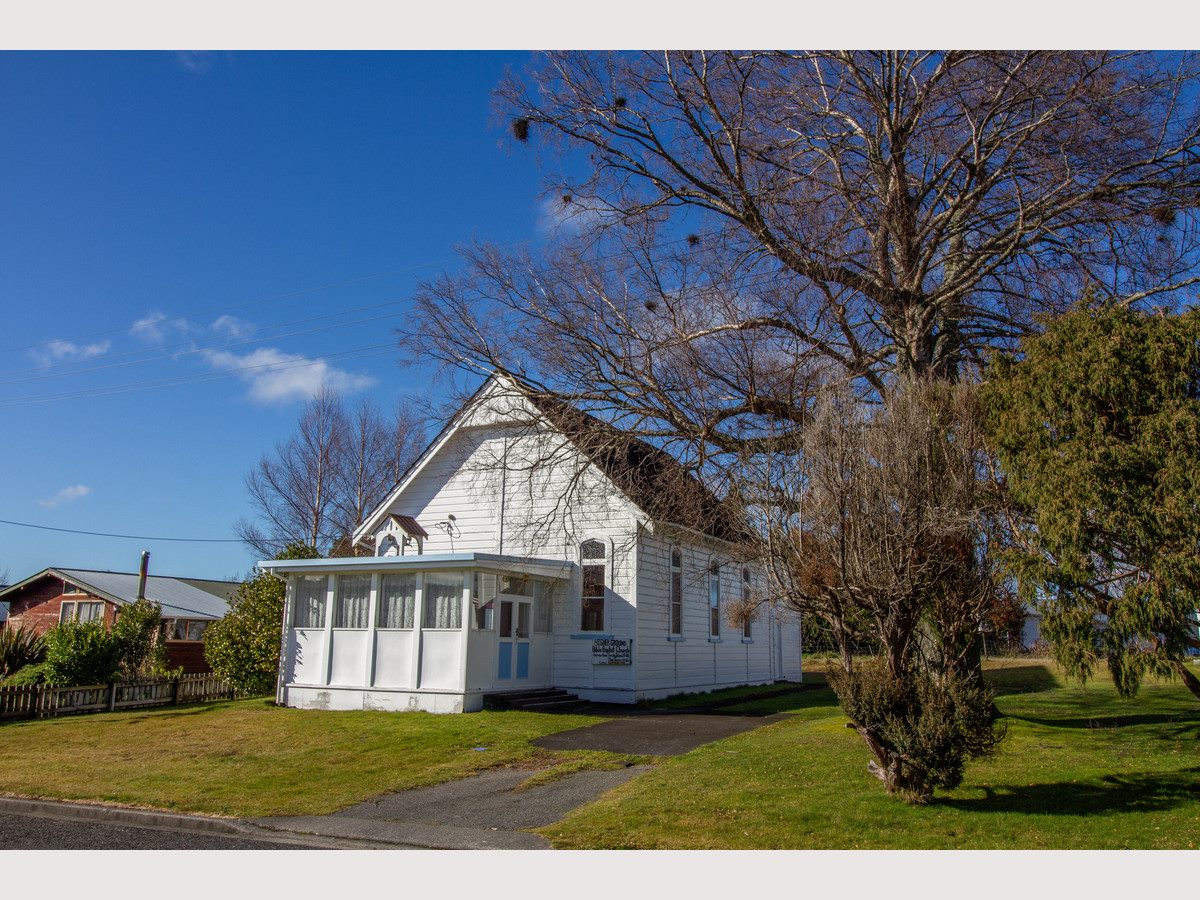
I took this photo in April on my first visit showing the south-facing corner of the building. You can see the false ceiling cutting across the top of the windows.
My latest trip to Ohakune was to retrieve the tools my sister loaned me and meet with prospective builders. My neighbour across the road had recommended the first one I met. Turns out she’s friends with his daughter. Ohakune’s a bit like that.
I’d wanted to meet him as he has a reputation as a craftsman who does meticulous work. I was looking for someone who would treat the old church with the care, love, and respect it deserved.
It also turned out that he knew the council’s requirements inside out and back to front. That included the requirement to have a minimum 600mm clearance between the floor and the ground. My sloping section gives me 400mm at the front entry and 250mm at the back. You do the maths…………….
One of the joys of applying for a change of use is that my 100 year old building has to comply with new building standards. I’d known that I’d need to lift the floorboards to get the required insulation underneath. Now I was learning that I may have to lift the building.
That’s right. Pick up a 144m2 building, re-pile it, and put it down 350mm higher than it was originally. And the cost of that I hear you ask? Just a lazy $15-20k – that’s all!
The second building team I met were very enthusiastic about what I was trying to achieve and full of ideas of how I could achieve it. They too were a recommendation from the same neighbour whose partner occasionally works for them.
I also met up with the plumber who had quoted on connecting the building to the water supply and sewerage. And yes he was another recommendation from my neighbour. They need to be giving her a commission!
The rest of my visit was spent removing remnants of underlay foam and staples from the floor. I also got to mark out the new walls and where the fixtures and fittings would go.
This is the likely kitchen and shower room layouts. Note the old door at the entrance to the where the bedroom will be. There will be a roof window or two above the kitchen cabinets and the old chair will be replaced with a porcelain ‘throne’.
Kitchen cabinets will run along this wall.
Shower, vanity & ‘throne’ in the bathroom.
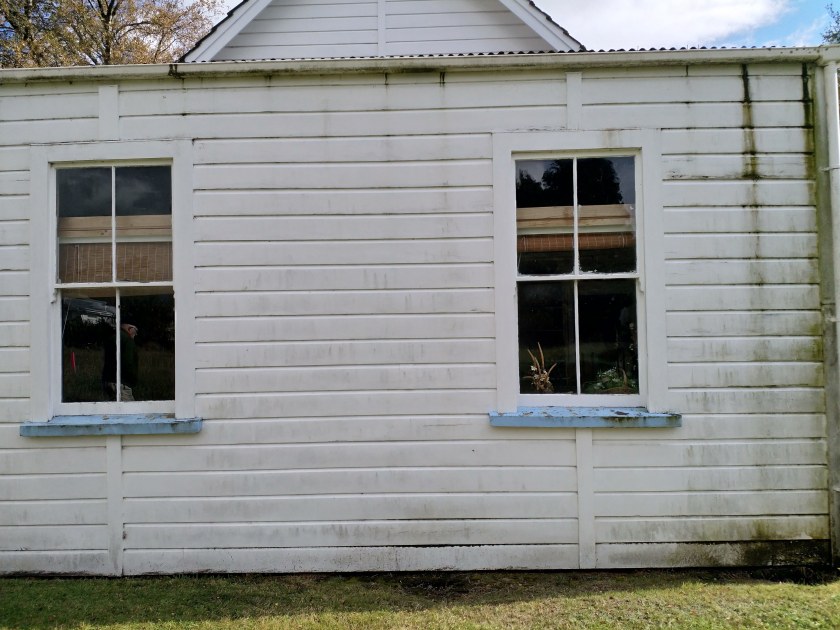
Back in Wellington for work during the week saw me putting in calls to council planners and planning consultants about what I would and wouldn’t need to do. You can see from this photo taken in April that the back section is a bit too close to the ground.
My discussion with the council planner was promising. I may be able to postpone lifting the building until phase two when I will need to strengthen the sub-floor to bear the weight of the mezzanine. I’ll still need do all I can to improve the insulation and ventilation to the sub-floor – but I was going to do that anyway.
Next time: Finding and choosing great professionals
These are the questions people ask me when they find out what I’m up to. I was thinking about this as I was walking to an early morning meeting in May with someone I respect as a coach and mentor. I thought about the first car I bought in 1994 which was a 1965 Volkswagen Kharmann Ghia Type34. If you’re not a car nut then this is what it looks like:
Early May was when I was trying to buy the church from the new owner, and I was tossing up whether or not to increase my original offer. I thought about my first car purchase and realised that I just don’t do ordinary! That spurred me to up my offer but unfortunately it was not to be at that stage.
Ohakune is a cute little village near the base of Mount Ruapehu. I love the small size and population, the large sections, the historic areas, and of course the views. It’s an easy drive from Wellington and negates the need to traverse the treacherous Desert Road. I feel that it is a place where I can relax and re-charge my batteries at the end of the week.
I’ve dreamed of renovating a property since I was a teenager. I remember cutting up paint charts and putting together different colour combinations to see how they went together. I’ve lived in old and modern properties, and have always preferred older properties with their generous proportions, sense of history, and space. Making a space my own has been a long-held dream.
I’m fascinated by churches – the spaces they create and the energy they contain. History is a favourite subject of mine. I remember visiting churches of different denominations in my home town as part of our history class to explore how their religious beliefs were reflected in their architecture.
I’ve been eyeing up churches for conversion for about a decade now. Serendipity provided me with a church ripe for renovation for sale in Ohakune when I was looking to buy. It was meant to be.
So there you have it. Let the adventure begin!
Next time: The money pit just got a whole lot deeper
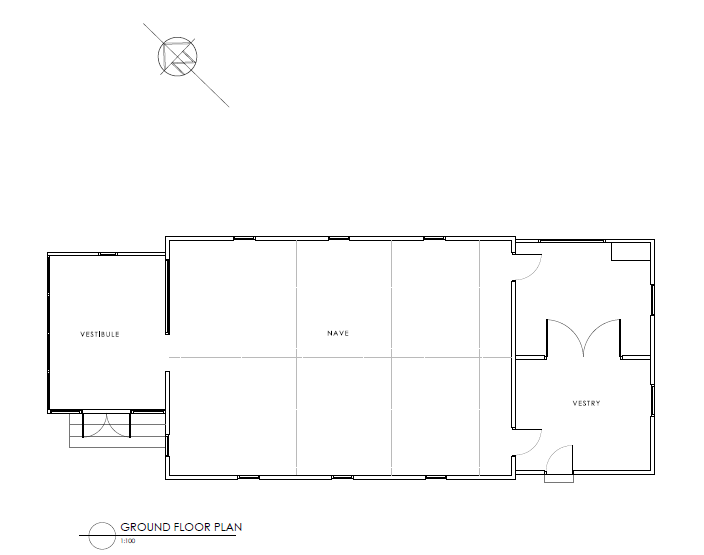
This graphic is of the existing floor plan from the south-west aspect.
It seems like it’s been a long time between the site visit and the first plans emerging from the design process. In reality it was just over three weeks during which I kept myself busy by demolishing unsympathetic additions in the vestry, removing plasterboard, and uplifting the carpet.
I’d provided my architect with a written brief before the site visit at the end of August. Due to my budget constraints, I’m planning to do the renovations in three phases:
Phase One – converting the vestry to contain one bedroom, a shower room, and kitchenette.
Phase Two – converting the nave to contain three more bedrooms, a bathroom, and the main living areas.
Phase Three – demolishing the 1970’s vestibule, re-instating the entrance porch, adding decking, garaging, fencing, and landscaping.
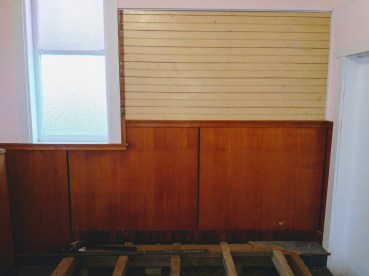
I want my visitors to have a strong sense of the church by stripping back the pinex and plywood to reveal the original rimu T&G sarking underneath. You can see from this picture some of the original woodwork before it got suffocated by pink pinex. Just below the plywood is the original vertical rimu T&G sarking. (Those aren’t floor joists btw, but the framing of the raised platform in the alter area.)
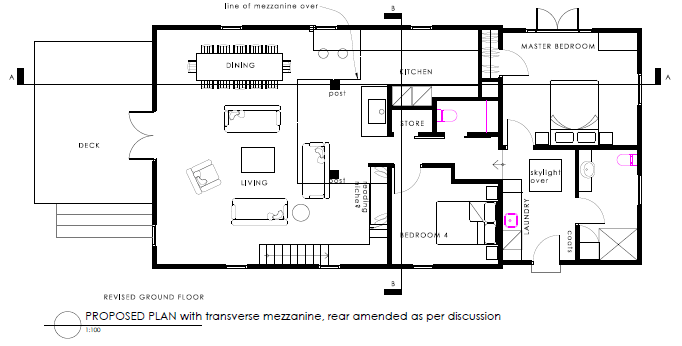
I also want the additions and insertions such as the mezzanine floor to give the illusion that they could be removed and the essence of the church would remain. I love open-plan spaces with defined zones for different activities. Push back the furniture and it’s a large party space!
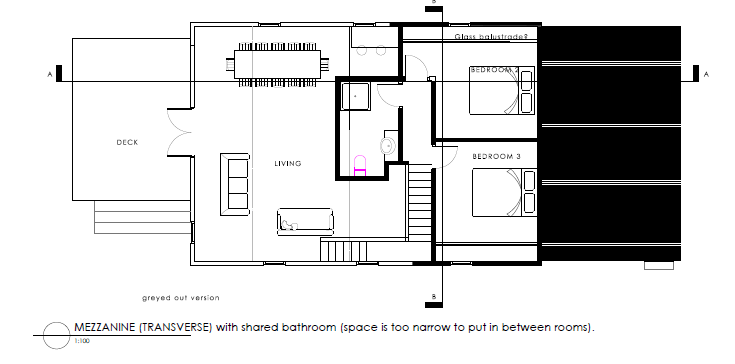
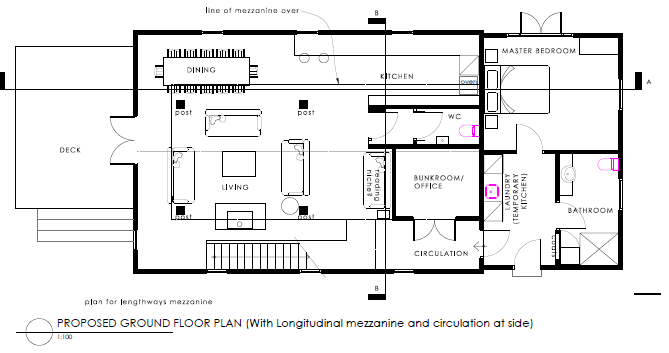
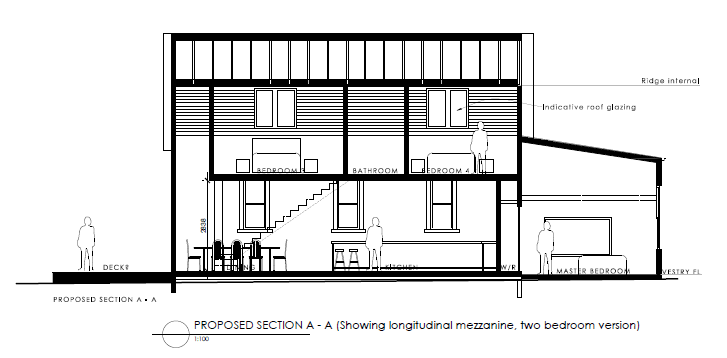
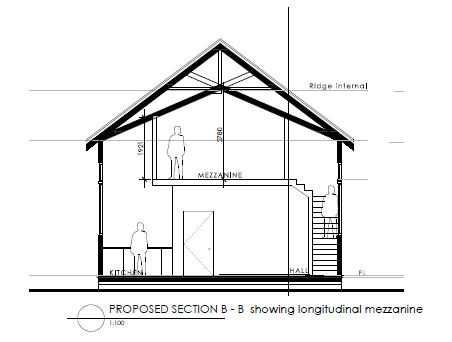
Scheme 1 – transverse mezzanine with two bedrooms and a bathroom upstairs.
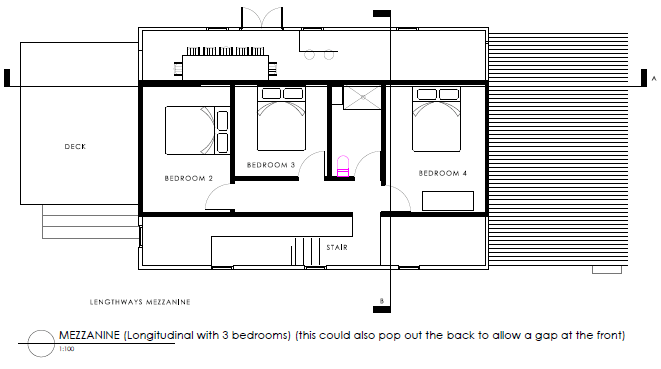
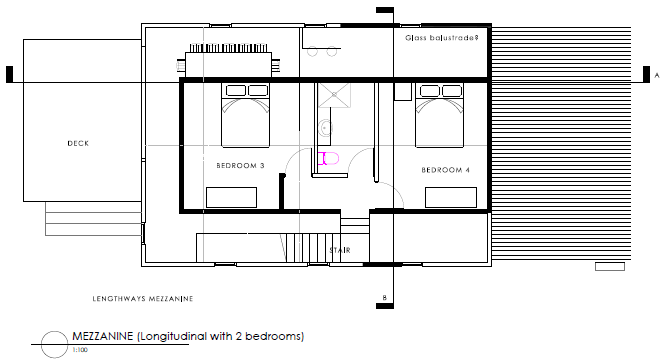
Scheme 2 – longitudinal mezzanine with two or three bedrooms and a bathroom upstairs.
What do you think of the proposed schemes? What do you think would work for me? What changes would you make if it was your space? I look forward to reading your comments!





 theoldkirknz.blog