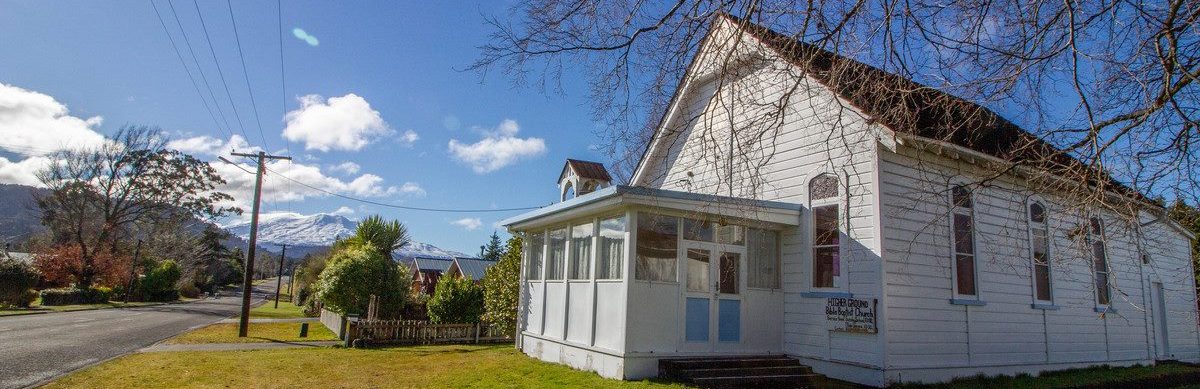
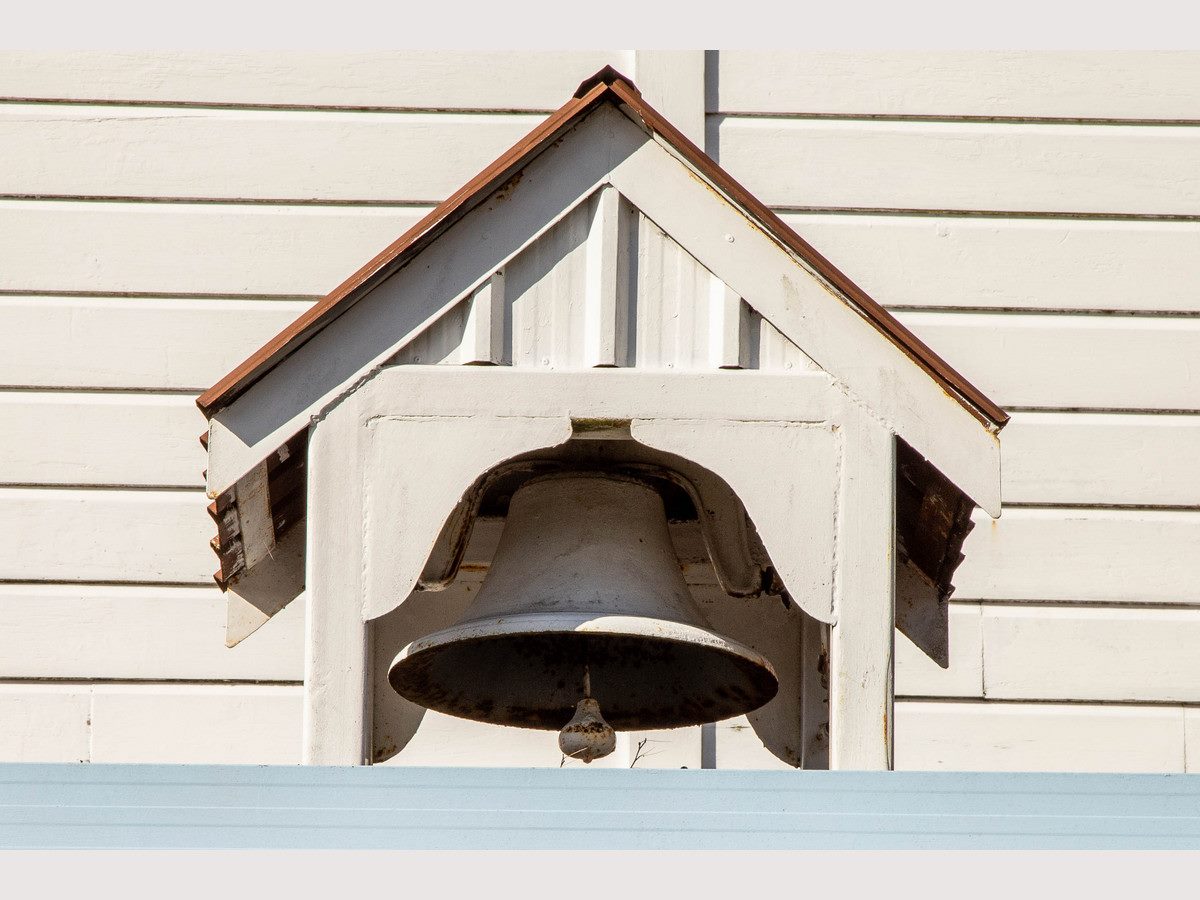
You can ring my bell if you’re a visitor but first you’ll have to get inside the vestibule!
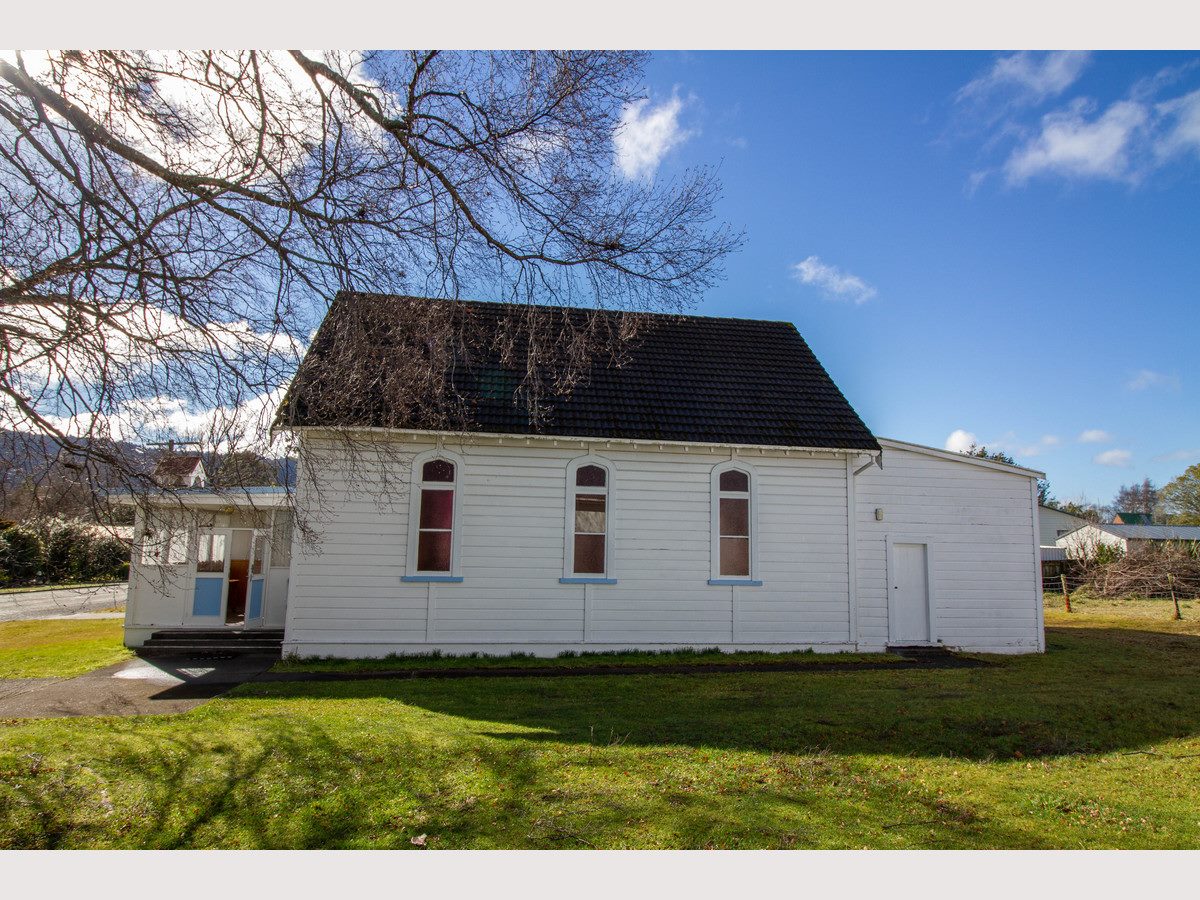
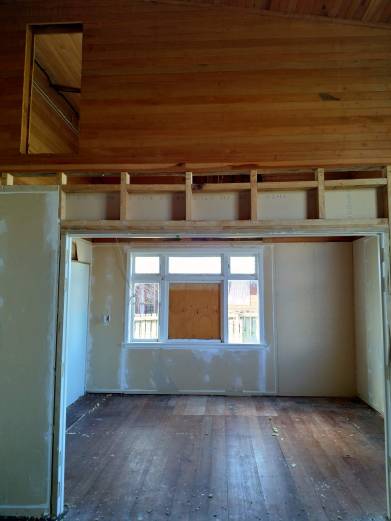
Large wooden building on a flat-ish section close to town – check. ‘Doorbell’ – check. Living room – well if you count a space 10.6m x 7.3m with a 5.8m ceiling height as a ‘living’ room, then yes – check. Bedroom, bathroom, kitchen? Uh-oh.
Most of the things that make a building a house were absent in the church which had made getting a loan rather a challenge. Having a good income made me ‘low risk’ as a borrower, but the property was still classified as ‘high-risk’ and unacceptable as security for a mortgage. Many banks weren’t interested so there was a lot of scrambling around at the last minute to get a finance deal done in time.
One of the casualties was the distribution from the family trust that I was planning to use to finance the first phase of the renovation to make the church habitable. Lenders want to minimise their risk by lending as little as possible, so my inheritance would be increasing my deposit instead.
Unfortunately that meant that I wouldn’t have the capital to make the church habitable. I decided to withdraw my KiwiSaver funds to assist with the house deposit which would release some of my own savings for the renovation.
The first budget lines to go were the pitched gable roof, solar panels, and rainwater collection system. What’s staying is the double-glazing, skylights, full insulation, and gas hot water system. The other things not being compromised is the quality of the fixtures and fittings even if they are pre-loved or seconds.
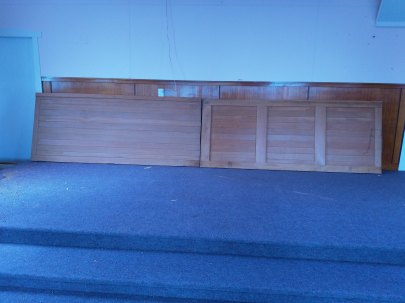
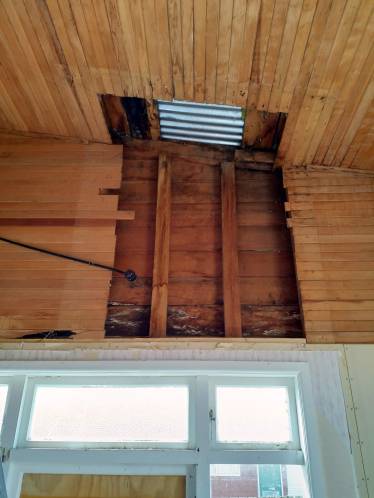
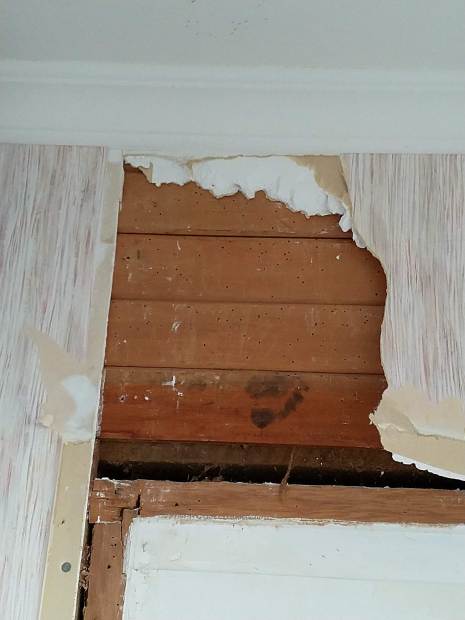
Last week’s discovery of the original internal doors in the ceiling cavity solved one budget item but added another. Measuring 2.43m x 0.98m, they would be perfect as pocket doors from the kitchenette / laundry to the bedroom and bathroom. I’ll need to remove some of the partitioning wall and add bracing to the doors as they were a bit too flexible – maybe the borer holes had something to do with that!
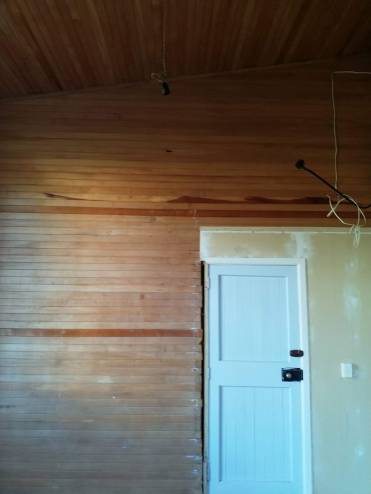
I want to keep the original wall linings but it will create a challenge to get plumbing and electrical services in without causing too much damage to the walls. One option is to repeat the original trick to run conduits down the walls for the lights and power points.
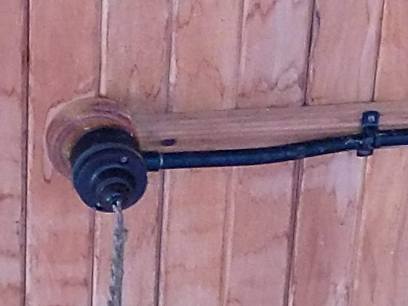
I love the detail of the turned wood the light fitting and conduit is attached to. Note the less-than-safe two-phase wiring running down to the light socket.
Ruapehu District Council have some strict requirements when converting commercial buildings to residential use, including full insulation and double-glazing. Fortunately there’s some things I can do without a building consent. Unfortunately most of those things are out of order for the sequence I need to do things in. At least one of the things I can do is to get the glazing in the original double-hung sash windows upgraded.
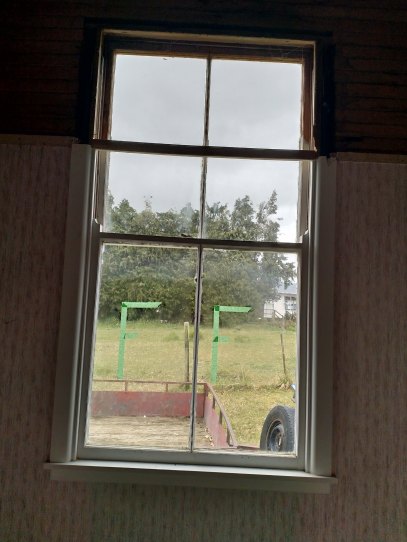
This is the window for what will be in the downstairs bathroom. Note the wood across the window where the false ceiling came to. The ‘F’ on the lower panes indicates the frosting needed to obscure the view. With an empty section and the Catholic Church behind I want to maintain some privacy!
Next time: The big reveal – the initial architectural schemes emerge from the design process.

 theoldkirknz.blog