Every b*st*rd says no

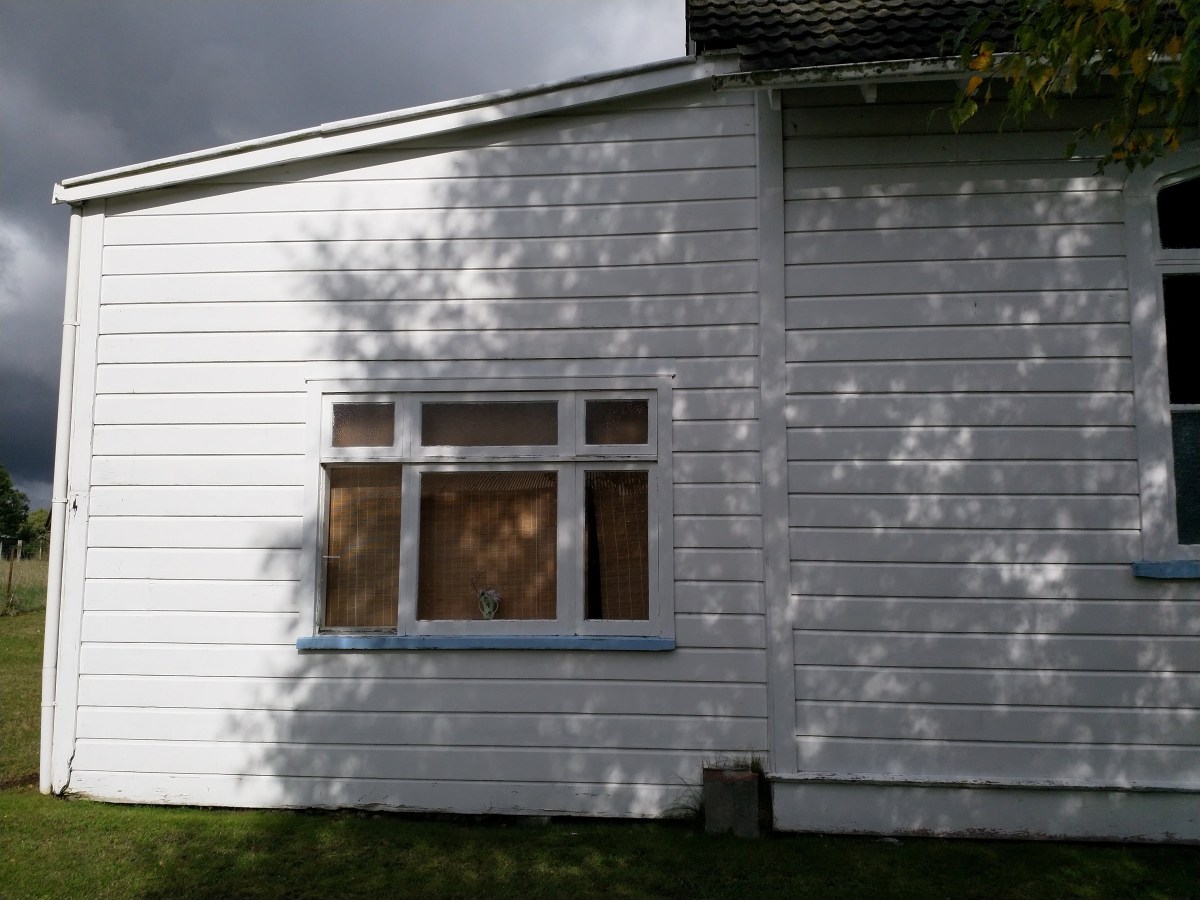
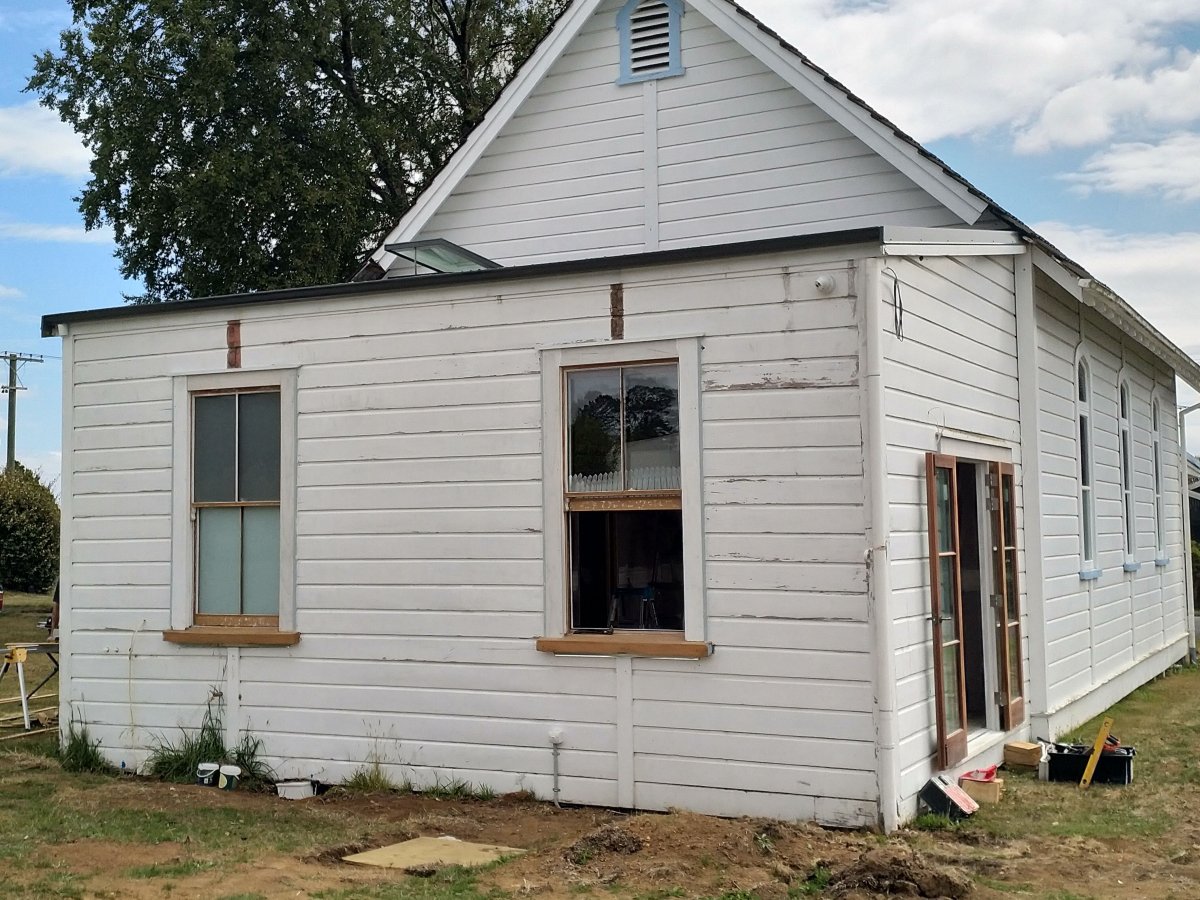
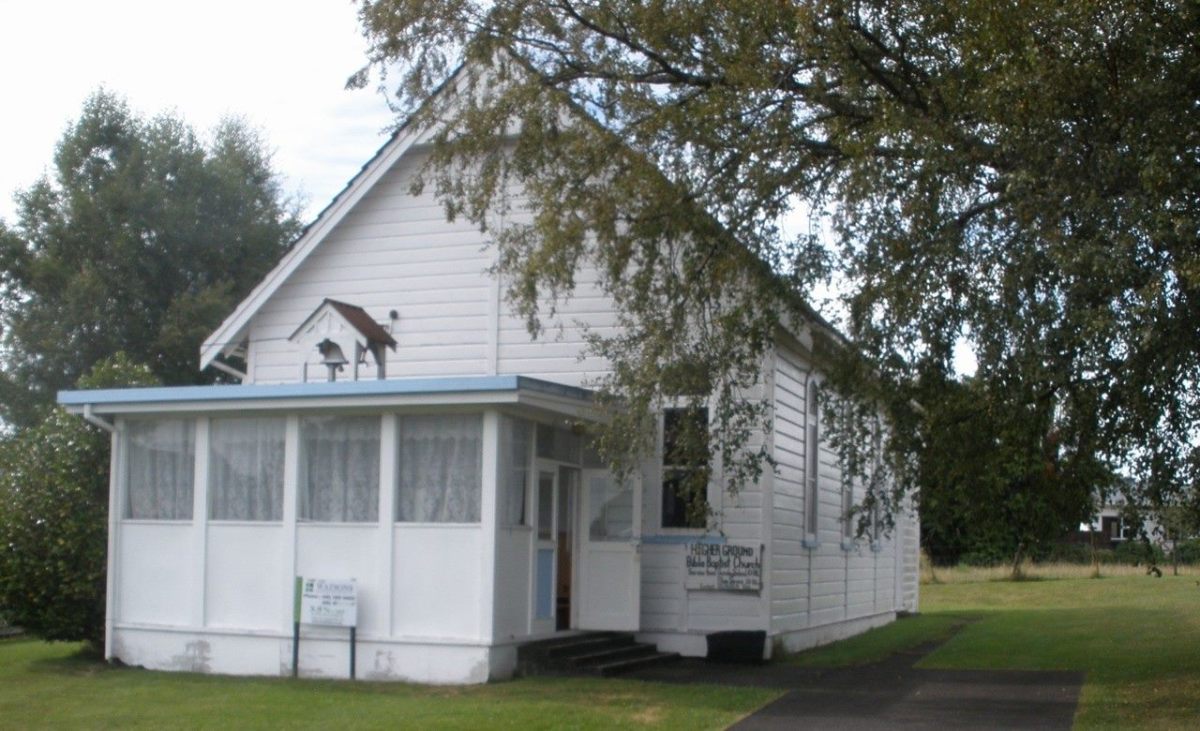
The title of this post comes from the book about developing 42Below vodka into a global brand.  The premise of the book is that you always run up against people who love to say “No” to the dreams of others.  This I found to be true when trying to obtain and maintain insurance on my building.  The photo is of  the kirk under renovation as I was trying to get insurance cover at the end of February 2020.

The general advice about insuring a new property is to use the same company that insured the risk for the previous owner.  I use a mainstream insurance broker for my business insurance, so I approached them to find me building insurance when I bought the property, and provided them with the name of the current insurer.

They were happy to provide commercial building cover, but I had to have a security and smoke alarm installed, monitored 24/7, and have a physical inspection of the property inside and out every week.  This was despite the fact that the building was not legally habitable, wasn’t connected to water or sewerage, and had a policeman living on one side of the church………

Eye-watering six-month fee paid, I had to extend the insurance a couple of times due to the delay in getting drawings done, construction finance, and a builder engaged.  Then came the fun and games when I was trying to get a certificate of insurance for the build contract.  This is the certificate you’re required to have by law for construction contracts that exceed $30k.

My ‘material damage’ policy covered construction works of up to $100k.  I was advised at my first extension that I’d need to provide the insurer with the details of my suppliers who would be carrying out the restricted building works.  When the time came to do so, a new broker tried to get me to take out a construct works policy which would be an additional fee to my existing policy.

After much to-ing and fro-ing, contacting her manager etc etc they agreed that I didn’t need a contract works policy, and there was no further information I needed to provide them.  There was a bit more faffing about to get the certificate of insurance, but eventually they provided it to me in early December 2019.

One of the things I discovered in this process was that the insurer had decided not to extend my insurance beyond 28 February 2020.  I now had a hard deadline to get the building habitable.

Novice that I am, I thought that I’d be able to get domestic building insurance once the building was legally habitable, which was due in mid-February.  I put the wheels in motion to get domestic insurance, only to discover that I needed to have a Code Compliance Certificate in my hot little hands before the insurer would take on the risk.

So back to my broker to see if the current insurer would extend the policy for a few more months.  No – but you can have a contract works policy instead.  Does that cover me for events unrelated to the construction works?  No.  But my mortgage holder requires me to have building insurance!  Sorry, the answer’s still no.

So back to the other insurer to see if they can do something for me.  After much faffing about the answer came back – sorry, no.  Cue online research to find insurance.  No sorry, we don’t insure buildings that old.  No sorry, we don’t cover that sort of risk.  I also looked into cover for natural disasters provided by EQCover Direct.  Unfortunately it would only give me $150k of cover, but it was better than nothing.

Then came the phone-bashing to follow up on the online form submission.  (Don’t get me started on the digital channels insurance companies use, or not.)

Then came the questions.  How old was the building?  Was it listed with the council or Heritage NZ?  Did it have any scrim or sarking?  Had it been fully re-wired since 1946?  Was it sitting on concrete piles?  Fortunately I had the answers to all these questions through the research I’d done into it’s history in 2018.

How about contract works insurance instead?  What work had I done so far?  What work was yet to be completed?  When would it be completed?  How much had I spent so far?  How much more did I have to spend?  What was going to be the total cost all up?  (How long is a piece of string?)  Not to mention the request for photos of the building interior and exterior in it’s current state!

Of the 12 insurers and brokers I approached, nine pretty much said ‘no’ straight away.  Two brokers stood out as being very helpful, so a big shout out to Greenstone Insurance brokers and South Pacific Insurance brokers.  EQC were awesome about getting natural disaster cover for me in the absence of cover from a private insurer.  After much arm-twisting, my current insurer agreed to provide material damage insurance for two months – with a 50% loading on the premium of course!

Next time:  Cleanliness is indeed next to godliness – redux
Just one look, that’s all it took!

Just one look and I knew
That you were my only one
Oh oh oh oh!
I thought I was dreamin’
But I was wrong, yeah, yeah, yeah
Oh, but-a, I’m gonna keep on schemin’
Till I can a-make you, make you my own!

These lyrics are from the song co-written and first released by Doris Troy in early 1963.  It was also recorded and released by The Hollies, Lulu, Linda Rondstadt, Mark Farner (who?), and Anne Murray among others.  I think I first heard it when it was performed in the film Mermaids (1990).

Warning:  long post follows

I remember when I first saw this photo of the kirk.  It was Easter 2018 and I was staying in Turangi for a family gathering.  In between events I took the opportunity to search for properties in Ohakune as I’d decided that was where I wanted to buy a property.

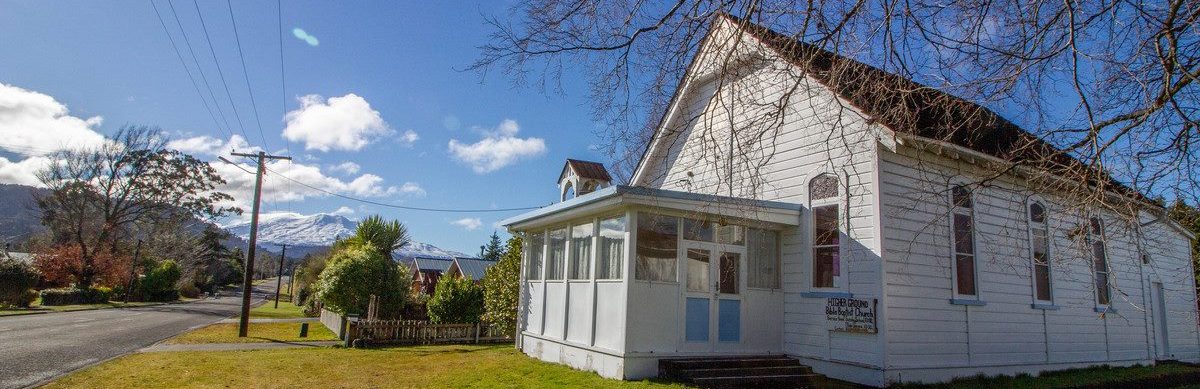
My first reaction when I saw the photo was “ooh that looks and interesting” followed by “that vestibule is ugly”.  It’s not that I objected to the vestibule per se, just that it was out of proportion to the rest of the building and unbalanced it.

I knew that building would have looked quite different when it was first built, and that it would have a lot of potential.  Thus was the beginning of five months of attempting to, and eventually buying the building.

The first attempt was when it was listed for sale on TradeMe, together with the church hall on the neighbouring section.  I made inquiries of the agent, registered my interest, and bought a valuation from QV for the property.  Unfortunately by the time I had the information I needed the church and hall had been sold to a developer.

The second attempt was me contacting the agent a few days later to see if the new owner would be interested in the selling the church in situ or for relocation.  The agent indicated that he was interested, so I arranged for a building inspection and Land Information Memorandum (LIM) Report.

I also arranged to go up and have a look through the church and a couple of other properties I was interested in.  The viewing of the church confirmed that it was the property I wanted to buy, and the viewing of the other properties confirmed that I didn’t want to buy any of them.

I needed to wait for the building inspection report before I could make a decision about what price I wanted to offer.  I knew the price the vendor had paid for both buildings, and what he wanted for the church.  Given that settlement hadn’t taken place as yet, I factored in a reasonable profit for a quick sale.

I decided to attend the decommissioning service at the end of April and present my offer to the agent at the same time.  The agent received the offer and advised he would pass it on to the vendor once his purchase of the church had settled.  He also undertook to contact the original vendor to let them know that there may be a re-sale of the church.

I signed the sale and purchase agreement with the amount I want to offer for the church.  The new owner counter-offered with the amount they originally wanted despite the LIM indicating there are problems that will need to be remedied.  I counter-offer, he counter-offers with no movement, and I counter-offer accepting his price.

The next thing I know, the agent indicates that there are other parties potentially interested in the church, and I’m now in a multi-offer / sealed bid situation for both properties.  I decide not to bid on both properties, and leave my existing offer on the table as part of the multi-offer process.  (Attempt #3)

But it’s not to be.  A couple of days later I receive an email advising me my offer was declined, with both church and hall sold to another person for a ‘ridiculous amount’.  A few days later and I’ve missed a call from the agent.  Thinking it might be good news, I phone him back immediately to see if the sale had fallen through.  But no – it’s just a pocket call!  He assures me that he’ll contact me if anything happens.

Over the next couple of months I looked at a number of other properties and sections in Ohakune but dismissed them as being too boggy.  Frankly, my heart just wasn’t in it.  So I was very surprised to see the church advertised on TradeMe at the beginning of August, this time with a different real estate agent, and going to auction at the end of the month.

I schedule a call with said agent to find out why the latest owners want to sell.  Imagine my surprise when I discover that the May sale had fallen through, and the seller had “lost all potential buyers”.  I advised the agent that I’d not been contacted when the sale fell through, and was still a willing purchaser.

I asked the agent what figure the owner wanted to take it off the market before the auction.  She indicates a starting point, so I send through an offer to purchase two days later and get the sale and purchase agreement drawn up.  (Attempt #4)  The next thing I know there are other parties interested, and it’s going to a multi-offer situation – again!

I decide to make a play for both properties to see if I can get the church off the market.  I figure I can always renovate the hall first, sell it and use the profit to renovate the church.  (Attempt #5)  The play doesn’t work, so we’re now in the multi-offer process.

So I up both of my offers to see if they are attractive enough to seal the deal.  (Attempt #6)  Unfortunately the finance condition makes them less attractive than other offers, and it’s a no-go.  However, the vendor decides to level the playing field and let the properties go to auction two weeks early.

My bank had offered me a mortgage in May based on the offer to purchase I had made.  That offer had lapsed, so I now needed to find out how much they were prepared to lend me under auction conditions.  Because the property wasn’t in the region where I lived, the decision was referred to my bank’s head office and that was taking a bit of time.

I had decided to drive up to Ohakune the day before the auction, and stay at a colleague’s holiday home.  I made a call to my bank that morning to find out the status of my application, only to discover that they had decided that they couldn’t offer me a loan on the property after all!

So it’s now ‘phone a friend’ time – fortunately my friend had worked as a mortgage broker and had some contacts.  She spent the rest of the morning furiously phoning around trying to secure finance ahead of the auction.

I worked close to where I lived, so I was able to get on the road pretty quickly and start the nearly four-hour drive to Ohakune.  I had been on the road for about 20 minutes when my friend called to say that she hadn’t been able to get finance, so she thought I shouldn’t go to the auction.

I wasn’t about to be deterred after five months, so I made the call that it was my job to buy the church, and her job to try and find finance.  I continued on my merry way, confident that we could achieve both objectives.

Another work colleague and my friend had coached me on how to bid at auction.  I knew that I needed to let the bidding go, and hold off making a bid unless I needed to stop it being sold to someone else.  So I sat there in the front row watching the bidding start off with a flurry, then slow down and stop.

The hammer nearly fell a couple of times – I’d put in a bid just before it was ‘gone’ and then it would be off again.  There were some bidders on the phone but one by one they dropped away.  I’d slowed the bidding down to $500 increases, and eventually the final bidder stopped bidding and it was mine!  (Attempt #7)

Deposit paid, I now had two weeks to get finance and settle on the property of my dreams.  Thanks to the sterling efforts of my friend, I eventually secured finance via a third-tier lender.  It was going to cost me an arm, a leg, and the money I was planning to use to renovate, but at least I now owned a church.  Let the journey begin!

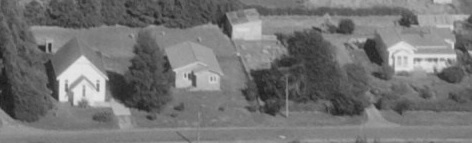
24 - 1975 22764395 Ohakune from Goldfinch St - Kirk Hall Manse
This is a close-up of a 1975 photo before the vestibule was added. Note the ‘out-house’ at the back, the church hall in the middle, and the manse (minister’s residence) to the right.

Next time:  And then there was light

What lies beneath……

The title of this blog is a take on the 2000 supernatural horror movie directed by Robert Zemeckis starring Harrison Ford and Michelle Pfeiffer.  It’s not a film genre I watch, but it accurately reflects the horrors than can lie beneath a 100 year old building.

Because I wasn’t lifting the building until phase two, I’d tasked my builder with lifting the assortment of floorboards in the vestry so that the plumber could install the pipework and he could install the sub-floor insulation.  The intention was to re-lay the floorboards, patch the hole in the nave floor, use the good boards in areas that would be on show, and hide the all-sorts under cabinets and furniture.

Unfortunately the 100+ year old boards turned out to be quite brittle, and there were a few casualties.  What also became apparent was that there were more than just a couple of floorboards missing from the nave floor – it had been completely restructured.

30 - Restructured nave floor2As this close-up shows, there were new bearers and floor joists inserted under the nave platform, with the piles under the platform higher than the piles under the rest of the nave and vestry.  They’d cut away some of the end wall to insert the bearers, packing them up with bits of floorboard and other random bits of wood.

So between the brittle, fractured floorboards and the big hole in the nave floor, I made the decision to replace the floorboards in the vestry.  I’d use the salvaged floorboards to patch the hole in the nave floor when I re-piled the church.

The next challenge was to find a floor that I’d be able to tolerate from a smell and aesthetic perspective.  The only suitable wood alternative was bamboo, which you can’t use in wet areas such as bathrooms and laundries……………..

A quick search on TradeMe identified Kersten Building Recyclers & Joinery who were able to run recycled matai floorboards to the specified width and thickness.  Order placed, they assured me they’d be able to get them delivered quickly so that they could be laid as soon as the pipe-out was completed.  Another unplanned bit of expenditure that’s going to hit my finances!

Other random finds included the 1974 concrete piles next to the original totara piles.  The bearers had been attached to the totara piles, but not the concrete ones.  We also found the original foundations for the fireplace hearth which the builder would dig out.  Strangest of all was a rusty cutter mattock next to a random weatherboard.

Next time:  Cookin’ up a storm

To Wi-Fi or not to Wi-Fi, that is the question

To be, or not to be: that is the question:
Whether ’tis nobler in the mind to suffer
The slings and arrows of outrageous fortune,
Or to take arms against a sea of troubles,
And by opposing end them? To die: to sleep;
No more; and by a sleep to say we end
The heart-ache and the thousand natural shocks
That flesh is heir to, ’tis a consummation
Devoutly to be wish’d. To die, to sleep;
To sleep: perchance to dream: ay, there’s the rub;
For in that sleep of death what dreams may come
When we have shuffled off this mortal coil,
Must give us pause: there’s the respect
That makes calamity of so long life;
For who would bear the whips and scorns of time,
The oppressor’s wrong, the proud man’s contumely,
The pangs of despised love, the law’s delay,
The insolence of office and the spurns
That patient merit of the unworthy takes,
When he himself might his quietus make
With a bare bodkin? who would fardels bear,
To grunt and sweat under a weary life,
But that the dread of something after death,
The undiscover’d country from whose bourn
No traveller returns, puzzles the will
And makes us rather bear those ills we have
Than fly to others that we know not of?
Thus conscience does make cowards of us all;
And thus the native hue of resolution
Is sicklied o’er with the pale cast of thought,
And enterprises of great pith and moment
With this regard their currents turn awry,
And lose the name of action.–Soft you now!
The fair Ophelia! Nymph, in thy orisons
Be all my sins remember’d.

It seems that even Shakespeare knew about the trials and tribulations of the inter-webs, well before Tim Berners-Lee invented the World Wide Web.  It can be a veritable cess-pit of humanity at times, so I thought about long and hard about getting a connection for the kirk.  Did I really want to have that sort of intrusion / distraction available at what is a place of refuge for me?

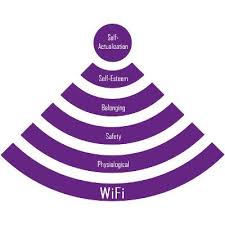
Maslow’s hierarchy of needs has been modified over time for different purposes.  The slightly tongue-in-cheek additions of ‘Wi-Fi’ and ‘Battery’ for me speak to the importance of knowledge and power.  ‘Scientia potestas est’ (knowledge is power) is the motto of my secondary school, and over the years I’ve tried to develop my knowledge to increase my agency.

Working from home is one of the things I value in my professional life, so I needed to decide if being able to work from Ohakune was going to be important to me.  Since my commute was extended from 10-20 minutes to 90 each way, I’ve really valued the ability to work from home on the occasional Friday.  It has also helped to avoid the weekend exodus traffic by being able to get on the road by 4pm.

What has finally swung it for me is the sheer convenience of being able to control heating systems remotely, as well as view live streams from the security cameras on the property if need be.  I’ll also be able to stream entertainment if I want a quiet night in.

Next time:  What lies beneath

The countdown begins

This is what a site office looks like when it’s waiting for the works to begin.  It’s been a long time coming, but work is about to get underway!

It’s been a few months since I wrote about the trials and tribulations of finding a builder.  Getting building consent approved for a change of use was starting to seem like a walk in the park!  I’d been using word-of-mouth referrals to find good local tradies, but hadn’t been able to find someone willing and available to take on the job.

Fortunately my well-networked neighbour came to the rescue with the name of a friend who had recently started their own building business after moving back from Auckland.  We arranged to meet on-site in early July, and he was keen to take on the job.  Unfortunately he wasn’t available to start until early September, but I figured that would give me enough time to get rid of the mountain of boxes I hadn’t sorted through before my move.

Unfortunately the start was delayed until December, which gave me heaps of time to sort out the things you need to have in place for a major works contract:

  1. Construction contract – recommended for all building works, and mandatory for anything over $30,000 including GST.  Fortunately the government’s building website has a link to a free contract you can download and use.
  2. Insurance – if you have domestic building insurance then you may need to get additional cover for the construction works.  My kirk is classified as a commercial building, so my insurance policy covered $100,000 worth of construction work.

However, trying to get an insurance certificate via my insurance broker was a drama that took nearly three weeks to resolve.  You have to provide your contractors with a copy of your insurance certificate as part of your contract with them.

In the process of getting my insurance certificate, I discovered that the insurer wasn’t going to extend my cover beyond 28 February 2020.  They had seen it as a short-term arrangement, and despite taking over $6,000 from me in 18 months, they didn’t want the continued risk of an un-occupied commercial business.

The pressure was now on to get the conversion completed to a stage that would enable me to get domestic building insurance cover in place by the end of February.  I would need to make sure that my builder had everything on site when he needed it in time to meet this deadline.

I already had the cabinets onsite as well as the tap-ware.  He’d order the timber he needed so it was just the shower and toilet I’d need to sort.  My original choices were no longer available, so I did the expedient thing and chose standard items from the local builder’s merchant catalogue.

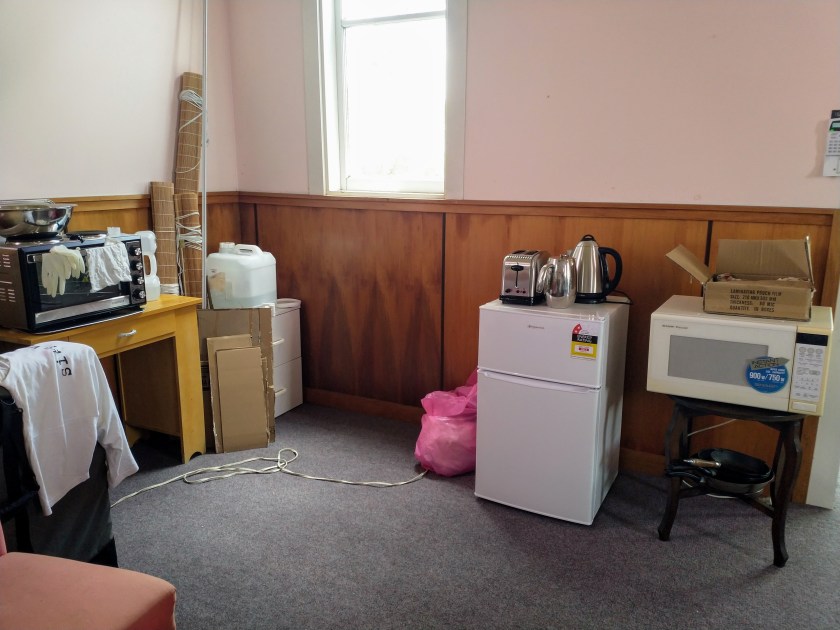
I already had a bench-top oven, electric jug, and coffee plunger on site, but decided to add a fridge and toaster to the site ‘kitchen’.  I’ve also dug out my old microwave just in case.  Note the old-fashioned bowl on the bench-top oven for washing up – but not at the same time.  Now all we need is to get water connected to the building!

22 - Site kitchen

Next time:  Driving with the whole body

Good fences make good neighbours – Robert Frost

This line is from the poem ‘Mending Wall’ by the Pulitzer Prize-winning American poet. It’s about two neighbours mending a dry-stone wall on their boundary to stop their livestock from wandering.

I never ‘got’ poetry at school – the modern stuff was too obscure for my taste. Likewise, I never got people’s need to build whacking big fences around them as a barrier. I like the fact that people use my section as part of a short-cut to the nearby Catholic church and a school.

So I was a bit concerned when my neighbours started talking about building a fence. Fortunately they were thinking of a ‘soft’ fence of plants along their boundaries. I thought that my future church-raising plans might trample all over their plants. I’ve shared my plans with them and it seems that it’s the back boundary they were keen to mark out.

And we’ll they might be! I was aware that the back section was owned by a widow living in Auckland. She had sold her adjacent chalet to a local neighbour who used the empty section as an occasional garden. Locals also used the empty section to graze their horses as there was an ‘internal’ fence across the back part of my section and the neighbour’s to the driveway. The person who had bought the chalet was keen to buy the section as well.

Needless to say I was a bit perturbed when I visited my church at the end of June to discover a couple of wooden pallets up-ended and hammered in next to the boundary pegs. There was a building site excavated and piles of earth and building materials on the section.

I made some inquiries and discovered that the section had been sold to the chalet-owner, and that they were planning to build a structure of some kind and fence off the section. I managed to track down someone who was able to pass on a message to the new owner who contacted me a few days later.

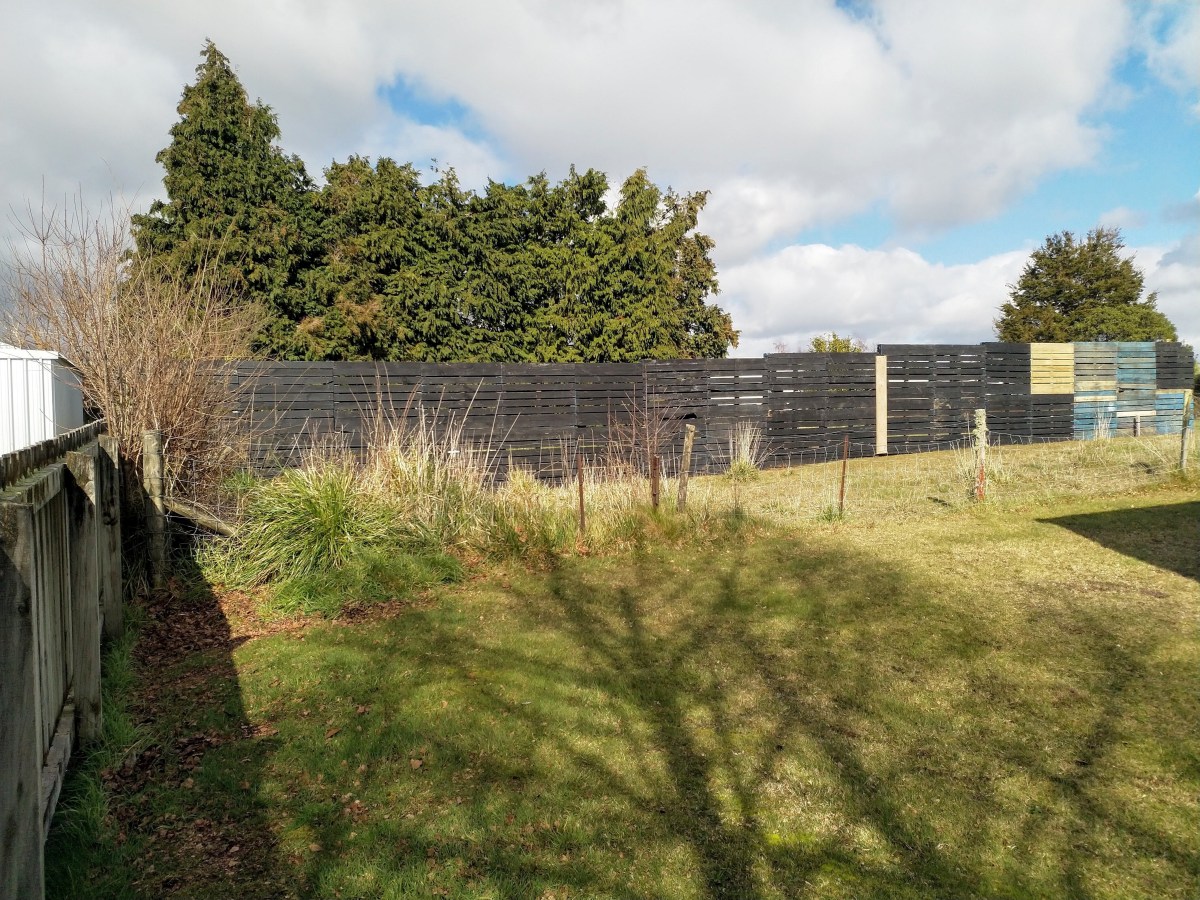
The conclusion of our conversation was that they were determined to build a 2m high fence out of wooden pallets on their side of our boundary, but not the boundary with my other neighbour. Needless to say I was less than impressed that the first thing I’d see when I opened my bedroom curtain was a black fence made out of old pallets. I already have an ordinary fence on one boundary, which was one too many.

They rejected outright my offer to pay for more appropriate fencing materials if they were prepared to construct it. Fortunately the Fencing Act gives me a vehicle to protect my property rights by enabling me to build a fence on the boundary. It’ll be tall enough to screen out their structure, but still give me a sense of space. It’ll also be a pretty white picket fence with pales shaped to reflect the pitch of the nave roof.

Unfortunately they rejected my proposal in the legal notice I gave them, and proposed that I pay for the materials and construction of a fence on the boundary line, or agree to them building the fence they’ve proposed. Then came the delaying tactics. They would consider my proposal if I got a proper quote and provided it to them by a certain date.

Quote duly obtained and provided, it took about three days for them to decline my proposal. No surprises there. I advised them that I would make application to the Disputes Tribunal to adjudicate on the matter, and submitted my application the following day.

Imagine my surprise when I returned to Ohakune the following weekend to find a ‘fence’ erected close to my boundary line. So close, that it’s not possible for me to build a fence on the boundary line without them moving their pallets. The picture at the top of this post is what I discovered on my return.

I made contact with the owner to discuss access to their section to allow for construction of a fence on the boundary line, and moving the pallets to allow for construction to take place. She refused to meet with me and stated that moving the pallets to allow for construction was “not happening”. So it’s off to the Disputes Tribunal we go to get a ruling on access, construction costs, and materials.

Meanwhile, I’ll get the remains of the internal fence and the tree stumps removed so that section of the lawn can be mowed and made tidy. Building a fence was going to be one of the last things I was planning to do, but now it looks like it’ll be one of the first! At least my cousin will have something to hitch her horse to if she rides over from the Rangitikei.

White picket fence

Next time: The countdown begins

The end of an era

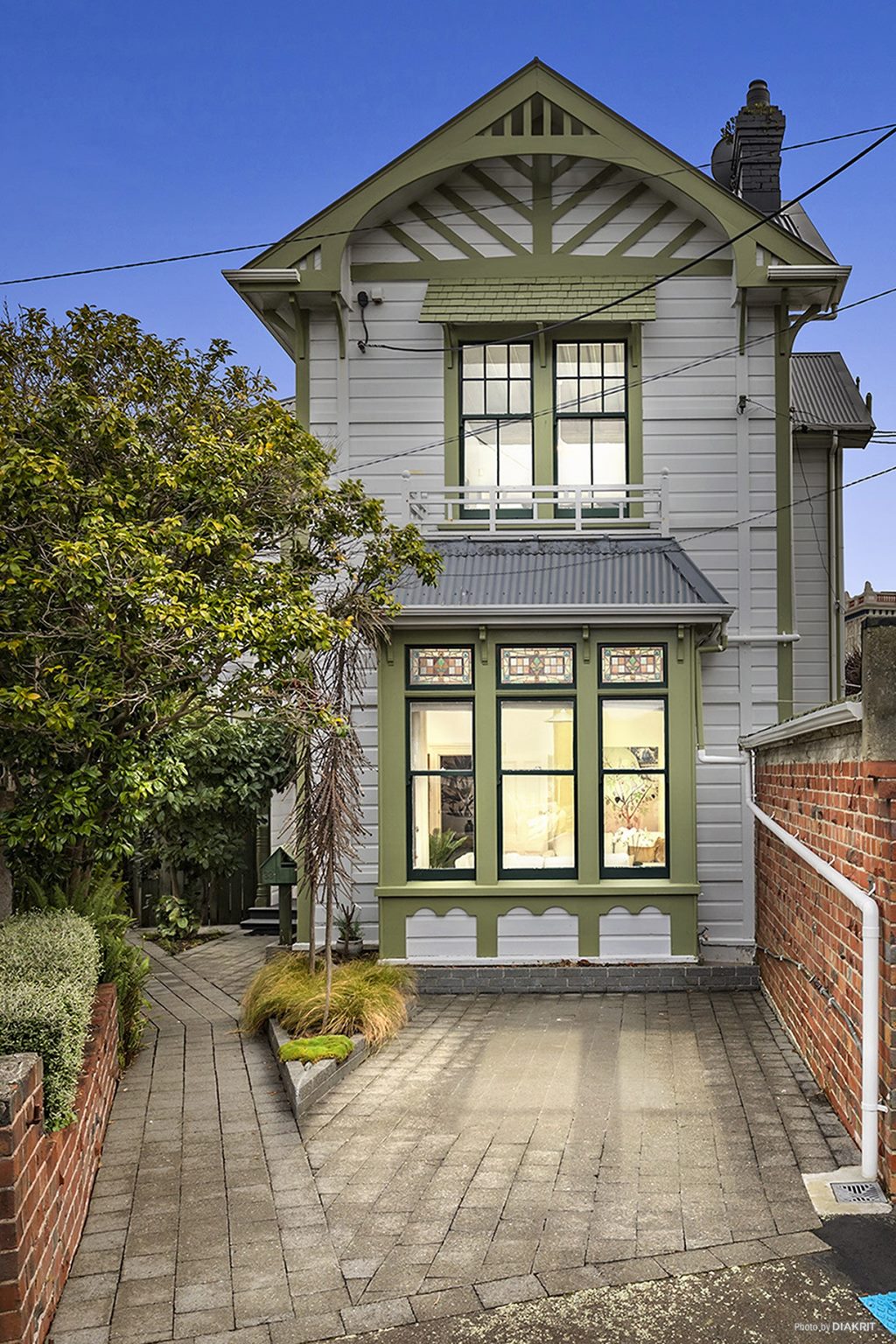
This is my former home of the last sixteen years.  You too could live here if you have a lazy $900k+…..

We’ve already established that I have a thing about old things.  Buildings, cars, clothes, and furniture are all things that I prefer to buy / occupy in a pre-loved state.  My last residence was the same – it’s polished floorboards and hand-drawn glass window panes were some of the things I loved about it.  The wind whistling up through the gaps in the floorboards in winter?  Not so much.

The property has an interesting history.  It was originally built around 1895 according to the Quotable Value website.  The historic Thomas Ward maps shows three sections making up what is now Hobson Crescent, with only one of those sections having a building on it by 1892.  That building appears to have been demolished to make way for the new road.

A fire broke out in a closet under the stairs in the afternoon of 27 May 1901.  Mr James Marchbanks owned the eight-roomed house which was severely damaged by smoke and water.  He was the Managing Engineer of the Manawatu Railway Company.  The only occupant at the time was a “servant girl”.

Mr Marchbanks must have recently purchased the property as his address for the 1900 election was given as 91A Tinakori Road.  For the 1904-05 election his address is given as 2 Hobson Crescent.  This difference in address from what it is known as now may be because the properties would have been re-numbered as the sections were sub-divided.

Mr Marchbanks made application for a building permit in 1901 to reinstate the fire-damaged dwelling.  It’s not clear if he was still the owner of the property in 1911 when a ‘J W Marchbank’ applied for a permit to make additions to the dwelling.  The 1911 census have him and his wife May Constance Marchbanks still living there.

Electoral rolls show James and his wife still living there in 1928.  In 1935 the couple and their son Donald were living in Heretaunga.  By 1936 it was owned by ‘J C Marchbanks’ when it was converted into three flats.  The ground floor was the largest, with two smaller flats upstairs.

The Marchbanks had two sons (Donald and James) and four daughters (Mary, Olive, Katherine and Barbara) by 1908, so ‘J C Marchbanks’ may have been their youngest son James Charles Ross who was born in 1903.  He’s listed as living there in 1935 and 1938 with his wife.  They had moved to Lower Hutt by 1946.

A widow Edith Millie Boyes was the owner in 1946 (until 1965 approx.) when the garage was added.  My former neighbours who now own the garage had to buy a car that would fit it’s narrow 1940’s proportions!  It was owned by a schoolteacher Mrs Brenda Margaret Narbey between 1969-72.  In April 1990 application was made to convert the three flats into two dwellings.  The building was sold to the current owner for $285,000 in October 1990.

Last October I learned that the owner wanted to sell said home to diversify his property portfolio.  Too many properties in one earthquake-prone (i.e. Wellington) basket you might say.  Liking the property, it’s location, and not wanting to move, I decided that I would try and buy the property.  Ever the eternal optimist me.

Long story short.  I put in an offer, it was accepted, and I withdrew it because I couldn’t get finance.  The owner was going to put the sale on hold for 12 months, but I decided that I couldn’t realistically afford to buy it and renovate the church at the same time.  Reluctantly I decided to move out and put the rent towards financing the renovations.

So here we are.  The property is for sale but probably not for long.  Ironically, another Thorndon property I lived in is also on the market.  It’s been flashed up quite a bit since I lived there 20 years ago!  Now I’m staying in a 1986 spec house with my brother that is 2/3 the size of my previous residence.  He’s been very accommodating of me, my stuff, and my two cats.  Necessity is the mother of invention.

Next time:  The search for a builder begins


Damn it, granite!

Buying stuff via online auction sites is a bit like online dating: you sees it, you wants it, but sometimes it’s just not that practical or plays hard to get………………..

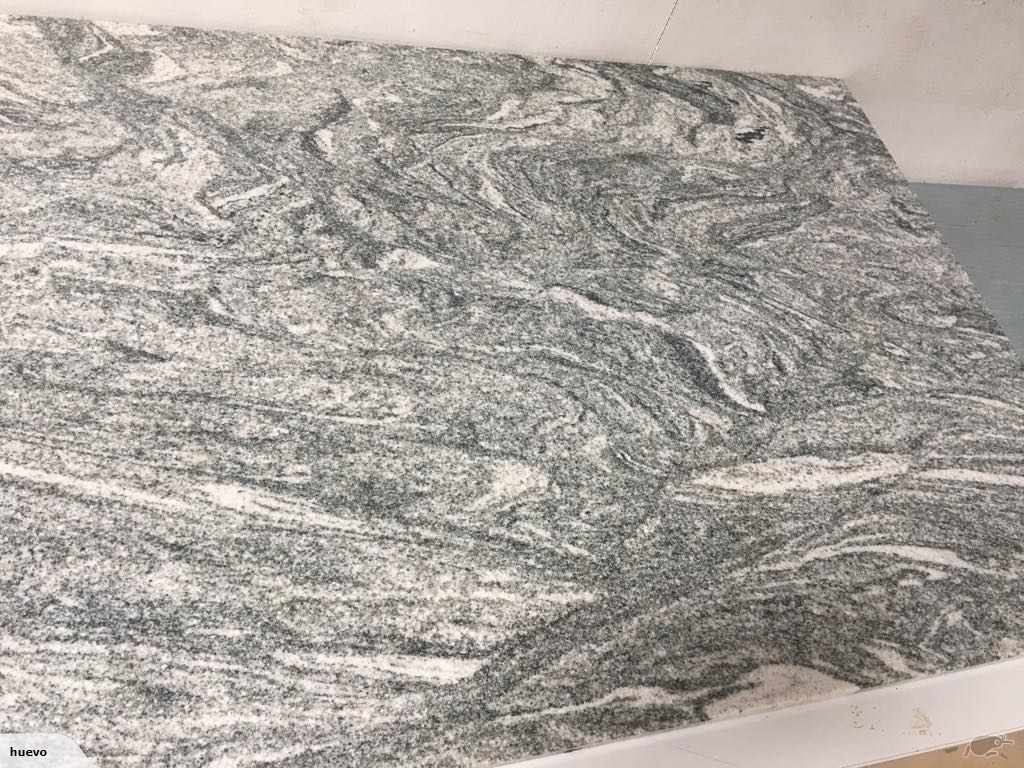
This was the case with this lovely piece of granite I found. Buying it was not the problem. Finding someone who would cut it for me was. First I tried advertising on BuildersCrack – no response. Then the lovely people at BuidersCrack sent me a list of people to contact. One I contacted didn’t do that sort of work and the other two didn’t return my calls. A bit like online dating really.

Maybe it wasn’t to be. I decided to try something else. Something that was available. Something that was willing and able to be cut up and shaped how I wanted it to be. So off to a granite bench-top place I went to find something that would work. But instead of finding a tall, dark and handsome piece of granite, all I could find was some wishy washy piece of blergh. And then I got the quote to cut, shape and install the piece of blergh. It would be twice as much as the vanity, tap, and basin combined. Blergh!

I decided to try a different tack. Approach another bench-top supplier to see if they could supply me with my shower tray and cut my granite as a side job. First they wanted to know if it was Chinese. A bit racist I thought. I reassured them that it was an European import, but of an undetermined vintage. They would love to help, but a bit busy after Christmas, here’s someone else you could try, come back to us if you’re unsuccessful. I’ve heard those lines before!

Fortunately the person they referred me to was able to help. My dream of a sexy piece of granite in my shower-room will be realised!

Next time: Call me (call me) on the line.  Call me, call me any, anytime……………

All you wanted to know about getting a change of use approved but were too afraid to ask………………

This photo of the eastern aspect shows the window that’s will be replaced by french doors onto a small deck.  Note the concrete roof tile slacking around on the ground rather than hanging out on the roof where it belongs.

I started investigating what I’d need to do to get a change of use approved in April 2018.  The ever-helpful Ruapehu District Council told me about things like having all windows double-glazed, and fully-insulating the exterior walls.  They also told me about having to connect to the water and sewerage system despite my preference to collect water and recycle my own sewerage.

The Building Act specifies what work you don’t need a consent for.  That’s mostly stuff that goes on within the building envelope.  Anything in the building envelope requires a consent, unless it’s an existing element.

Ok, I can live with that.  Until I realised that pretty much everything I wanted to do within the building envelope was dependent on doing stuff to the building envelope first.  Sigh.

Then there’s a whole lot of stuff that you don’t need a consent for, but councils will still want to know about.  Stuff like heating.  You don’t need a building consent to install a heat-pump, but councils still want to know that you’ll have heating.  Ditto ventilation like bathroom and kitchen extraction fans.  You need to get those drawn in as well.

They want to know where you’re going to install your gas cylinders for your hot water system, what they’ll be mounted on, and how you’re going to stop them from being nicked.  And yes they do get nicked!

They also want to know what products you’re going to use for specific applications such as shower wall water-proofing, insulation, and new door and window fittings.  You have to obtain producer statements from your proposed suppliers and submit them to your council.  They then get officially stamped and you have to have them on site at all times together with your approved plans.  You also have go back to council to get new ones approved if you change your mind or the supplier goes out of business.  Double-sigh.

Since I’m putting french doors where the east-facing window is, that needs to have safety glass and a deck installed below it.  The main entry needs to comply with the slip-resistance performance of NZBC d1.3.3 (d) – whatever the hell that is!  And I have to get the road access re-done to meet another standard.

Councils have 20 days to approve building consent applications.  They stop the clock as soon as they have any queries.  They also stop the clock for their end-of-year three-week close-down.  I lodged my application on 30 November 2018.  The council requested additional information on 18 December and it was supplied on 20 December.  On 9 January I got the call to say it was approved.  I think we can call that some kind of record!

Next time:  Damn it, granite!

Everything takes twice as long and costs twice as much

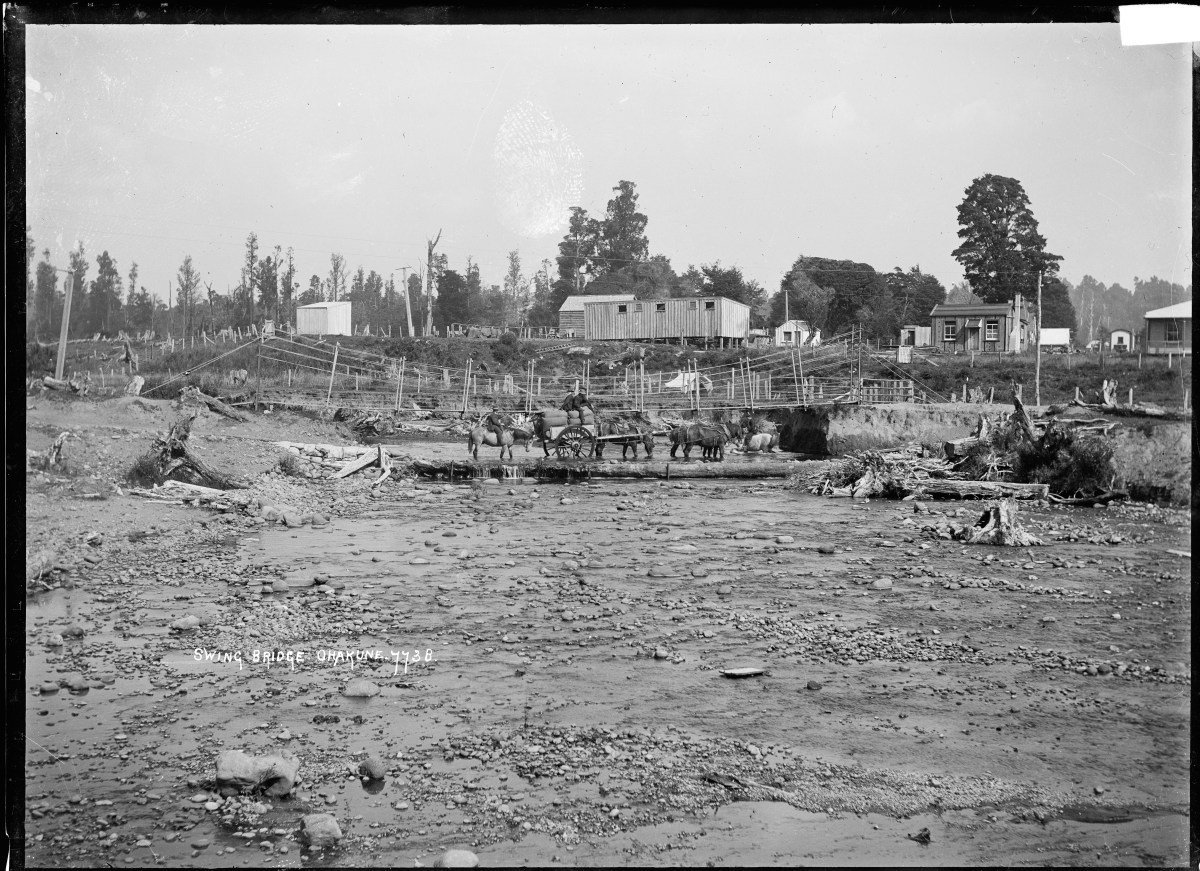
This photo of the swing bridge over the river was taken around 1910.  Like the wagoner crossing via the ford I usually have to take the long way around.

Okay, so the heading might be a slight exaggeration, but it seems that way at times.  Take my purchase of the church.  I paid nearly 35% more for it in August than when I tried to buy it in May.

The kitchen cabinets are costing me 33% more because I need to get the more expensive oak cabinets sanded and spray-painted.  The spray-painting is costing me 50% more than estimated as the spray-painter has to do a special clean of his equipment before and after he uses the paint products I’ve specified.  The cabinets are imported and despite ordering them in September I won’t get them until late January.

The roof window in the kitchenette is going to cost me more because the company I wanted to use no longer makes them, and I now may need to get it fabricated to order.  The french doors will also be a special order so that they fit the width of the existing window.  I will need to order both of them soon so that I can get them fabricated in the new year, but I need to wait for building consent approval before I can do that.

Installing insulation will be more expensive as I have to remove the floorboards to install it underneath.  At least that will make it easier for the plumber to install the plumbing to the kitchenette!  It will be more expensive to install insulation in the walls as I will need to pump it in for most areas.  I need to add new rafters to create enough depth in the roof cavity to install insulation.  And so it goes on.

I got a great piece of advice when I started out contracting and consulting – “work out how long you think it ought to take, then double it”.  That’s proven to be the case for the design and drawings, and I’m following that mantra for the consent and building phases.

Let the fun begin!

Next time:  December disappears into a haze of waiting