Just one look, that’s all it took!

Just one look and I knew
That you were my only one
Oh oh oh oh!
I thought I was dreamin’
But I was wrong, yeah, yeah, yeah
Oh, but-a, I’m gonna keep on schemin’
Till I can a-make you, make you my own!

These lyrics are from the song co-written and first released by Doris Troy in early 1963.  It was also recorded and released by The Hollies, Lulu, Linda Rondstadt, Mark Farner (who?), and Anne Murray among others.  I think I first heard it when it was performed in the film Mermaids (1990).

Warning:  long post follows

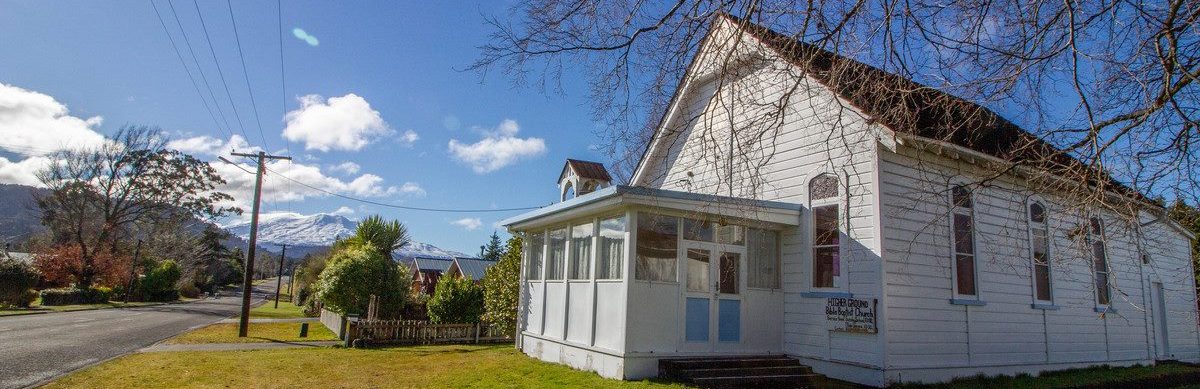
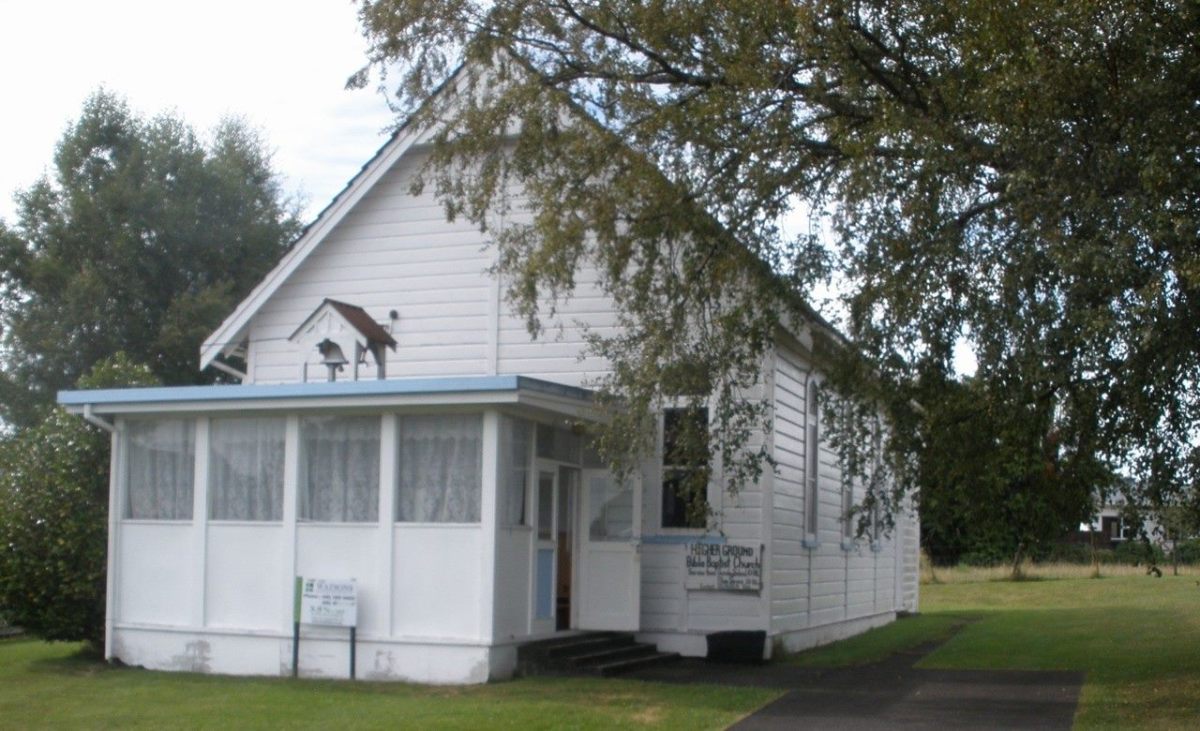
I remember when I first saw this photo of the kirk.  It was Easter 2018 and I was staying in Turangi for a family gathering.  In between events I took the opportunity to search for properties in Ohakune as I’d decided that was where I wanted to buy a property.

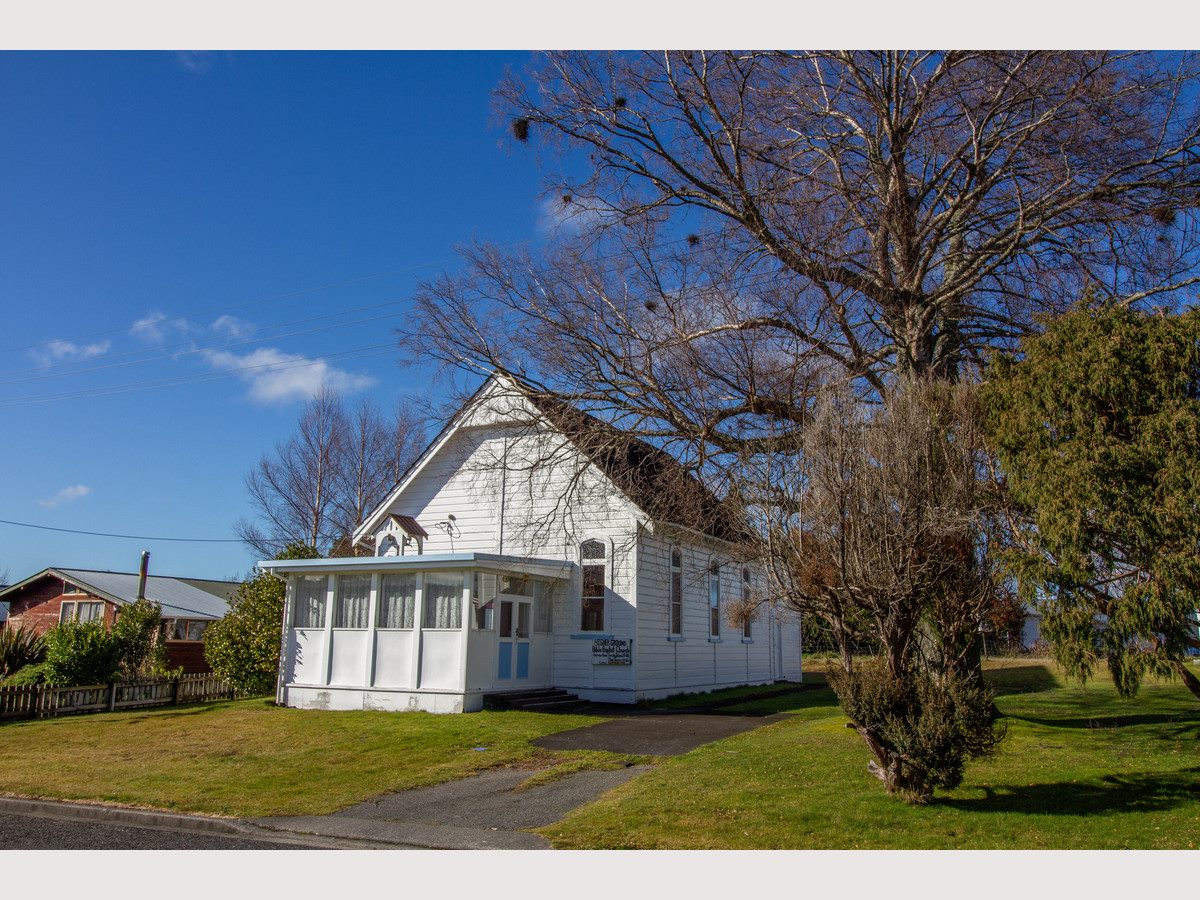
My first reaction when I saw the photo was “ooh that looks and interesting” followed by “that vestibule is ugly”.  It’s not that I objected to the vestibule per se, just that it was out of proportion to the rest of the building and unbalanced it.

I knew that building would have looked quite different when it was first built, and that it would have a lot of potential.  Thus was the beginning of five months of attempting to, and eventually buying the building.

The first attempt was when it was listed for sale on TradeMe, together with the church hall on the neighbouring section.  I made inquiries of the agent, registered my interest, and bought a valuation from QV for the property.  Unfortunately by the time I had the information I needed the church and hall had been sold to a developer.

The second attempt was me contacting the agent a few days later to see if the new owner would be interested in the selling the church in situ or for relocation.  The agent indicated that he was interested, so I arranged for a building inspection and Land Information Memorandum (LIM) Report.

I also arranged to go up and have a look through the church and a couple of other properties I was interested in.  The viewing of the church confirmed that it was the property I wanted to buy, and the viewing of the other properties confirmed that I didn’t want to buy any of them.

I needed to wait for the building inspection report before I could make a decision about what price I wanted to offer.  I knew the price the vendor had paid for both buildings, and what he wanted for the church.  Given that settlement hadn’t taken place as yet, I factored in a reasonable profit for a quick sale.

I decided to attend the decommissioning service at the end of April and present my offer to the agent at the same time.  The agent received the offer and advised he would pass it on to the vendor once his purchase of the church had settled.  He also undertook to contact the original vendor to let them know that there may be a re-sale of the church.

I signed the sale and purchase agreement with the amount I want to offer for the church.  The new owner counter-offered with the amount they originally wanted despite the LIM indicating there are problems that will need to be remedied.  I counter-offer, he counter-offers with no movement, and I counter-offer accepting his price.

The next thing I know, the agent indicates that there are other parties potentially interested in the church, and I’m now in a multi-offer / sealed bid situation for both properties.  I decide not to bid on both properties, and leave my existing offer on the table as part of the multi-offer process.  (Attempt #3)

But it’s not to be.  A couple of days later I receive an email advising me my offer was declined, with both church and hall sold to another person for a ‘ridiculous amount’.  A few days later and I’ve missed a call from the agent.  Thinking it might be good news, I phone him back immediately to see if the sale had fallen through.  But no – it’s just a pocket call!  He assures me that he’ll contact me if anything happens.

Over the next couple of months I looked at a number of other properties and sections in Ohakune but dismissed them as being too boggy.  Frankly, my heart just wasn’t in it.  So I was very surprised to see the church advertised on TradeMe at the beginning of August, this time with a different real estate agent, and going to auction at the end of the month.

I schedule a call with said agent to find out why the latest owners want to sell.  Imagine my surprise when I discover that the May sale had fallen through, and the seller had “lost all potential buyers”.  I advised the agent that I’d not been contacted when the sale fell through, and was still a willing purchaser.

I asked the agent what figure the owner wanted to take it off the market before the auction.  She indicates a starting point, so I send through an offer to purchase two days later and get the sale and purchase agreement drawn up.  (Attempt #4)  The next thing I know there are other parties interested, and it’s going to a multi-offer situation – again!

I decide to make a play for both properties to see if I can get the church off the market.  I figure I can always renovate the hall first, sell it and use the profit to renovate the church.  (Attempt #5)  The play doesn’t work, so we’re now in the multi-offer process.

So I up both of my offers to see if they are attractive enough to seal the deal.  (Attempt #6)  Unfortunately the finance condition makes them less attractive than other offers, and it’s a no-go.  However, the vendor decides to level the playing field and let the properties go to auction two weeks early.

My bank had offered me a mortgage in May based on the offer to purchase I had made.  That offer had lapsed, so I now needed to find out how much they were prepared to lend me under auction conditions.  Because the property wasn’t in the region where I lived, the decision was referred to my bank’s head office and that was taking a bit of time.

I had decided to drive up to Ohakune the day before the auction, and stay at a colleague’s holiday home.  I made a call to my bank that morning to find out the status of my application, only to discover that they had decided that they couldn’t offer me a loan on the property after all!

So it’s now ‘phone a friend’ time – fortunately my friend had worked as a mortgage broker and had some contacts.  She spent the rest of the morning furiously phoning around trying to secure finance ahead of the auction.

I worked close to where I lived, so I was able to get on the road pretty quickly and start the nearly four-hour drive to Ohakune.  I had been on the road for about 20 minutes when my friend called to say that she hadn’t been able to get finance, so she thought I shouldn’t go to the auction.

I wasn’t about to be deterred after five months, so I made the call that it was my job to buy the church, and her job to try and find finance.  I continued on my merry way, confident that we could achieve both objectives.

Another work colleague and my friend had coached me on how to bid at auction.  I knew that I needed to let the bidding go, and hold off making a bid unless I needed to stop it being sold to someone else.  So I sat there in the front row watching the bidding start off with a flurry, then slow down and stop.

The hammer nearly fell a couple of times – I’d put in a bid just before it was ‘gone’ and then it would be off again.  There were some bidders on the phone but one by one they dropped away.  I’d slowed the bidding down to $500 increases, and eventually the final bidder stopped bidding and it was mine!  (Attempt #7)

Deposit paid, I now had two weeks to get finance and settle on the property of my dreams.  Thanks to the sterling efforts of my friend, I eventually secured finance via a third-tier lender.  It was going to cost me an arm, a leg, and the money I was planning to use to renovate, but at least I now owned a church.  Let the journey begin!
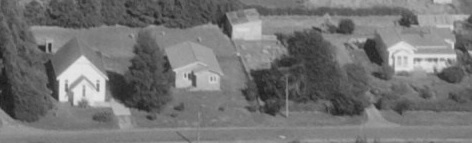
24 - 1975 22764395 Ohakune from Goldfinch St - Kirk Hall Manse
This is a close-up of a 1975 photo before the vestibule was added. Note the ‘out-house’ at the back, the church hall in the middle, and the manse (minister’s residence) to the right.

Next time:  And then there was light

To Wi-Fi or not to Wi-Fi, that is the question

To be, or not to be: that is the question:
Whether ’tis nobler in the mind to suffer
The slings and arrows of outrageous fortune,
Or to take arms against a sea of troubles,
And by opposing end them? To die: to sleep;
No more; and by a sleep to say we end
The heart-ache and the thousand natural shocks
That flesh is heir to, ’tis a consummation
Devoutly to be wish’d. To die, to sleep;
To sleep: perchance to dream: ay, there’s the rub;
For in that sleep of death what dreams may come
When we have shuffled off this mortal coil,
Must give us pause: there’s the respect
That makes calamity of so long life;
For who would bear the whips and scorns of time,
The oppressor’s wrong, the proud man’s contumely,
The pangs of despised love, the law’s delay,
The insolence of office and the spurns
That patient merit of the unworthy takes,
When he himself might his quietus make
With a bare bodkin? who would fardels bear,
To grunt and sweat under a weary life,
But that the dread of something after death,
The undiscover’d country from whose bourn
No traveller returns, puzzles the will
And makes us rather bear those ills we have
Than fly to others that we know not of?
Thus conscience does make cowards of us all;
And thus the native hue of resolution
Is sicklied o’er with the pale cast of thought,
And enterprises of great pith and moment
With this regard their currents turn awry,
And lose the name of action.–Soft you now!
The fair Ophelia! Nymph, in thy orisons
Be all my sins remember’d.

It seems that even Shakespeare knew about the trials and tribulations of the inter-webs, well before Tim Berners-Lee invented the World Wide Web.  It can be a veritable cess-pit of humanity at times, so I thought about long and hard about getting a connection for the kirk.  Did I really want to have that sort of intrusion / distraction available at what is a place of refuge for me?

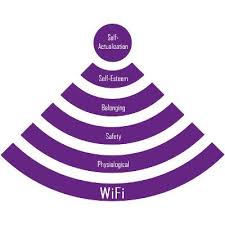
Maslow’s hierarchy of needs has been modified over time for different purposes.  The slightly tongue-in-cheek additions of ‘Wi-Fi’ and ‘Battery’ for me speak to the importance of knowledge and power.  ‘Scientia potestas est’ (knowledge is power) is the motto of my secondary school, and over the years I’ve tried to develop my knowledge to increase my agency.

Working from home is one of the things I value in my professional life, so I needed to decide if being able to work from Ohakune was going to be important to me.  Since my commute was extended from 10-20 minutes to 90 each way, I’ve really valued the ability to work from home on the occasional Friday.  It has also helped to avoid the weekend exodus traffic by being able to get on the road by 4pm.

What has finally swung it for me is the sheer convenience of being able to control heating systems remotely, as well as view live streams from the security cameras on the property if need be.  I’ll also be able to stream entertainment if I want a quiet night in.

Next time:  What lies beneath

Good fences make good neighbours – Robert Frost

This line is from the poem ‘Mending Wall’ by the Pulitzer Prize-winning American poet. It’s about two neighbours mending a dry-stone wall on their boundary to stop their livestock from wandering.

I never ‘got’ poetry at school – the modern stuff was too obscure for my taste. Likewise, I never got people’s need to build whacking big fences around them as a barrier. I like the fact that people use my section as part of a short-cut to the nearby Catholic church and a school.

So I was a bit concerned when my neighbours started talking about building a fence. Fortunately they were thinking of a ‘soft’ fence of plants along their boundaries. I thought that my future church-raising plans might trample all over their plants. I’ve shared my plans with them and it seems that it’s the back boundary they were keen to mark out.

And we’ll they might be! I was aware that the back section was owned by a widow living in Auckland. She had sold her adjacent chalet to a local neighbour who used the empty section as an occasional garden. Locals also used the empty section to graze their horses as there was an ‘internal’ fence across the back part of my section and the neighbour’s to the driveway. The person who had bought the chalet was keen to buy the section as well.

Needless to say I was a bit perturbed when I visited my church at the end of June to discover a couple of wooden pallets up-ended and hammered in next to the boundary pegs. There was a building site excavated and piles of earth and building materials on the section.

I made some inquiries and discovered that the section had been sold to the chalet-owner, and that they were planning to build a structure of some kind and fence off the section. I managed to track down someone who was able to pass on a message to the new owner who contacted me a few days later.

The conclusion of our conversation was that they were determined to build a 2m high fence out of wooden pallets on their side of our boundary, but not the boundary with my other neighbour. Needless to say I was less than impressed that the first thing I’d see when I opened my bedroom curtain was a black fence made out of old pallets. I already have an ordinary fence on one boundary, which was one too many.

They rejected outright my offer to pay for more appropriate fencing materials if they were prepared to construct it. Fortunately the Fencing Act gives me a vehicle to protect my property rights by enabling me to build a fence on the boundary. It’ll be tall enough to screen out their structure, but still give me a sense of space. It’ll also be a pretty white picket fence with pales shaped to reflect the pitch of the nave roof.

Unfortunately they rejected my proposal in the legal notice I gave them, and proposed that I pay for the materials and construction of a fence on the boundary line, or agree to them building the fence they’ve proposed. Then came the delaying tactics. They would consider my proposal if I got a proper quote and provided it to them by a certain date.

Quote duly obtained and provided, it took about three days for them to decline my proposal. No surprises there. I advised them that I would make application to the Disputes Tribunal to adjudicate on the matter, and submitted my application the following day.

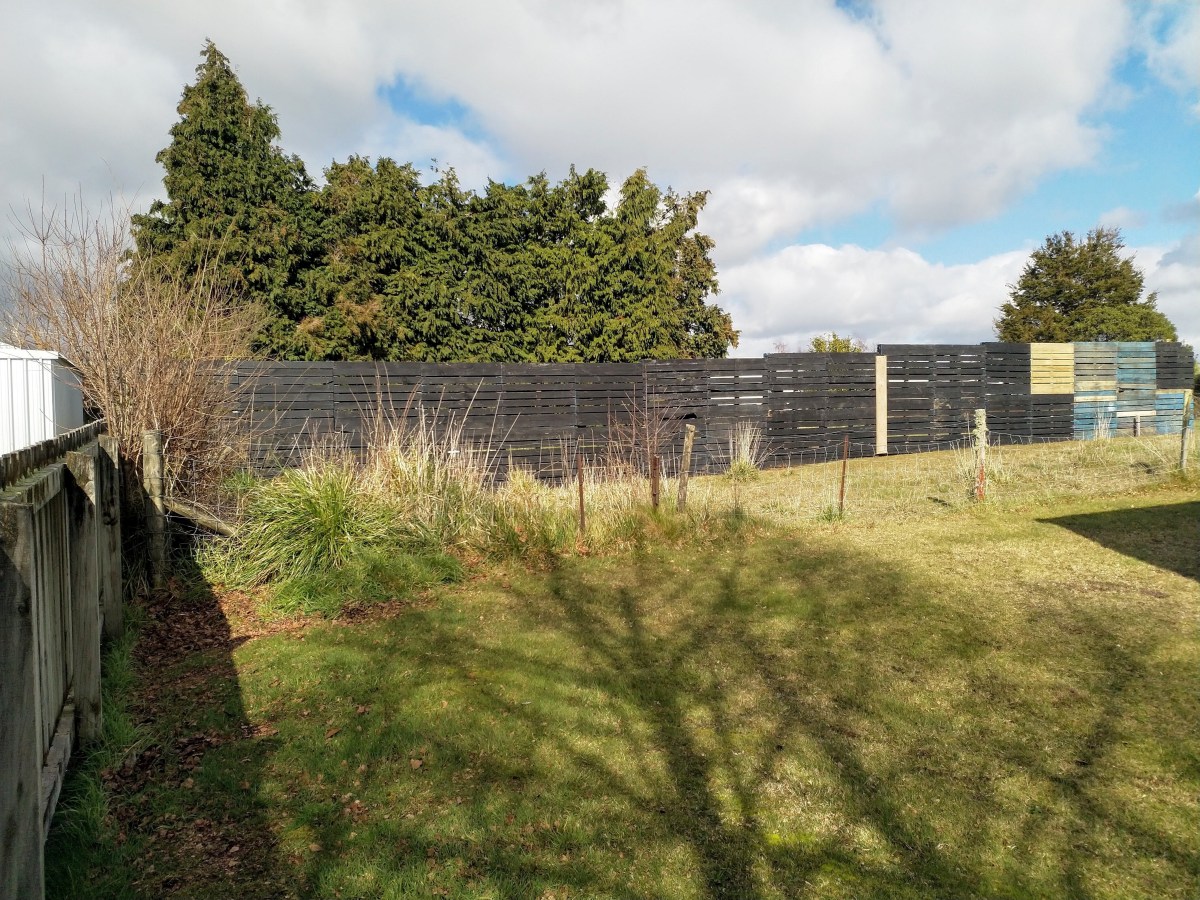
Imagine my surprise when I returned to Ohakune the following weekend to find a ‘fence’ erected close to my boundary line. So close, that it’s not possible for me to build a fence on the boundary line without them moving their pallets. The picture at the top of this post is what I discovered on my return.

I made contact with the owner to discuss access to their section to allow for construction of a fence on the boundary line, and moving the pallets to allow for construction to take place. She refused to meet with me and stated that moving the pallets to allow for construction was “not happening”. So it’s off to the Disputes Tribunal we go to get a ruling on access, construction costs, and materials.

Meanwhile, I’ll get the remains of the internal fence and the tree stumps removed so that section of the lawn can be mowed and made tidy. Building a fence was going to be one of the last things I was planning to do, but now it looks like it’ll be one of the first! At least my cousin will have something to hitch her horse to if she rides over from the Rangitikei.

White picket fence

Next time: The countdown begins

Happy 100th ‘anniversary’ kirk!

12 August 2019 marks the 100th anniversary of the marriage of Ivy Horne to Ivan Croad. It was the first marriage in the new church. I still don’t know when it was opened, so this date is as good as any to celebrate!

Here’s how the wedding was reported in the Manawatu Times on 21 August:

CROAD—HORNE. On Tuesday afternoon at the Presbyterian Church, Ohakune, Mr Ivan Croad, of Ballance, Pahiatua, son of Mr H. Croad, of Palmerston, was married to Miss Ivv Horne, eldest daughter of Mr and Mrs Horne, Miro Road, Ohakune. The church had been prettily decorated for the occasion by friends of the bride. The bridal gown was of cream crepe de chene, embroidered with pearls, made with a tunic and finished with a sash of cream satin. A veil caught with clusters of orange blossoms and a shower bouquet of spring flowers completed her toilet. The bride was given away by her father, and was attended by her sisters, Misses Violet and Elsie Horne, who wore pale blue fuji silk dresses, and hat to match trimmed with tiny pink roses and black velvet ribbon strings. They carried bouquets of violets. The bridegroom’s presents to the bridesmaids were a gold curb bangle and a gold wishbone brooch respectively. Mr N. Croad, of Palmerston North, supported his brother as best man. As the wedding party left the vestry, the Rev. Mr Morton presented the bride with a Bible, as this was the first wedding in the new church. Mrs Butler presided at the organ during the ceremony and played the Wedding March. Numerous presents were received, amongst the most treasured being a silver cake basket, presented to the bride by the congregation of the church. The church was packed with the many friends of the young couple, and after the ceremony the guests were entertained at the wedding breakfast at the residence of the bride’s parents. The Rev. Mr Morton proposed the health or the bride and bridegroom, and the other customary toasts were honoured. Mr and Mrs Croad left by the afternoon train for North on route for Pipiriki and Wanganui, the bride wearing a tailor-made brown costume with saxe blue hat.

Next time:  As pretty as a picture.

A view from above

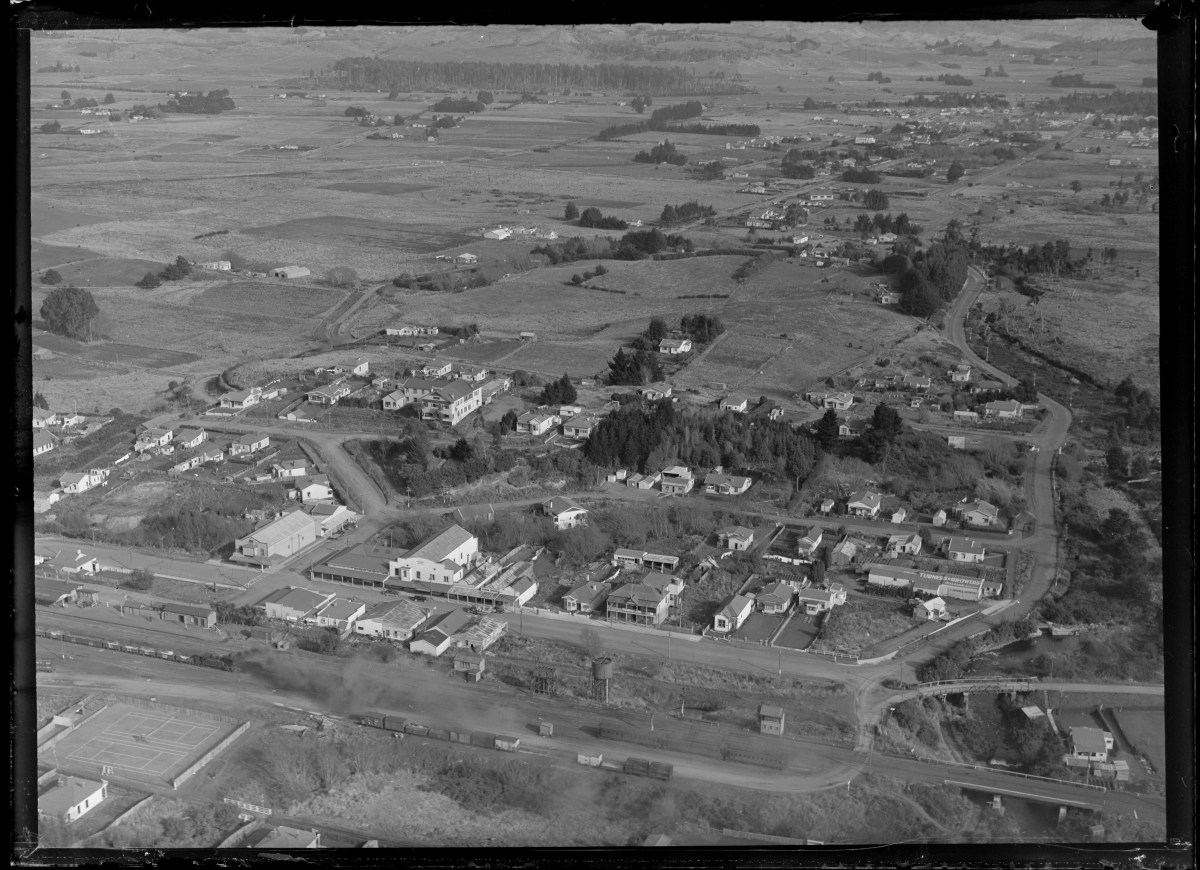
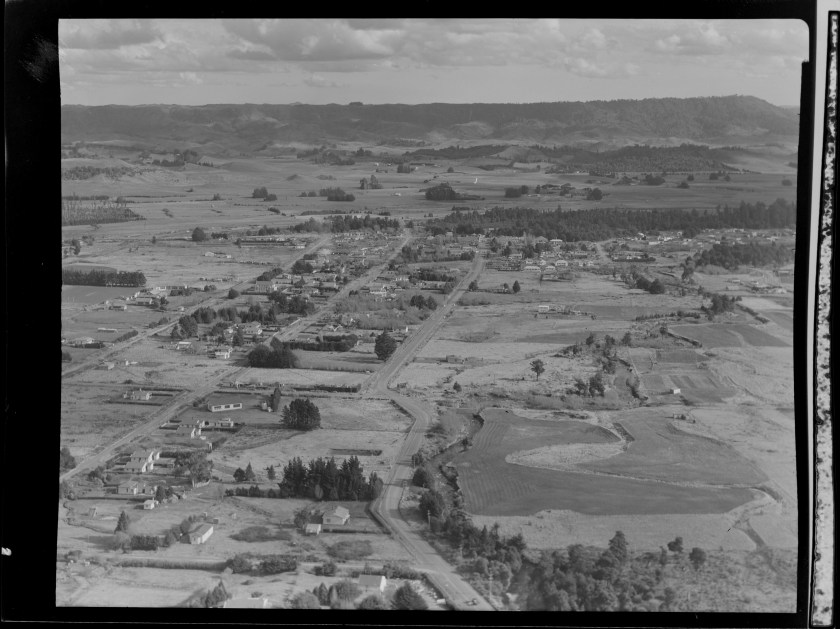
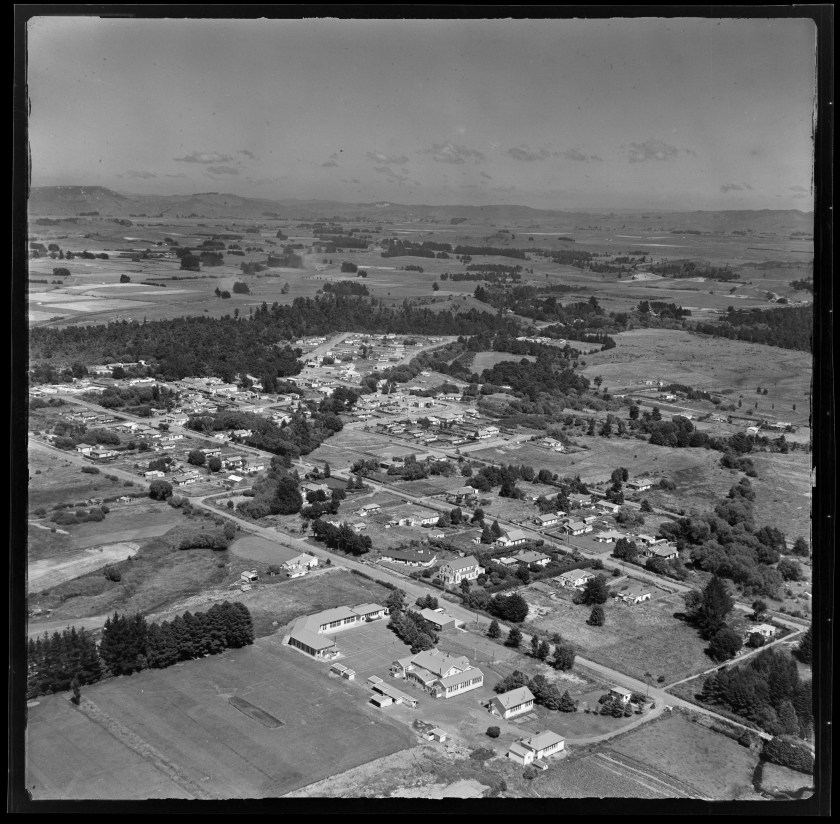
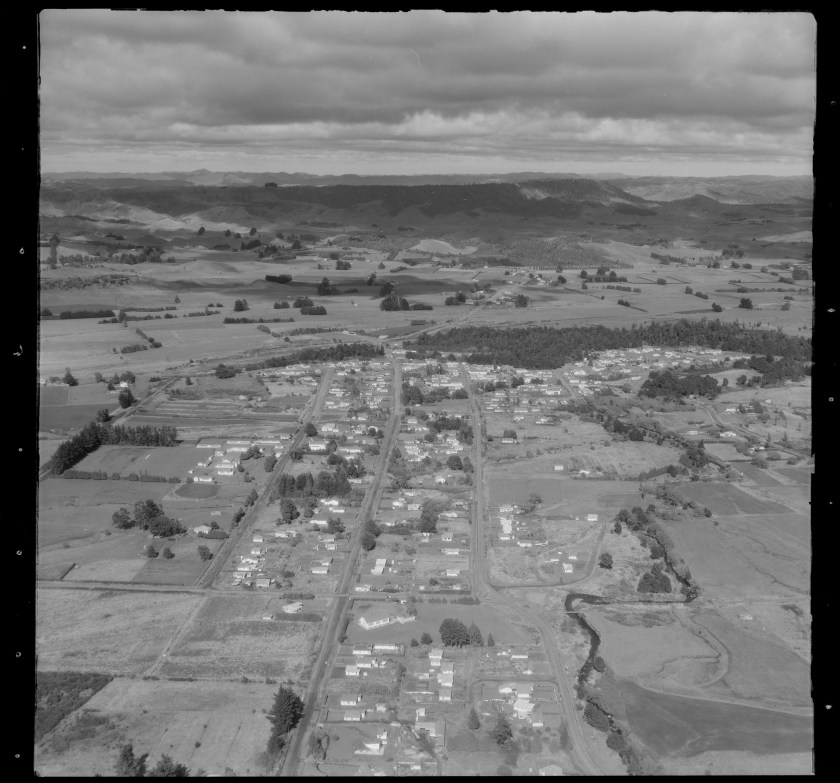
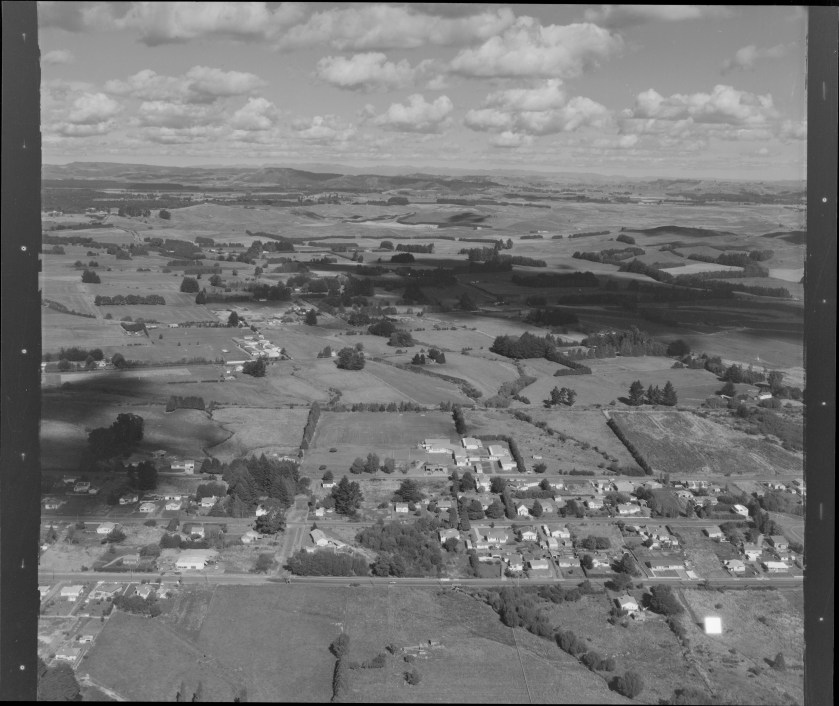
The photo above was taken in 1947 – if you squint hard and peer closely you may be able to make out a large white building towards the top right corner. That’s the Catholic church, and my kirk is just in front of it to the right.

The photos in this post are from the Whites Aviation series held in the NZ National Library collection. It’s a treasure-trove of aerial photographs taken over a long time. I came across the collection via a NZ History Federation post. The National Library blog post explains more about the collection.

Some of the photos I found have been scanned in reverse, which was a bit disorientating at first! It was great to see photos of the kirk before the vestibule was added in 1976. It’s also been interesting to see how the township has developed over the years. Here’s a few more photos so you can play ‘spot-the-kirk’ with me!

Next time: Happy 100th ‘anniversary’ kirk!

1951 23256507 Ohakune towards Clyde St - Kirk
1951 view from the Junction end
1957 32051265 Ohakune from Tainui St - Kirk
1957 view from the east
1965 23030068 Ohakune towards Raetihi - Kirk
1965 view from the Junction end
1975 22764395 Ohakune from Goldfinch St - Kirk
1975 view from the west

The search for a builder begins

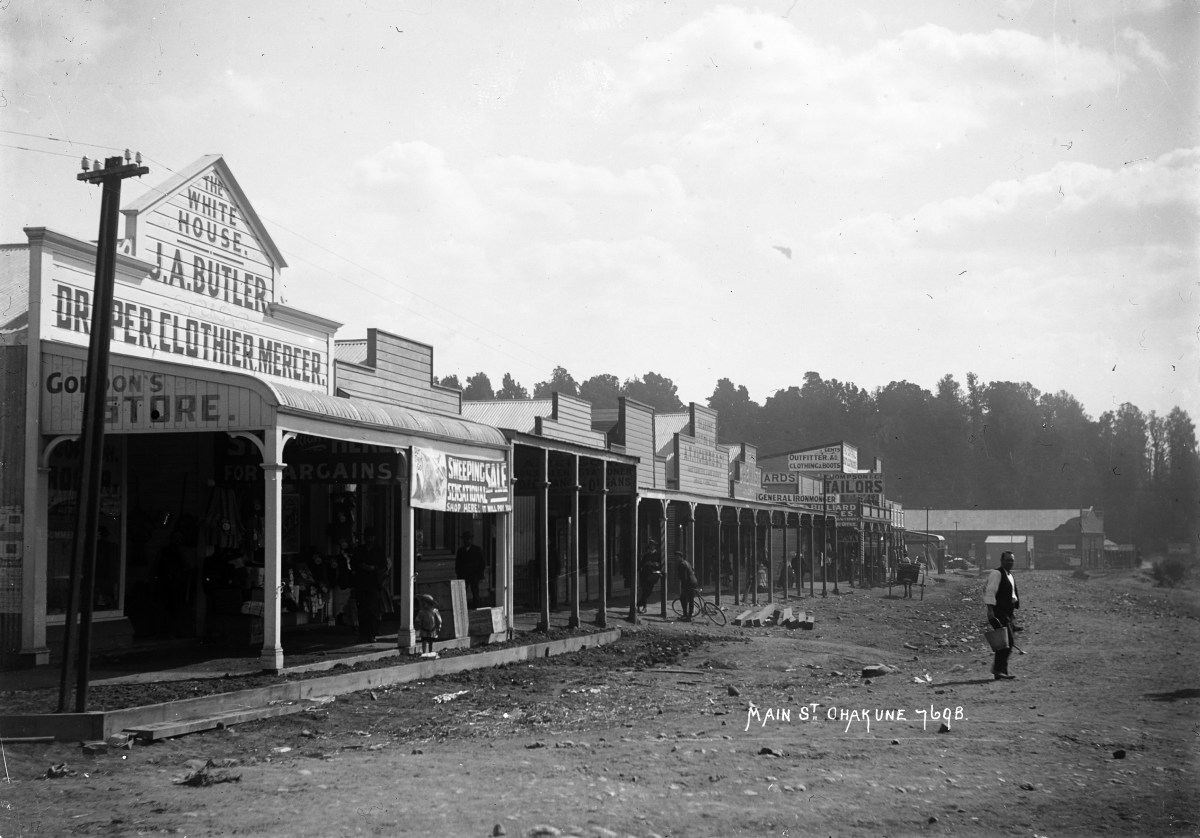
There’s been a lot of construction in Ohakune over the years.  This photo taken c1910 shows some construction work underway.  I wonder if the guy with the bucket is a LBP?

I met with a number of builders the first month after taking possession, but needed to get building consent approved before I could get pricing from them.  The delay has coincided with an upturn in construction in the district.  Good builders are very busy as I discovered when I sent my plans and requirements out for indicative pricing:

  • Option A doesn’t want to take on a renovation project
  • Option B isn’t available until April
  • Option C isn’t available for 18 months
  • Option D isn’t available until after Christmas
  • Option E is about to start a nine-month job
  • Option F hasn’t got back to me with pricing
  • Option G isn’t returning my messages

I need to get my first building inspection completed by early-January, otherwise I have to re-apply for building consent.  I knew it wouldn’t be easy, but I didn’t think it’d be this much of a challenge!

Next time:  Things aren’t always what they seem

Call me (call me) on the line. Call me, call me any, anytime………….

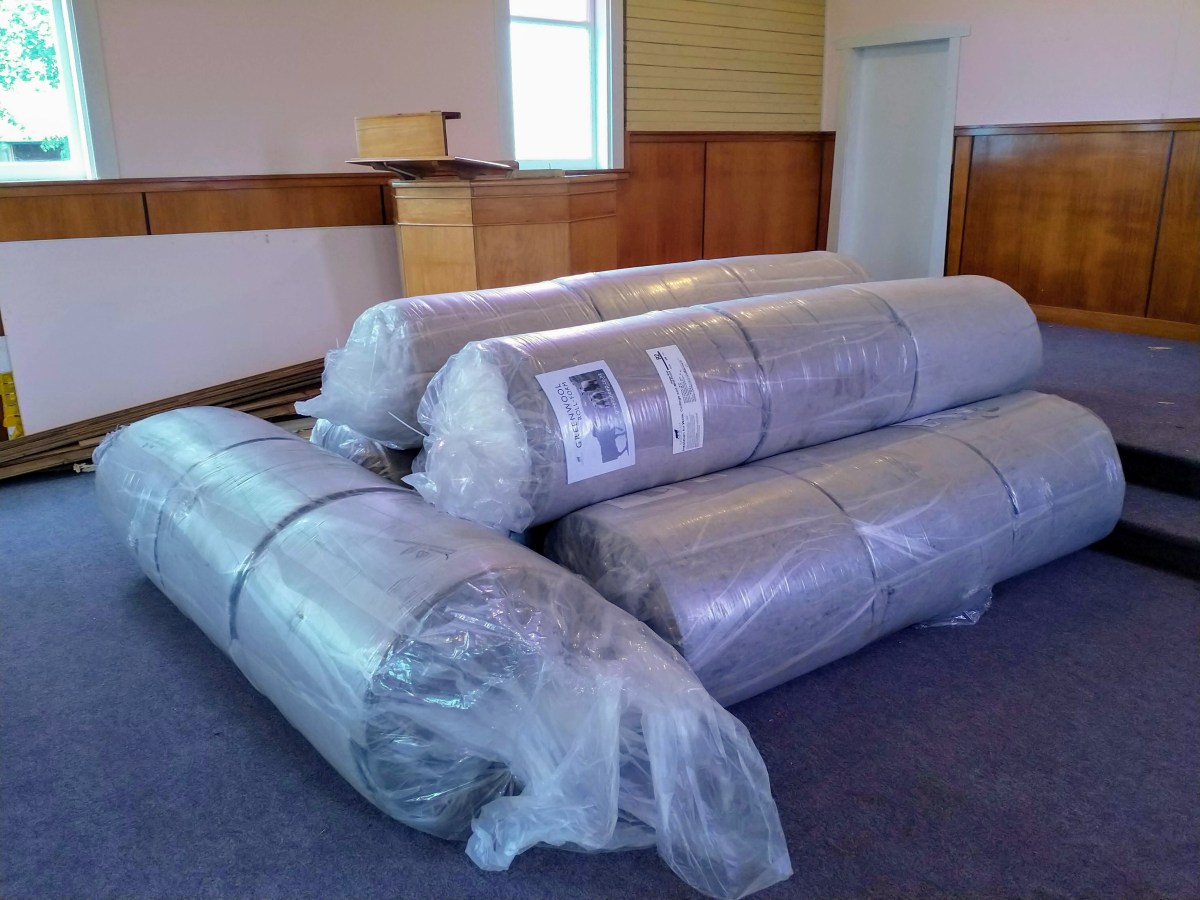
This is my pile of insulation made out of recycled wool.  It’s going under the floor and in the opened-up bathroom walls to keep everything toasty.  It’s my building’s equivalent of sheepskin boots and a woollen coat.

The tyranny of distance is one of the challenges of this project.  Most suppliers have their deliveries taking place during the week when I’m at work in Wellington.  Fortunately the door to the vestibule has a code on it so freight companies can put their deliveries inside without me having to be there.

Fairly straight forward you would have thought.  But no.  Suppliers don’t always think to obtain delivery instructions when you place your order.  Then you find out that the goods have been dispatched for delivery without delivery instructions.  You’re reassured that the freight company have been instructed to call you prior to delivering the goods.

Should be ok you think.  But no.  The tracking link you’re given shows the goods were out for delivery the day prior.  But you’re reassured that the freight company have been instructed to call you prior to delivering the goods.  You check the tracking link which shows the goods are back out for delivery so you wait for the call.  They don’t call.

So you check the tracking link again which shows that the goods were delivered and signed for by someone you’ve never heard of.  So you phone the supplier who suggests you call the freight company.  You call the freight company who confirm they had your contact number and promise to look into it and get back to you.  They don’t call you back.

You call the freight company a few hours later and get someone more helpful.  They put you through to the depot who say they didn’t have your number in their system.  They try to call the driver but can’t get hold of him.  They finally get hold of the driver who turns out is the person who signs as having ‘received’ the goods except they didn’t.  What they did is leave the products outside the building in public view.

So you contact your helpful neighbour to see if she can check it out when she gets home from work and put the products in the vestibule.  You get a text to say it’s all done.  Phew.

You decide you owe your neighbour so buy her a nice bottle of Central Otago Pinot Noir as a thank you.  When you give it to your neighbour you discover that the products were left outside the wrong building.  Not ok.  You let the supplier know what’s happened and trust they’ll sort it out with their freight company.  Radio silence ensues.

This is just the beginning of the project so I’ll have a lot more deliveries over the next few months.  It could end up costing me heaps in wine!  “You can call me any day or night.  Call me.”

Next time:  Cleanliness is indeed next to godliness

All you wanted to know about getting a change of use approved but were too afraid to ask………………

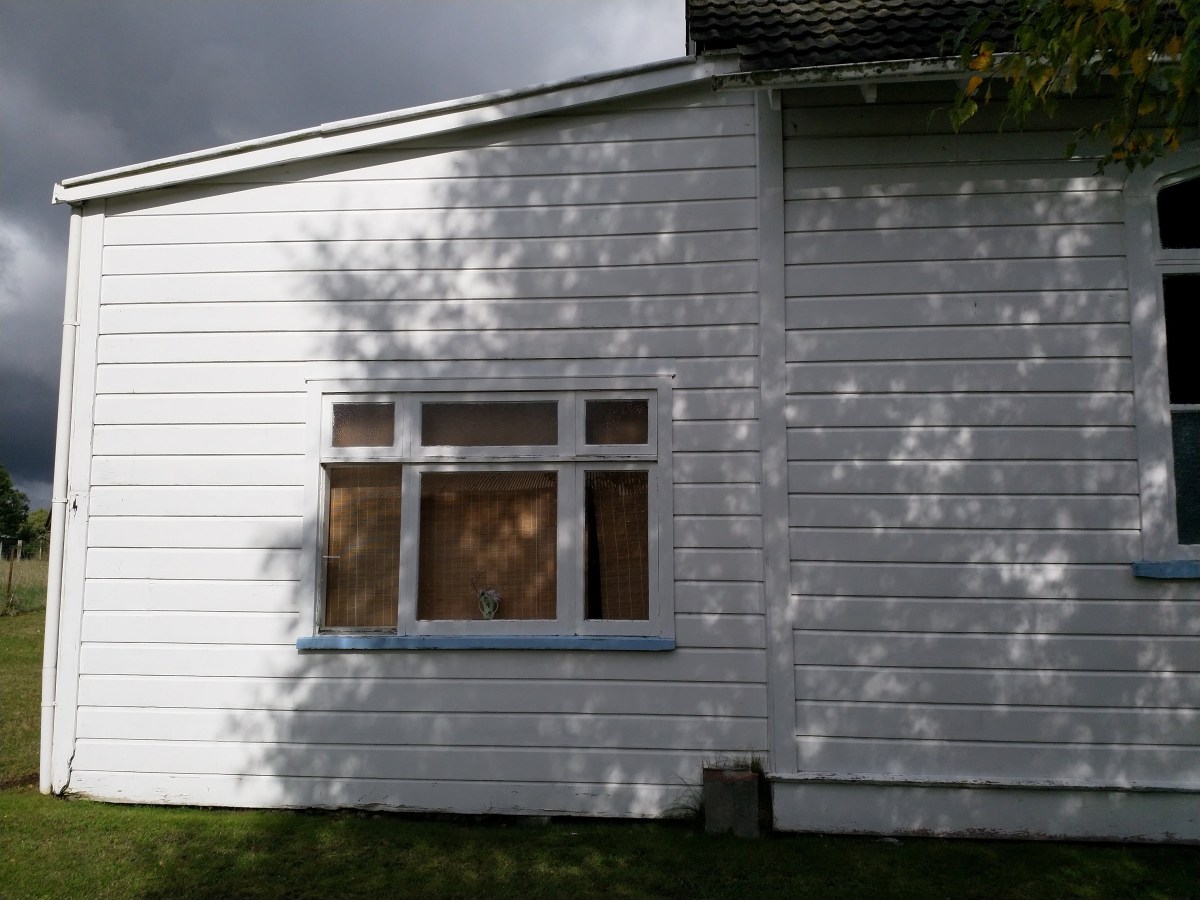
This photo of the eastern aspect shows the window that’s will be replaced by french doors onto a small deck.  Note the concrete roof tile slacking around on the ground rather than hanging out on the roof where it belongs.

I started investigating what I’d need to do to get a change of use approved in April 2018.  The ever-helpful Ruapehu District Council told me about things like having all windows double-glazed, and fully-insulating the exterior walls.  They also told me about having to connect to the water and sewerage system despite my preference to collect water and recycle my own sewerage.

The Building Act specifies what work you don’t need a consent for.  That’s mostly stuff that goes on within the building envelope.  Anything in the building envelope requires a consent, unless it’s an existing element.

Ok, I can live with that.  Until I realised that pretty much everything I wanted to do within the building envelope was dependent on doing stuff to the building envelope first.  Sigh.

Then there’s a whole lot of stuff that you don’t need a consent for, but councils will still want to know about.  Stuff like heating.  You don’t need a building consent to install a heat-pump, but councils still want to know that you’ll have heating.  Ditto ventilation like bathroom and kitchen extraction fans.  You need to get those drawn in as well.

They want to know where you’re going to install your gas cylinders for your hot water system, what they’ll be mounted on, and how you’re going to stop them from being nicked.  And yes they do get nicked!

They also want to know what products you’re going to use for specific applications such as shower wall water-proofing, insulation, and new door and window fittings.  You have to obtain producer statements from your proposed suppliers and submit them to your council.  They then get officially stamped and you have to have them on site at all times together with your approved plans.  You also have go back to council to get new ones approved if you change your mind or the supplier goes out of business.  Double-sigh.

Since I’m putting french doors where the east-facing window is, that needs to have safety glass and a deck installed below it.  The main entry needs to comply with the slip-resistance performance of NZBC d1.3.3 (d) – whatever the hell that is!  And I have to get the road access re-done to meet another standard.

Councils have 20 days to approve building consent applications.  They stop the clock as soon as they have any queries.  They also stop the clock for their end-of-year three-week close-down.  I lodged my application on 30 November 2018.  The council requested additional information on 18 December and it was supplied on 20 December.  On 9 January I got the call to say it was approved.  I think we can call that some kind of record!

Next time:  Damn it, granite!

December disappears into a haze of waiting

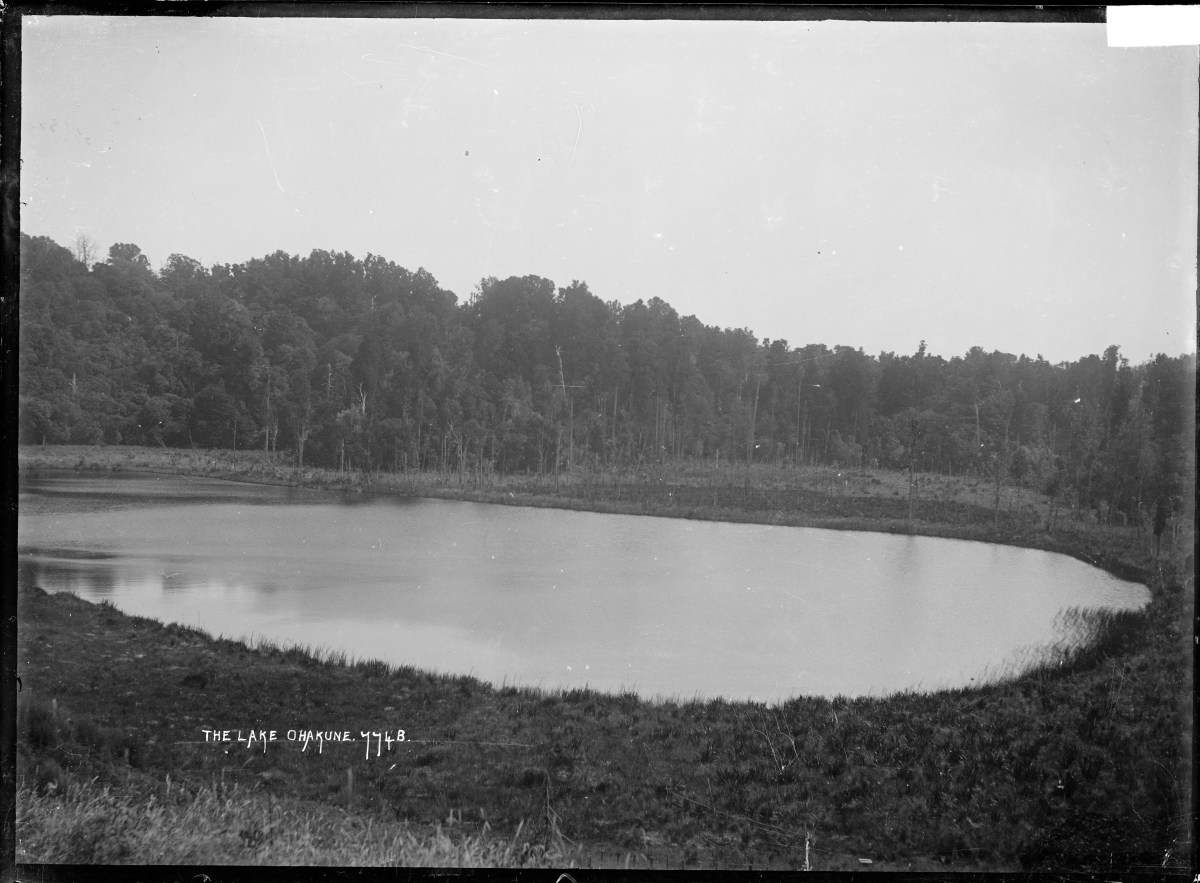
This photo of a lake near Ohakune was taken around 1910.  It may be in the scenic reserve on Lakes Road.

December went by in a rush.  After submitting my building consent application at the end of November it was taken up with resolving design queries from the council and paying the bills.  Unfortunately I was three days late submitting to get my consent approved before their Christmas close-down.

I finished work mid-December, so with a month off it was time to start researching products, estimating costs, and finalising design elements.  The costs soon stack up even when you’re looking at stock bog-standard items.

The heated toilet seat with the anti-bacterial nozzle, pressure wash, deodorisation, warm water bidet function, and remote control was quickly taken off the list.  Now I just have to decide if I want a retro toilet or something more modern.  Decisions, decisions.

Next time:  All you wanted to know about getting a change of use approved but were too afraid to ask

Everything takes twice as long and costs twice as much

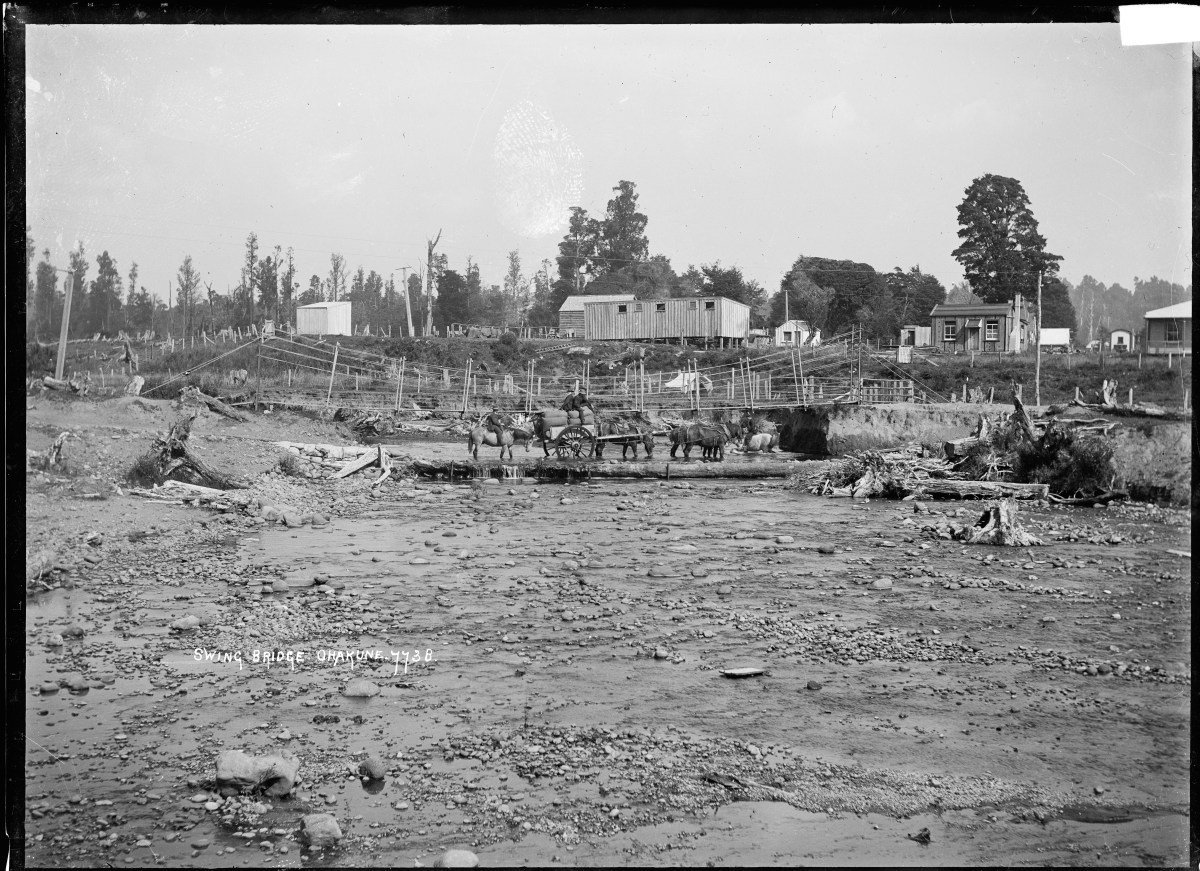
This photo of the swing bridge over the river was taken around 1910.  Like the wagoner crossing via the ford I usually have to take the long way around.

Okay, so the heading might be a slight exaggeration, but it seems that way at times.  Take my purchase of the church.  I paid nearly 35% more for it in August than when I tried to buy it in May.

The kitchen cabinets are costing me 33% more because I need to get the more expensive oak cabinets sanded and spray-painted.  The spray-painting is costing me 50% more than estimated as the spray-painter has to do a special clean of his equipment before and after he uses the paint products I’ve specified.  The cabinets are imported and despite ordering them in September I won’t get them until late January.

The roof window in the kitchenette is going to cost me more because the company I wanted to use no longer makes them, and I now may need to get it fabricated to order.  The french doors will also be a special order so that they fit the width of the existing window.  I will need to order both of them soon so that I can get them fabricated in the new year, but I need to wait for building consent approval before I can do that.

Installing insulation will be more expensive as I have to remove the floorboards to install it underneath.  At least that will make it easier for the plumber to install the plumbing to the kitchenette!  It will be more expensive to install insulation in the walls as I will need to pump it in for most areas.  I need to add new rafters to create enough depth in the roof cavity to install insulation.  And so it goes on.

I got a great piece of advice when I started out contracting and consulting – “work out how long you think it ought to take, then double it”.  That’s proven to be the case for the design and drawings, and I’m following that mantra for the consent and building phases.

Let the fun begin!

Next time:  December disappears into a haze of waiting