Driving with the whole body

The title of this post is a play on the book ‘Running with the Whole Body: A  30-Day Program to Running Faster with Less Effort’ written by Jack Heggie.  Written in 1996, it promises you that his revolutionary 30-day program will not only prevent you from injuring yourself, but enable you to become a smoother and more powerful runner.  I’m no runner, but I do like driving.

In a previous post I’ve explained how I don’t do ordinary.  I’m also prone to doing ‘roadies’ to collect items I’ve purchased online.  Selling my car last year to fund the kirk was an easy decision to make, but much harder to live with than I thought it would be!

It wasn’t long before I felt the frustration of not having the independence my own ‘set of wheels’ gave me.  I’d had my driver’s licence for nearly 15 years before I got my first car, but hadn’t been without one since.  My lovely brother was happy to drive me around and loan me his car, but I didn’t like borrowing it from him.  Likewise my 85 year-old mother was happy to lend me her car, but I didn’t like borrowing it either.

Fortunately my two lovely older sisters were happy to lend me their cars when they were out of town for extended periods of time.  This gave me freedom without the guilts.  I also found a couple of local car rental firms and hired everything from 10 year-old cars to more recent models.

One thing the rentals had in common was cruise control, which is a must-have for me.  There’s nothing worse on a car trip than sitting in a fixed position for long periods of time without being able to move your legs.  The other thing that I find helps is using my whole body for steering.  Sounds a bit weird, but this is how it works for me.

If I’m driving with just my arms, I’m pulling down / pushing up with my forearms and biceps when steering around bends.  This can get a bit tiring if you’re faranging around some of the minor highways and byways of the country.  When I’m driving with my whole body, I’m shifting my weight from one side of my pelvis to the other and allowing my ribs to compress in the direction of the bend.  This makes steering effortless and smooth, and much less tiring.

After nine months of being car-less, I succumbed to purchasing the little cutie in the featured image of this post.  This is how I introduced my new car to family and friends:

“Meet Graciela (Spanish variant of Grace meaning elegant and graceful woman) my new hybrid freedom machine. Day 1 was a roadie from Hastings to Ohakune via the toilet-less Taihape-Napier road. They warn you about the absence of petrol stations, but not toilets! She’s fun to drive like my Kharmann Ghia (Marlene Von Lustbucket), comfy like my Saab (Theodora von Gwavas after we got losted in Gwavas forest), and has the driving technology of my Mazda (so boring I didn’t bother to name it). I think you’ll like driving this one <sister> – it’s got radar cruise control.”

I’m going to really enjoying cruising up to Ohakune to check out building progress.  With all the technology available in cars these days, all I need to do is steer and brake when I’m going through built-up areas!

Next time:  To Wi-Fi or not to Wi-Fi, that is the question

The cabinets are coming, the cabinets are coming……….

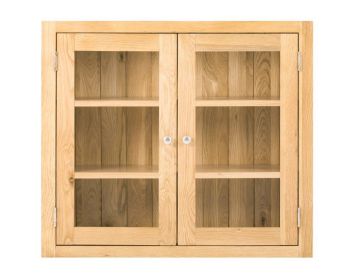
Glass-fronted wall cabinet – coming to my kitchenette soon!  I like being able to see where things are without having to open numerous cupboard doors.

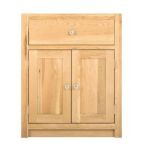
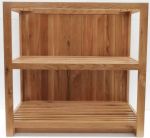
I’ve loved the BespOak NZ kitchen cabinets since I first saw them.  However, with wooden floors, walls, and ceilings in my church this natural white oak product may have been a wood too far.  I was delighted to discover that they also had a painted product using acacia wood for the external panels, and white oak for the internal panels and shelves.

Being the mildly OCD person that I am, I decided to order the cabinets in September which was a couple of months in advance of when I anticipated the kitchen and bathroom would be put together.  (Little did I know then what I know now.)  I duly went online to get the product numbers only to discover that the painted versions were no longer listed.

Inquiries to BespOak NZ revealed that the manufacturer had discontinued the product line due to a lack of demand.  However, I could purchase the oak cabinets and have them treated and painted so that I would achieve a similar effect.  And so commenced my next mission.

Products ordered, BespOak NZ put me in touch with a spray-painter who had already worked with their products, but not my preferred paint products.  The Natural Paint Company had supplied their products to another client for painting BespOak NZ products.  They were awesome at liaising with the spray-painter and talking through their products, how best to use them, and paint options.

Meanwhile, I had worked out my colour scheme for the bathroom and kitchen, and ordered a colour chart from The Natural Paint Company.  Rather than printing their colours on glossy cards they actually paint them onto cardboard so you get a ‘real’ sample.  They have an awesome service which gives you your first 10 colour chips free.

Colour ‘chart’ in hand, I’d tested the colours in the natural light of the vestry earlier in the month and narrowed it down to white and three shades of grey.  The second part of The Natural Paint Company’s awesome service is that they will send you four 85ml test pots and a brush for under $20.

I’d managed to scavenge some unused plasterboard from my sister so painted three of them up with a base coat and two top coats of the greys.  I figured white is white, right?  I couldn’t choose between the three colours so it was time to test them in-situ.

That called for another road trip, this time with one of my sisters and a niece in tow.  My sister is renovating her 1930’s ‘railway cottage’ and kindly lent me some of her DIY tools in the demo phase.  (I may have ‘killed’ her girly-drill in the process.)  My niece has been keen on interior design for a few years now so I’ve enlisted her help in choosing fixtures and fittings for the bathroom and kitchen, and choosing the bedroom decor.

I’d arranged to meet with the person doing the detailed drawings council need to support my change of use and building consent application.  It was a good opportunity for my sister and niece to look around whilst I talked my plans over with the designer.

Choosing the colour for the cabinets was much harder than I thought.  I wanted to have the same colour in the bathroom and kitchen which will have different light sources.  The bathroom window faces south-east, whilst the kitchen will be lit by a roof window and artificial light.

I’d recently seen the Grand Designs NZ episode where they renovated a historic building in Christchurch and used dark colours with the original native wood.  Whilst I’m not a fan of black or blue, I was struck by how rich the dark colours and native wood looked together.  I was very tempted to paint the cabinets a dark grey, but decided that I needed something lighter.

My final choice was between two light greys – one cool in tone whilst the other was a bit warmer.  They both looked fine in the bathroom area, but the warmer tone looked better in the kitchen area.  Job done.

Back in Wellington, it was time to order the paint for delivery to the spray-painter in Mt Maunganui, only to discover that there was going to be a delay in the cabinets arriving in the country.  Ah well, it’s not like I’ve got building consent to be able to install them before the new year!

Next time:  Everything takes twice as long and costs twice as much

Decidedly average coffee

Warning:  this is a post about a road trip.  Look away now if it’s not your thing.

If you’ve been reading my posts you’ll know that I have a predilection for old things – especially second-hand furniture.  I also have a predilection for buying things online.  One of the risks that comes with that is the item you covet / purchase can be in a town far, far away.  I’ve limited myself to the North Island for my searches but there can still be dragons.

My new two-seater recliner couch was one such item, being a resident of one of Auckland’s eastern beach suburbs.  Dimensions in hand I loaded them into an online freight calculator to discover that it would cost me as much to freight it to Ohakune as it did to purchase it.  Don’t people know I’m on a budget?

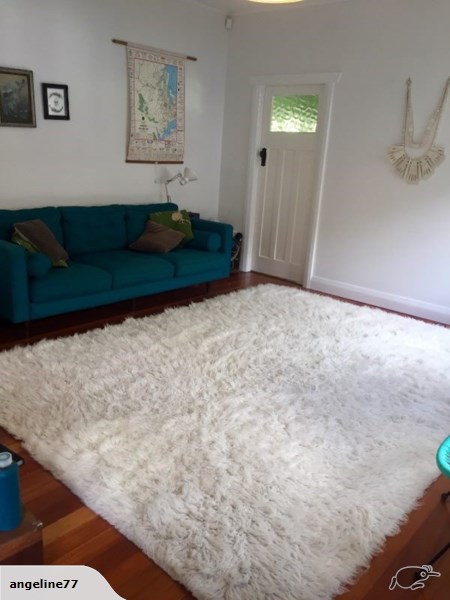
The seller reassured me that it could be dismantled so I figured that I should be able to fit it in the back of my trusty red Mazda6 liftback.  I’d also bought a 2.5 x 3.4m Flokati rug residing in one of Auckland’s western suburbs so I now had two reasons to make the trip to Auckland.  Said rug is the feature image for this post.  It will keep my toes toasty on chilly mornings.

An early finish at work on Friday meant that I could take in my niece’s final school prize-giving followed by a family dinner.  I contemplated a coffee injection prior to getting on the road at 8pm, but figured that I had enough energy and focus for the 3+ hour trip to Turangi, including the Desert Road.  There wasn’t much traffic on the road for the most part, and a little bit of drizzle kept me on my toes.  I made it to Turangi shortly after 11pm and headed straight to bed.

Coffee count for the day = 1.  People’s Coffee, Don Wilfredo blend, plunger. Above average.

I was up early, breakfasted, sheets changed, dishes done, and on the road by 8am.  I’m not a ‘needs coffee first thing in the morning’ kind of person so thought I’d wait until I got to Tirau for my first coffee for the day.  My sister and brother-in-law do a lot of motorbike riding so she’d introduced me to her favourite cafe there a few years ago.  I think it’s changed hands since the last time I was there as my flat white was very watery, and my friand came with the dairy products I asked to be excluded.  Not the service we usually get there!

Back on the road to Auckland with an ETA of midday.  Then I caught up with the traffic heading to the car races at Pukekohe.  Traffic slowed down to a crawl meant that I wasn’t going to make my first pick-up on time.  Sigh.  Fortunately the sellers had left the rug in an accessible location so I loaded it into my car and headed to Titirangi for lunch.  After an average lunch and acceptable coffee I was ready to head east to collect the sofa.

Unfortunately my pick-up was delayed so I headed to Hillsborough Cemetery to try and find the grave of someone connected to my maternal family history.  Geneology websites are very good at giving you plot numbers etc for specific graves – cemetery operators not so much!  After stomping around the cemetery for a while I gave up and headed for my next destination.

Of course I was early and the seller not at home yet so I parked up for a nap.  The seller’s son arrived at the appointed time and we tried to figure out how to dismantle the sofa.  We figured it out but didn’t have the tools to make it happen.  The seller arrived, pulled out his trusty tools and we were able to get the back rests off.  The next challenge was to get it out of the building via a long narrow corridor, down a U-shaped ramp, and into the back of my car.

Whilst I’d worked out that it should fit into my car, I hadn’t taken into account that the reclining mechanism would make the couch heavy.  As in very heavy.  As in almost too heavy for three people to carry / lift.  We finally managed to get it into the car, and the seller took a photo to prove to his sister that it could be done!  I had no idea how I was going to get it out of my car and into the church on my own.  I figured the universe would provide the answer!

Then it was off down the motorway to Hamilton where I’d arranged to stay with my cousin and his wife.  It was great catching up with them, seeing how tall their four boys had grown, and recharging for the final day of my road trip.  I’d arranged to meet the Session Clerk of the Taihape-Waimarino Presbyterian Parish in Taihape at midday, so it was going to be another early start for me the following day.

Coffee count for the day = 2.  (1) Unknown roaster and blend, flat white.  Almost undrinkable.  (2) Allpress Espresso, unknown blend, flat white.  Acceptable.

It’s been a while since I’d driven to Ohakune via State Highway 3.  Being on a mission to get the car unloaded meant that I didn’t stop for a coffee en-route.  It was surprisingly easy to get the couch out of the car and into the church.  I was able to reverse up to the front doors so that there was about 70cm between my car and the entry.

The steps up to the front door meant that the floor and boot were almost level.  A bit of huffing and puffing saw me wriggle the couch out of the car, into the church, and position it in front of the nave windows.  Low cloud meant that I couldn’t check out the views, but I did have enough time to check on the wood oils I’d applied last time to see which one I preferred.  I also tested the paint chips in the vestry’s natural light to see which ones worked best.

I decided that I had enough time to grab a coffee from one of the carts in Ohakune before I was due in Taihape.  I hadn’t tried the brand before even though it was a Wellington roaster.  Oh well, cross that one off my list!  It kept me going long enough to spend a couple of hours going through the old records for my church which I’ll use to add to the history section of this website over time.

After a late lunch at the reliable Brown Sugar cafe, it was back on the road for the last leg to Wellington.  I promised myself a decent coffee at Bulls but it was not to be!  Coffee yes, decent no.  What was usually a very reliable coffee stop wasn’t on this occasion.

The rest of the trip was uneventful until I got to Paraparaumu.  A crash at Paekakariki had caused significant delays so I made a detour to my mother’s to say hello.  I managed to cap my weekend off by leaving my mobile at her place.  Needless to say I was too tired to drive back to retrieve it that day!

Coffee count for the day = 2.  (1) Lucky Espresso, unknown blend, flat white.  Below average.  (2) Revive Espresso, unknown blend, flat white.  Disappointingly very average.

Next time:  Why I write
The money pit just got a whole lot deeper

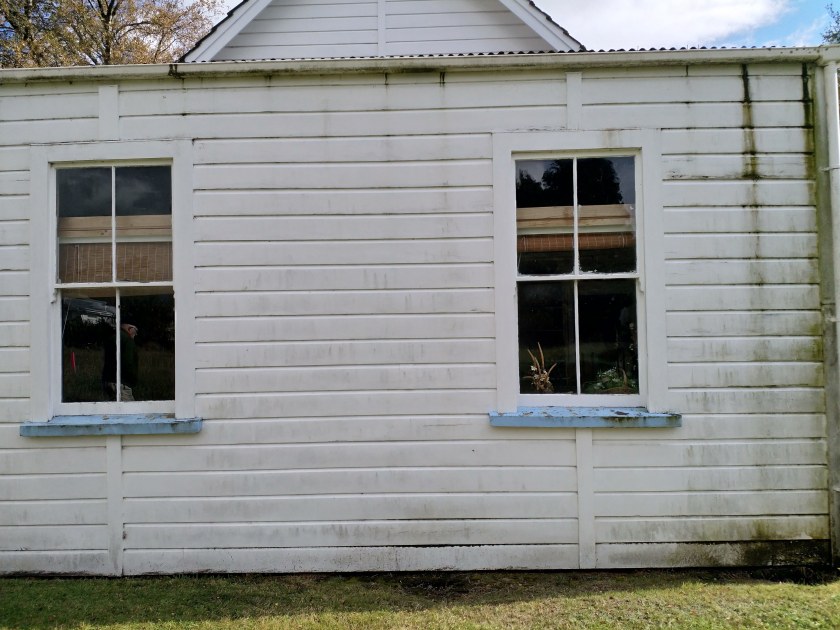
I took this photo in April on my first visit showing the south-facing corner of the building.  You can see the false ceiling cutting across the top of the windows.

My latest trip to Ohakune was to retrieve the tools my sister loaned me and meet with prospective builders. My neighbour across the road had recommended the first one I met. Turns out she’s friends with his daughter. Ohakune’s a bit like that.

I’d wanted to meet him as he has a reputation as a craftsman who does meticulous work. I was looking for someone who would treat the old church with the care, love, and respect it deserved.

It also turned out that he knew the council’s requirements inside out and back to front. That included the requirement to have a minimum 600mm clearance between the floor and the ground. My sloping section gives me 400mm at the front entry and 250mm at the back. You do the maths…………….

One of the joys of applying for a change of use is that my 100 year old building has to comply with new building standards. I’d known that I’d need to lift the floorboards to get the required insulation underneath. Now I was learning that I may have to lift the building.

That’s right. Pick up a 144m2 building, re-pile it, and put it down 350mm higher than it was originally. And the cost of that I hear you ask? Just a lazy $15-20k – that’s all!

The second building team I met were very enthusiastic about what I was trying to achieve and full of ideas of how I could achieve it. They too were a recommendation from the same neighbour whose partner occasionally works for them.

I also met up with the plumber who had quoted on connecting the building to the water supply and sewerage. And yes he was another recommendation from my neighbour. They need to be giving her a commission!

The rest of my visit was spent removing remnants of underlay foam and staples from the floor. I also got to mark out the new walls and where the fixtures and fittings would go.

This is the likely kitchen and  shower room layouts. Note the old door at the entrance to the where the bedroom will be. There will be a roof window or two above the kitchen cabinets and the old chair will be replaced with a porcelain ‘throne’.

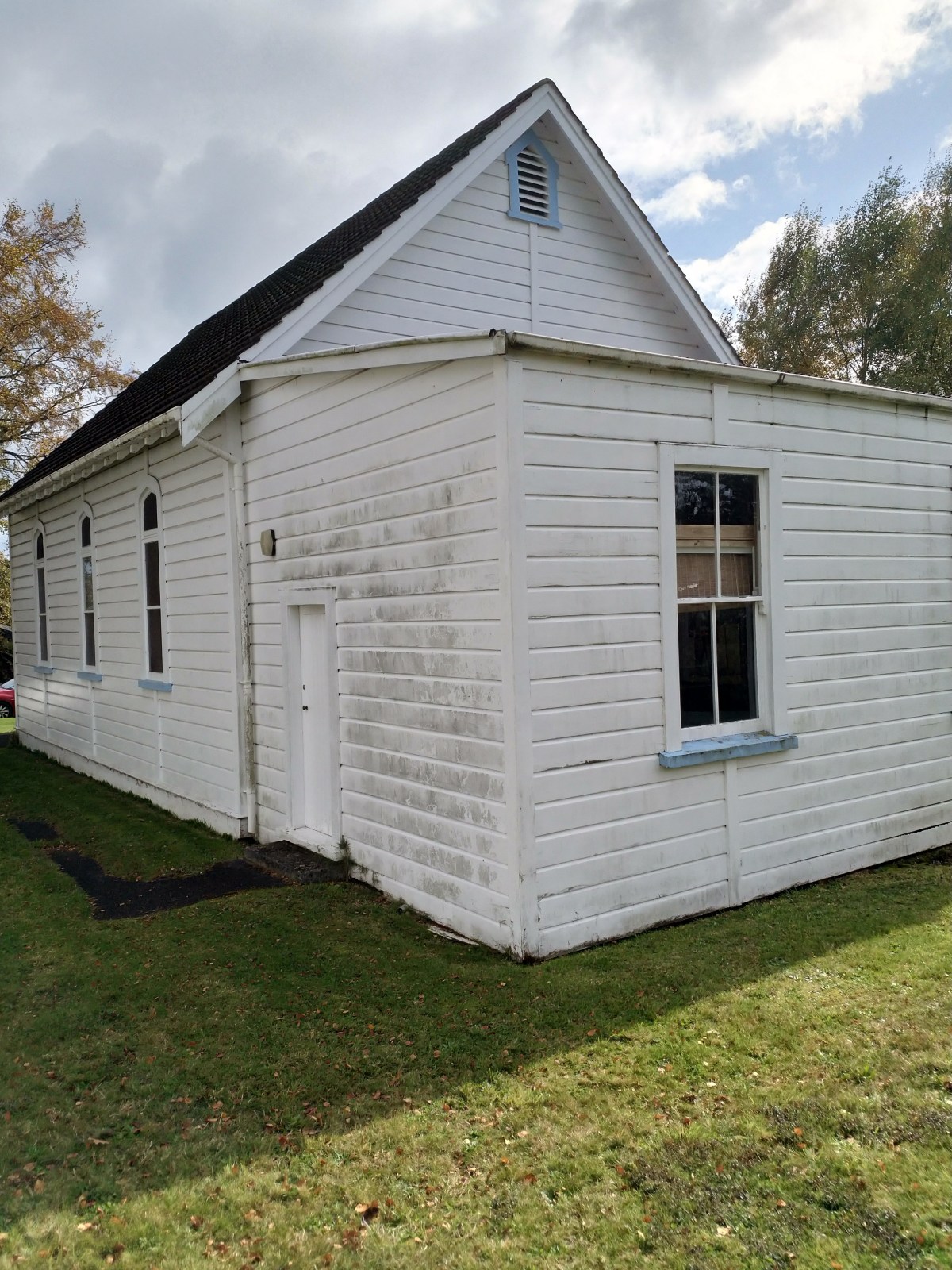
Back in Wellington for work during the week saw me putting in calls to council planners and planning consultants about what I would and wouldn’t need to do. You can see from this photo taken in April that the back section is a bit too close to the ground.

1918 Church Vestry rear view

My discussion with the council planner was promising. I may be able to postpone lifting the building until phase two when I will need to strengthen the sub-floor to bear the weight of the mezzanine. I’ll still need do all I can to improve the insulation and ventilation to the sub-floor – but I was going to do that anyway.

Next time: Finding and choosing great professionals

Check yo’self before yo’ wreck yo’self

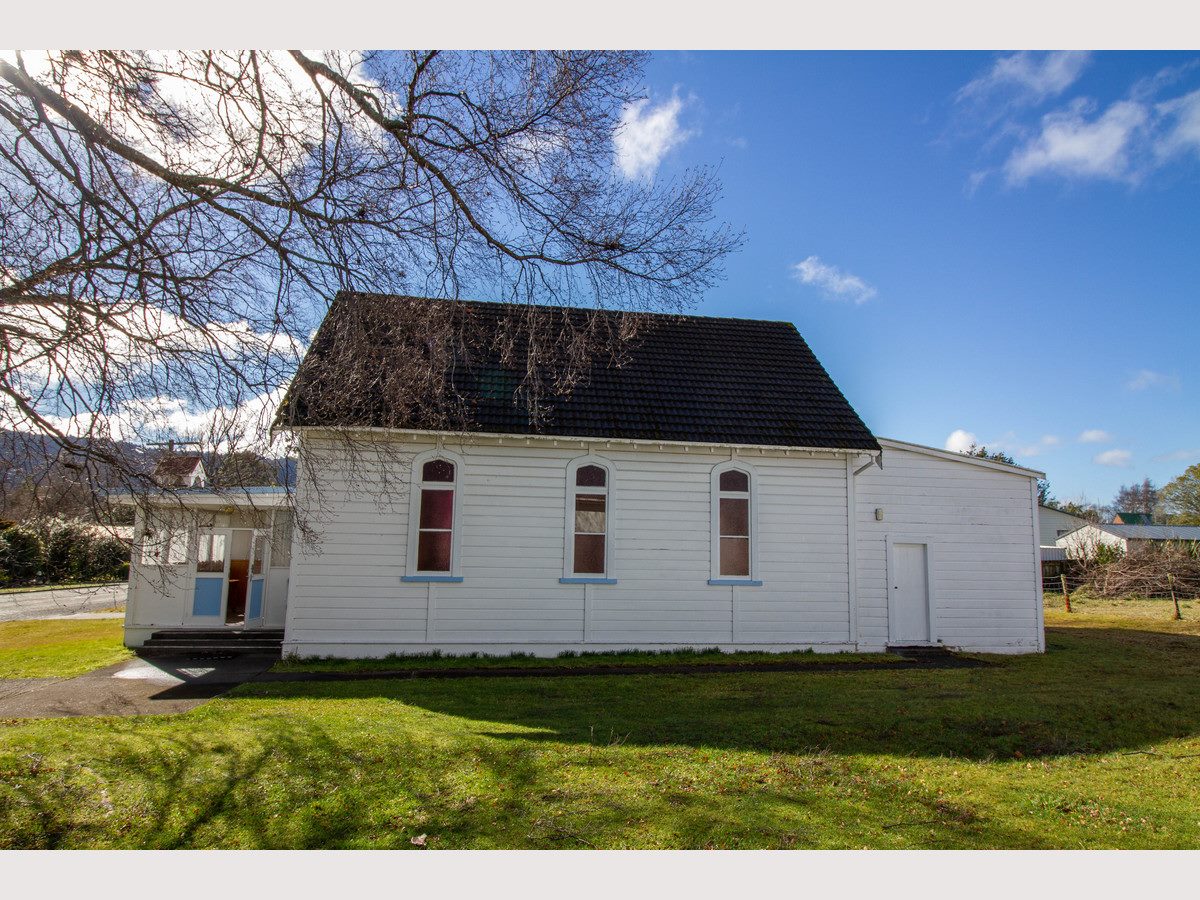
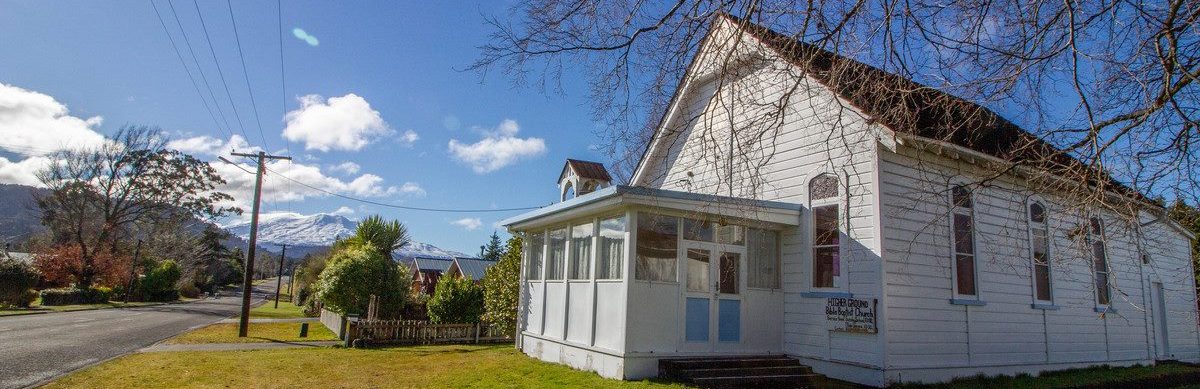
View of the church from the south-west aspect. Vestibule at the front, nave in the middle, and vestry at the back.

I’m a middle-aged woman who rents a townhouse with no lawn and doesn’t like gardening.  I am a stranger to strenuous activity, preferring gentle exercise like walking and cycling to maintain my fitness.  I’ve done strenuous exercise like fitness classes, running and weights and found I injure easily.

I’ve also been a health and safety manager on a brown-fields exhibition site so know the risks associated with old buildings and construction activities.  Taking on the renovation of a 144 m2 building could be injurious to my health and well-being if I’m not careful.  So early on I decided to get others into to do the ‘heavy lifting’ of my demolition and renovation project.

The first cab off the rank was the removal of the false ceiling in the vestry.  I knew from the building inspection report that it hid a reasonably-sized space with the original ceiling and walls lined in native timber.  It also covered the top part of the original double-hung sash windows on the south-eastern wall.  I’m all for using professionals so called in a Licensed Building Practitioner to remove the false ceiling and remove the rubbish.

P1 Vestry - chimney detail1

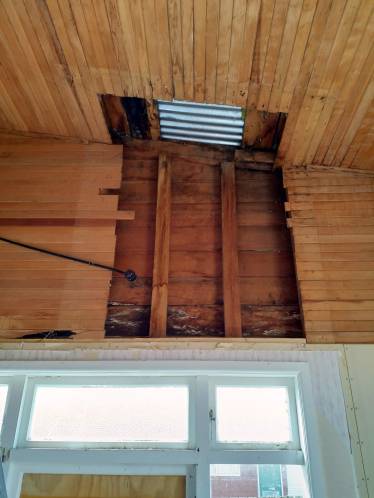
Removing the false ceiling revealed the space where this window is was a previously a fireplace – you can see where the chimney went through the roof.  You can also see where the window hasn’t been sealed properly by the wet weatherboards and white mould.  The original electrical wiring in black metal conduits was thoughtfully bent up out of the way of the false ceiling.  The central window pane was the only casualty of the ceiling removal.

Also on show was the original ceiling height of 4.15m at the nave wall and 3.5m at the external wall – plenty of ceiling height for the architect to work with!  The other bonus was the discovery of the original internal doors in the ceiling cavity.  Made of native timber complete with borer holes, they would create an interesting addition to the vestry space.

My return to the church the second weekend was accompanied by my brother and a wallpaper steamer.  My brother is used to hard physical work having worked in orchards during his school years, and more recently establishing and maintaining his own garden on the Kapiti Coast.  I’d identified in my first weekend that working above my head and going up and down ladders was too difficult for me, so I needed someone else to do that work.

We quickly set to work, with me stripping wallpaper from the floor up, whilst he worked from the top of the plasterboard down.  We were paid a visit during the afternoon by a guy who had tried to buy the church when it came back onto the market in early August.  Despite me introducing myself as the owner he appeared to ignore me and address my brother.  What is it with some people who assume that it’s the male who’s in charge?

Sunday saw another visitor looking for a church service.  My knowledge of local services was no further advanced, and I’d been unsuccessful at removing the signage near the vestibule.  Orange duct tape didn’t obliterate the details, but at least it indicated that they weren’t current.

The final priority for the weekend was removing the plasterboard in the area that would form the downstairs bathroom, and lift the old carpet.

P1 Vestry - external door

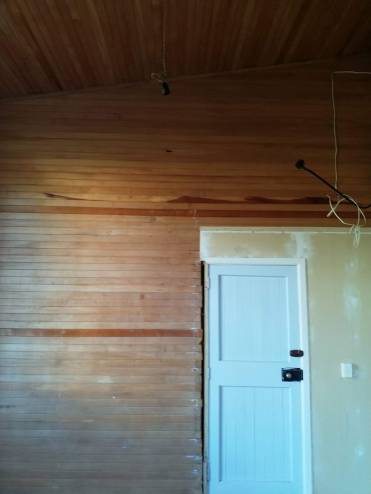
This picture shows the external door with the original light switch in it’s black metal conduit bent up out of the way.  You may be able to just make out the original black light fitting hanging down against the background of the rimu wall lining.  As the wall to the left will form part of the bathroom, I’ll be removing the original timber and using it to patch other sections that will be on show.

P1 Vestry - partition1

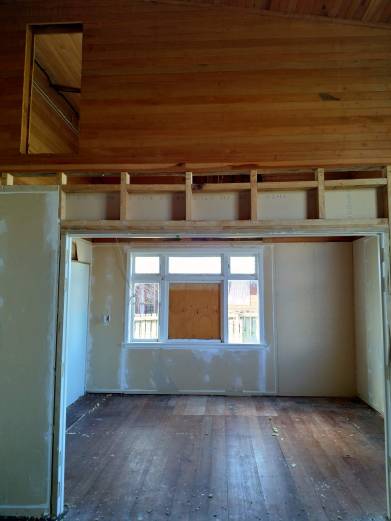
Removing the carpet revealed where the floorboards have probably been patched after the fireplace was removed.  You can make out the different colour of the floorboards in the photo above.   The builder who removed the false ceiling identified that there were floorboards missing from under the raised platform in the nave.  Hopefully the hole and the patched floor match and the boards can be re-instated to their rightful place in the future.  I’ll be leaving it to my architect to work out how to do that!

Next time:  Money’s too tight to mention

Taking possession, possessing, being possessed….

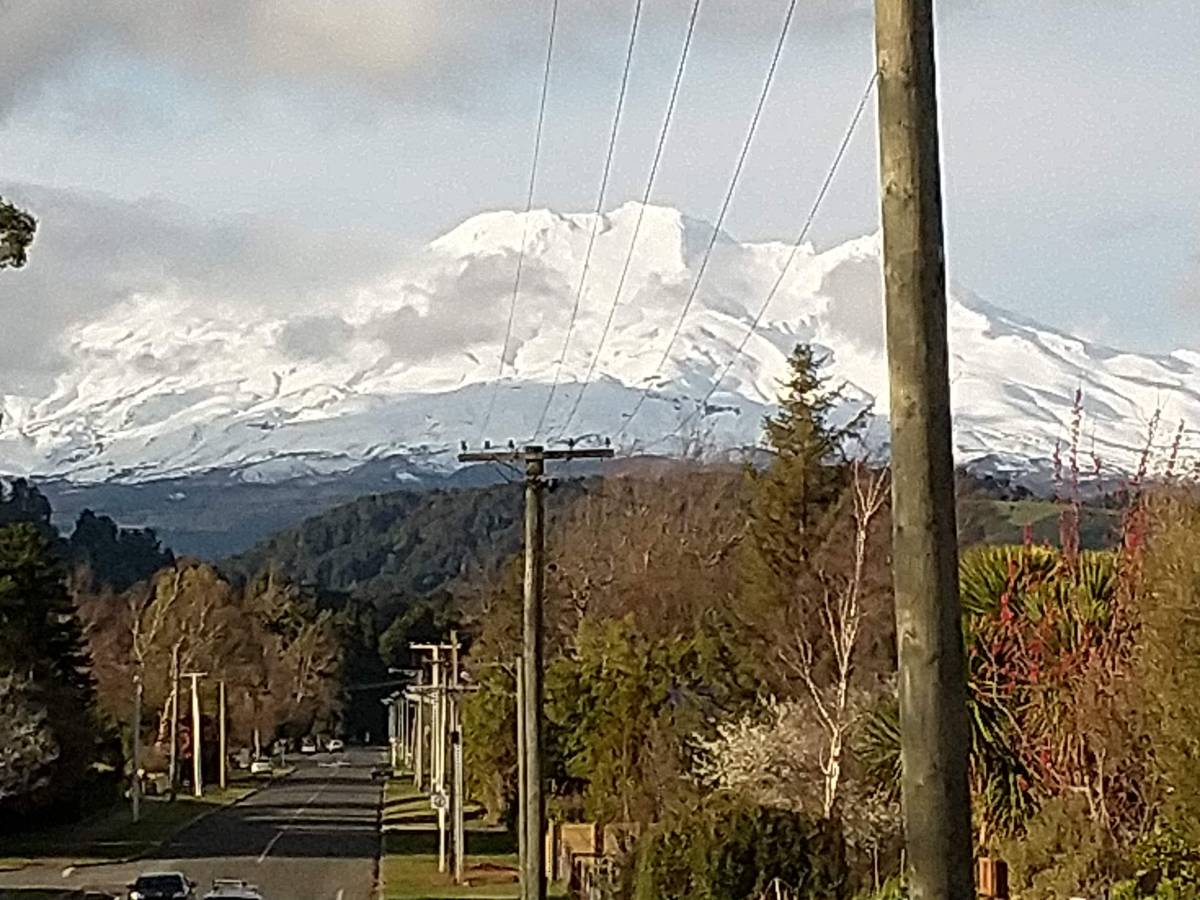
The above view is taken from the berm outside of the church.  The maunga dominates the landscape.

One of the advantages of buying at auction is that the settlement process is truncated so the date for possession comes around pretty quickly!  I’d arranged to meet my architect onsite at 11am so it was an early start to the day with a drive from my rented townhouse in Wellington.  I’d refueled the car the night before so all I needed was a coffee refuel at Sublime Coffee in Bulls to be at the church with plenty of time to spare.

I’ve never worked with an architect before, so the extensiveness of the site visit and survey was a bit of an eye-opener.  Andy from Alpine Security Services saw me at the building and stopped by to discuss panel and sensor placement.  Patrick who looks after the grounds of the beautifully restored St Joseph’s Catholic Church on Arawa Street called in to say hello en-route to his church.  I quickly figured out that they’re a friendly bunch here – with a permanent population of about 1,100 it seems like everyone knows each other.

With the site visit and building survey done, I waved goodbye to Elinor and headed to Utopia Cafe for a late lunch and to await confirmation of settlement. It was now later than the estimated time given by my lawyers.  The last working day of the month being a Friday probably didn’t help!  I finally got the call just before 3pm, and went into the real estate agents to collect the keys.  But there were no keys to be found!  Fortunately I still had the code for the front door from the site visit, so let myself in for a ceremonial ringing of the church bell.

I’d planned to spend the afternoon moving the left-over furniture out of the vestry and removing the shelves, cupboard and internal doors added in the 80s or 90s.  I’d achieved the first task and was celebrating with a late afternoon tea when my sister called to say that the vet nurse couldn’t get access to my townhouse.  After 30 minutes trying to track down my spare house keys I gave up, packed up, and headed back to Wellington for the night.

Owning an old building is liking owning an aging cat.  There are some things that are inherently flawed based on the genetics of the building or breed.  In the case of my Burmese they are prone to lots of (expensive) health issues with a shorter life-expectancy than other breeds.  One of them needs twice-daily medication so I have the expense of a vet nurse to keep an eye on them when I’m away in the weekends.  Working in Wellington during the week and being in Ohakune in the weekends is going to be an expensive necessity.

Possessing a 100-year-old church also comes with  some expensive necessities.  From the borer-invested native timbers to the pinex and plywood-clad nave – most of the recent ‘improvements’ will need to be carefully unpicked to reveal the beauty of the original structure and construction methods.  Not having any water or sewerage connected is going to prove another expensive necessity.

My return to Ohakune the following morning saw me stripping out the shelves, cupboard and internal doors.  I’d borrowed a girly-drill from my sister but it was no match for the efforts of the builders and parish workers who’d put the units together.  I managed to get the screws out that secured the bookshelves to the wall, measured it up, and posted it in the Ohakune Buy & Sell group for removal.  Fingers crossed I’d be able to find someone willing to take it.

Feeling a bit tired after my drive I amused myself by removing all the blinds, hooks and other bits and bobs in the vestry.  I also removed the trim around the ‘false’ doorway in the vestry to discover it was blocked rather than false.  I also discovered ‘customwood’ and thus my obsession started.

What’s with ‘customwood’?  It’s neither custom nor wood but some mass-produced abomination of a by-product that appears to have infested the vestry.  Ok, I get that it’s cheap and looks like wood once painted.  But it’s full of chemicals and a bugger to remove when you’re trying to restore the original character of a building.  Removing it from the scene of a slater cemetery was a particularly disgusting experience.

A lovely couple from Tangiwai had contacted me about the bookshelves and I’d arranged to meet them at the church on Sunday morning.  They came with a large trailer, a friend, and a large drill so I offered the cupboards and internal doors to them as well.  Fortunately they were keen and after about 30 minutes all three items were loaded onto the trailer.  What was left was the following inscription on the plasterboard behind the cupboard:

Lined Oct 1994: N Black, P Chapman, C Bradley, & N and I Horne.  Terry Cowland Parish Assistant, Terry Sua Minister for Combined Waimarino Taihape Parish.

I celebrated the revelation of the inscription with a coffee and a sit-down.  A visitor from out of town knocked on the door and asked about services at the church.  From my neighbour Janelle I was aware that there had been weekly services held there until the church was sold in May.  Unfortunately my knowledge of current church services were limited to my neighbouring Catholic church which didn’t seem to appeal to my visitor.

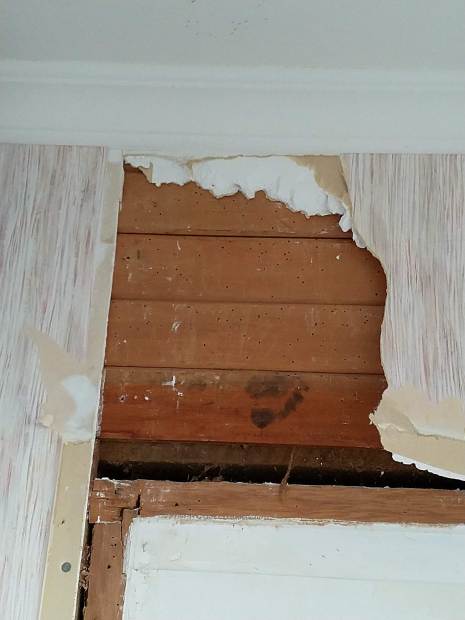
Coffee and chat done, it was back to the customwood removal and seeing what lay beneath.  Removing the plasterboard above the blocked doorway revealed what I has suspected – native rimu tongue and groove wall boards lined the walls below the false ceiling.  I knew from the property inspection report that the walls and ceiling above the false ceiling were of the same materials.  Phase 1 Vestry boards and gib above blocked door

The shelves and cupboard had hidden wide native timber floorboards.  With the false ceiling to be removed during the week, I would have a good sense of the space next weekend.

Next time:  Check yo’self before yo’ wreck yo’self