Every b*st*rd says no

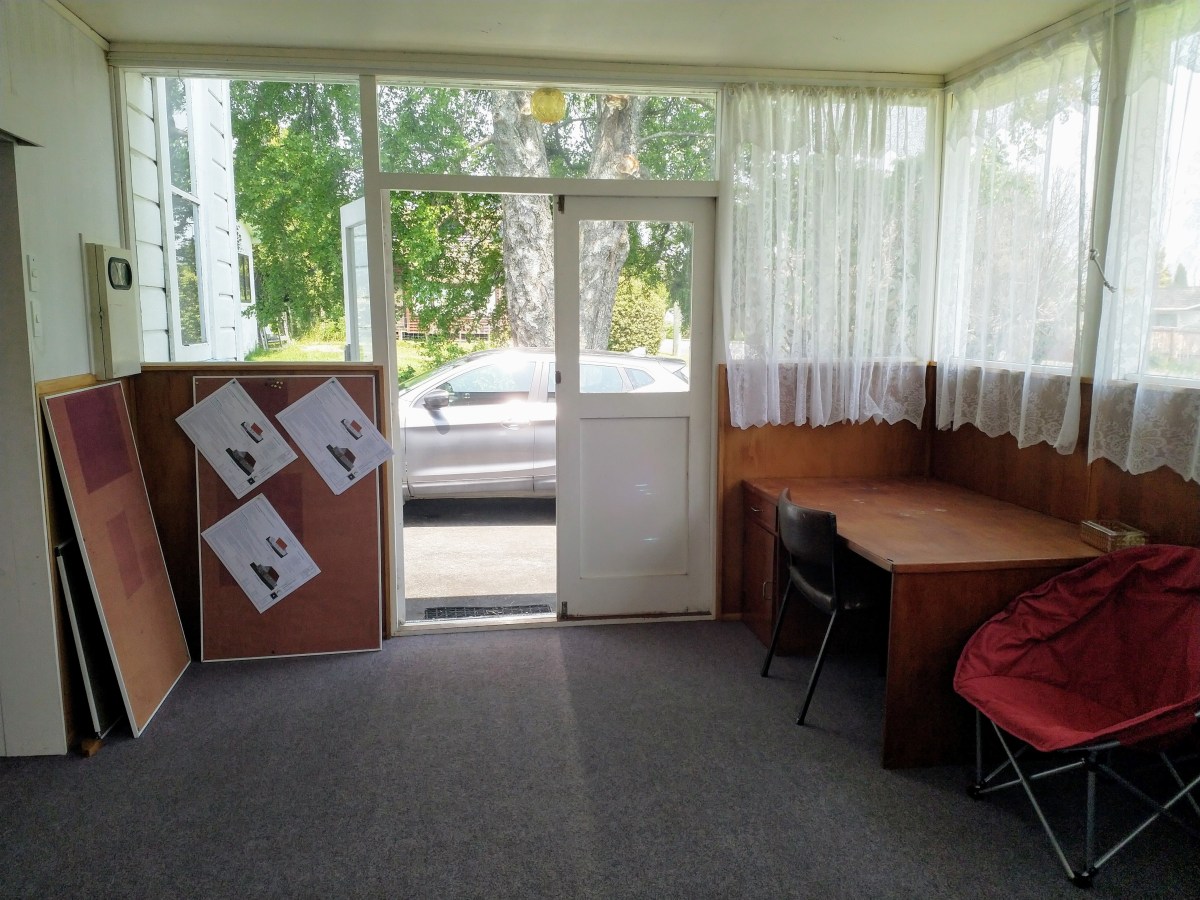
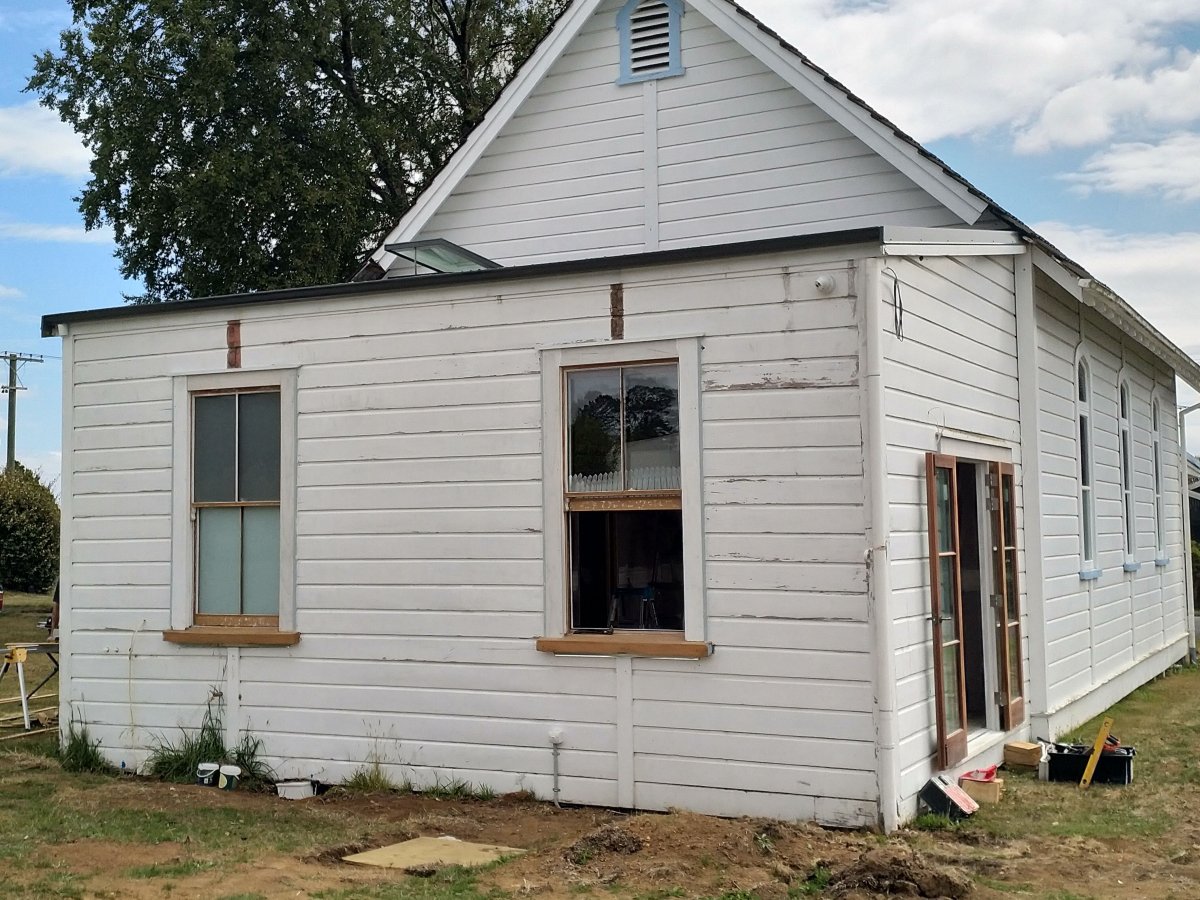
The title of this post comes from the book about developing 42Below vodka into a global brand.  The premise of the book is that you always run up against people who love to say “No” to the dreams of others.  This I found to be true when trying to obtain and maintain insurance on my building.  The photo is of  the kirk under renovation as I was trying to get insurance cover at the end of February 2020.

The general advice about insuring a new property is to use the same company that insured the risk for the previous owner.  I use a mainstream insurance broker for my business insurance, so I approached them to find me building insurance when I bought the property, and provided them with the name of the current insurer.

They were happy to provide commercial building cover, but I had to have a security and smoke alarm installed, monitored 24/7, and have a physical inspection of the property inside and out every week.  This was despite the fact that the building was not legally habitable, wasn’t connected to water or sewerage, and had a policeman living on one side of the church………

Eye-watering six-month fee paid, I had to extend the insurance a couple of times due to the delay in getting drawings done, construction finance, and a builder engaged.  Then came the fun and games when I was trying to get a certificate of insurance for the build contract.  This is the certificate you’re required to have by law for construction contracts that exceed $30k.

My ‘material damage’ policy covered construction works of up to $100k.  I was advised at my first extension that I’d need to provide the insurer with the details of my suppliers who would be carrying out the restricted building works.  When the time came to do so, a new broker tried to get me to take out a construct works policy which would be an additional fee to my existing policy.

After much to-ing and fro-ing, contacting her manager etc etc they agreed that I didn’t need a contract works policy, and there was no further information I needed to provide them.  There was a bit more faffing about to get the certificate of insurance, but eventually they provided it to me in early December 2019.

One of the things I discovered in this process was that the insurer had decided not to extend my insurance beyond 28 February 2020.  I now had a hard deadline to get the building habitable.

Novice that I am, I thought that I’d be able to get domestic building insurance once the building was legally habitable, which was due in mid-February.  I put the wheels in motion to get domestic insurance, only to discover that I needed to have a Code Compliance Certificate in my hot little hands before the insurer would take on the risk.

So back to my broker to see if the current insurer would extend the policy for a few more months.  No – but you can have a contract works policy instead.  Does that cover me for events unrelated to the construction works?  No.  But my mortgage holder requires me to have building insurance!  Sorry, the answer’s still no.

So back to the other insurer to see if they can do something for me.  After much faffing about the answer came back – sorry, no.  Cue online research to find insurance.  No sorry, we don’t insure buildings that old.  No sorry, we don’t cover that sort of risk.  I also looked into cover for natural disasters provided by EQCover Direct.  Unfortunately it would only give me $150k of cover, but it was better than nothing.

Then came the phone-bashing to follow up on the online form submission.  (Don’t get me started on the digital channels insurance companies use, or not.)

Then came the questions.  How old was the building?  Was it listed with the council or Heritage NZ?  Did it have any scrim or sarking?  Had it been fully re-wired since 1946?  Was it sitting on concrete piles?  Fortunately I had the answers to all these questions through the research I’d done into it’s history in 2018.

How about contract works insurance instead?  What work had I done so far?  What work was yet to be completed?  When would it be completed?  How much had I spent so far?  How much more did I have to spend?  What was going to be the total cost all up?  (How long is a piece of string?)  Not to mention the request for photos of the building interior and exterior in it’s current state!

Of the 12 insurers and brokers I approached, nine pretty much said ‘no’ straight away.  Two brokers stood out as being very helpful, so a big shout out to Greenstone Insurance brokers and South Pacific Insurance brokers.  EQC were awesome about getting natural disaster cover for me in the absence of cover from a private insurer.  After much arm-twisting, my current insurer agreed to provide material damage insurance for two months – with a 50% loading on the premium of course!

Next time:  Cleanliness is indeed next to godliness – redux
Cookin’ up a storm

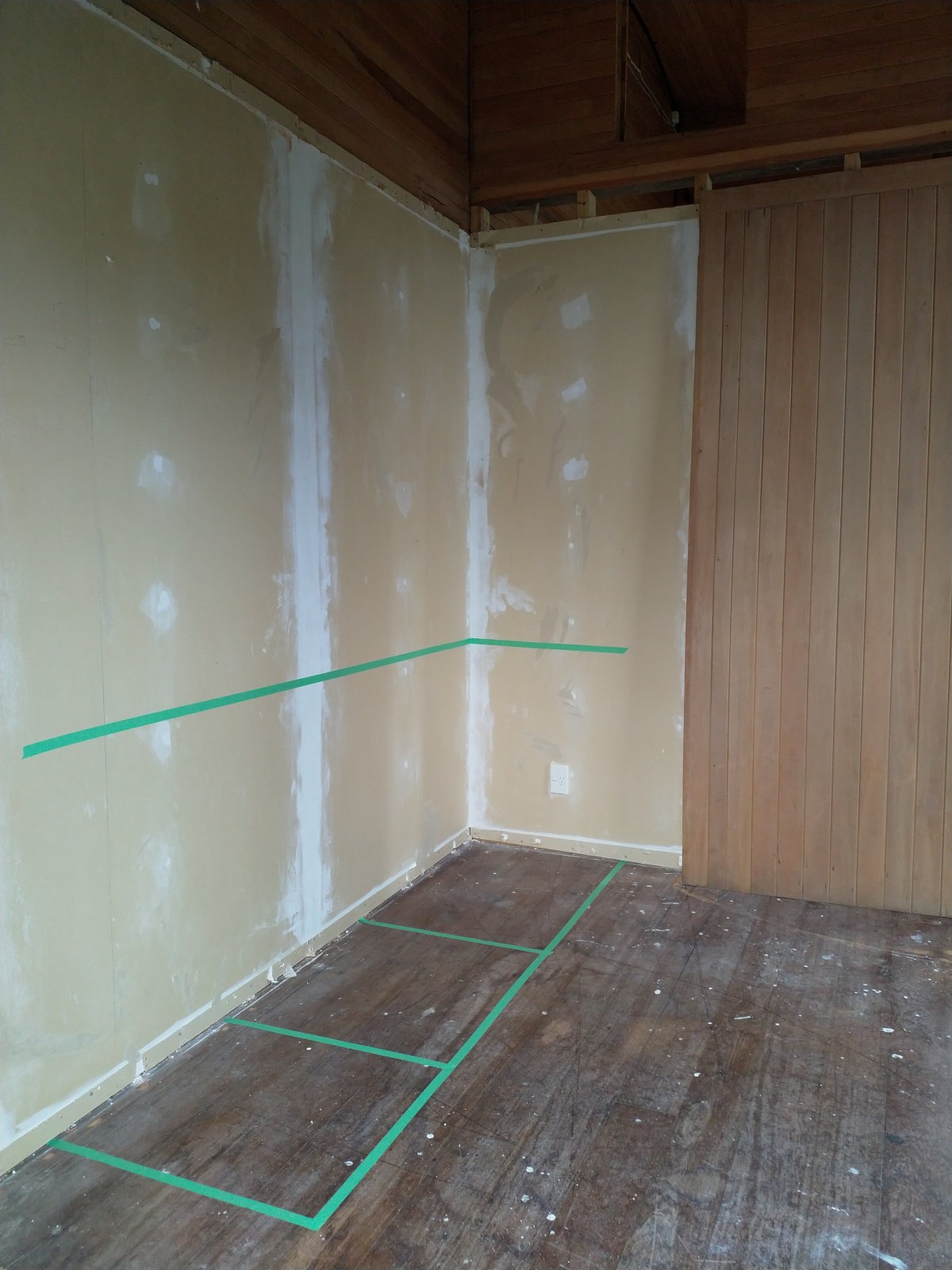
You may recall in an earlier post I outlined my planned layout for the kitchenette.  Well not much has changed since then, although I’ve made some other design decisions.

It wasn’t until I set up and used the ‘construction kitchen’ that I realised that I hadn’t allowed for enough power points in the kitchenette.  I’m trying to have a minimalist kitchen, but the basic appliances alone needed four power points, so I’ve doubled-down and am planning for eight, plus one under the bench for the washer-dryer.

Council requires an extractor fan in the kitchenette.  Originally drawn in the external wall over 3m from the bench-top oven, I’ve relocated it to the wall above where the oven will be.  Ducting will take the exhaust out through the wall and under the nave floor.  Hopefully that will mean that the fumes will exit the area without setting off the smoke detector!

31 - Kitchenette plumbed and wired
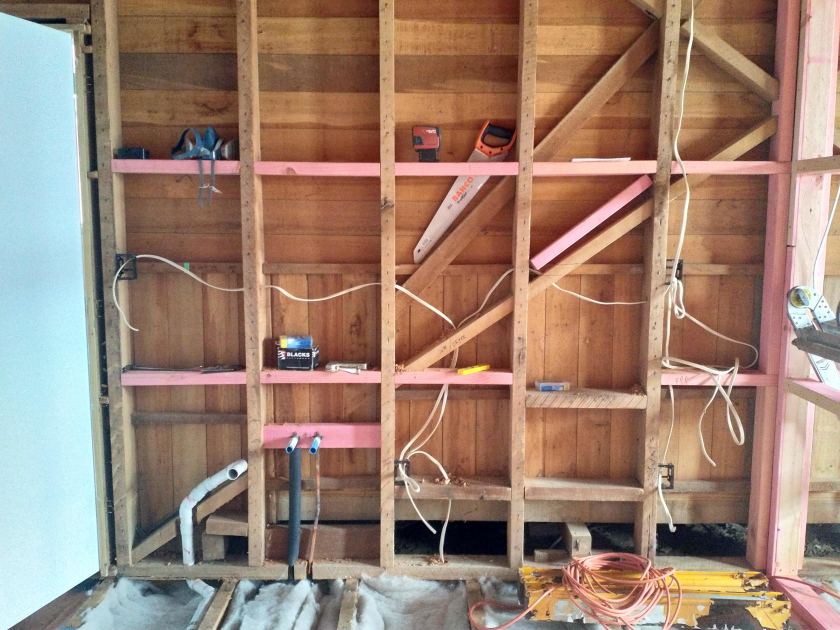
The kitchenette area plumbed-in and (almost) wired up – note the sub-floor insulation which is recycled wool

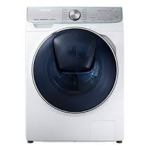
I managed to get a good discount on the washer-dryer I wanted in the Boxing Day sales.  It operates on separate feeds for hot and cold water, and the condenser-dryer will drain out via the sink.  That should cut down on the humidity levels and power bills!

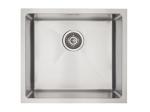
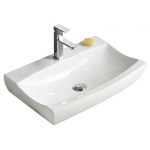
One of the decisions I had to make was the dimensions of the sink and the thickness of the bench as it affected the plumbing set-out.  I wanted a sink that would work as a kitchen sink in phase one, and a laundry sink in phase two.  Fortunately the supplier I’d scouted in 2019 had a comprehensive online catalogue, and wide range available.

Next time:  Just one look, that’s all it took!

The countdown begins

This is what a site office looks like when it’s waiting for the works to begin.  It’s been a long time coming, but work is about to get underway!

It’s been a few months since I wrote about the trials and tribulations of finding a builder.  Getting building consent approved for a change of use was starting to seem like a walk in the park!  I’d been using word-of-mouth referrals to find good local tradies, but hadn’t been able to find someone willing and available to take on the job.

Fortunately my well-networked neighbour came to the rescue with the name of a friend who had recently started their own building business after moving back from Auckland.  We arranged to meet on-site in early July, and he was keen to take on the job.  Unfortunately he wasn’t available to start until early September, but I figured that would give me enough time to get rid of the mountain of boxes I hadn’t sorted through before my move.

Unfortunately the start was delayed until December, which gave me heaps of time to sort out the things you need to have in place for a major works contract:

  1. Construction contract – recommended for all building works, and mandatory for anything over $30,000 including GST.  Fortunately the government’s building website has a link to a free contract you can download and use.
  2. Insurance – if you have domestic building insurance then you may need to get additional cover for the construction works.  My kirk is classified as a commercial building, so my insurance policy covered $100,000 worth of construction work.

However, trying to get an insurance certificate via my insurance broker was a drama that took nearly three weeks to resolve.  You have to provide your contractors with a copy of your insurance certificate as part of your contract with them.

In the process of getting my insurance certificate, I discovered that the insurer wasn’t going to extend my cover beyond 28 February 2020.  They had seen it as a short-term arrangement, and despite taking over $6,000 from me in 18 months, they didn’t want the continued risk of an un-occupied commercial business.

The pressure was now on to get the conversion completed to a stage that would enable me to get domestic building insurance cover in place by the end of February.  I would need to make sure that my builder had everything on site when he needed it in time to meet this deadline.

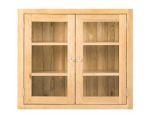
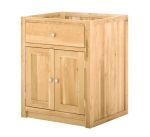
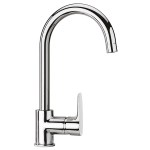
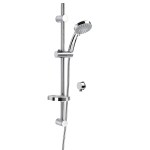
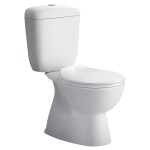
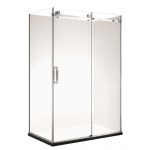
I already had the cabinets onsite as well as the tap-ware.  He’d order the timber he needed so it was just the shower and toilet I’d need to sort.  My original choices were no longer available, so I did the expedient thing and chose standard items from the local builder’s merchant catalogue.

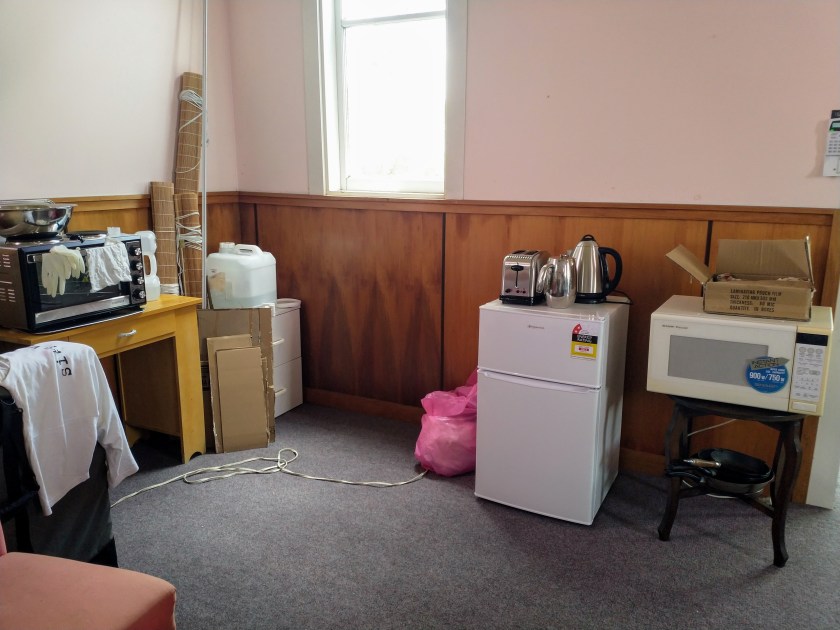
I already had a bench-top oven, electric jug, and coffee plunger on site, but decided to add a fridge and toaster to the site ‘kitchen’.  I’ve also dug out my old microwave just in case.  Note the old-fashioned bowl on the bench-top oven for washing up – but not at the same time.  Now all we need is to get water connected to the building!

22 - Site kitchen

Next time:  Driving with the whole body

The search for a builder begins

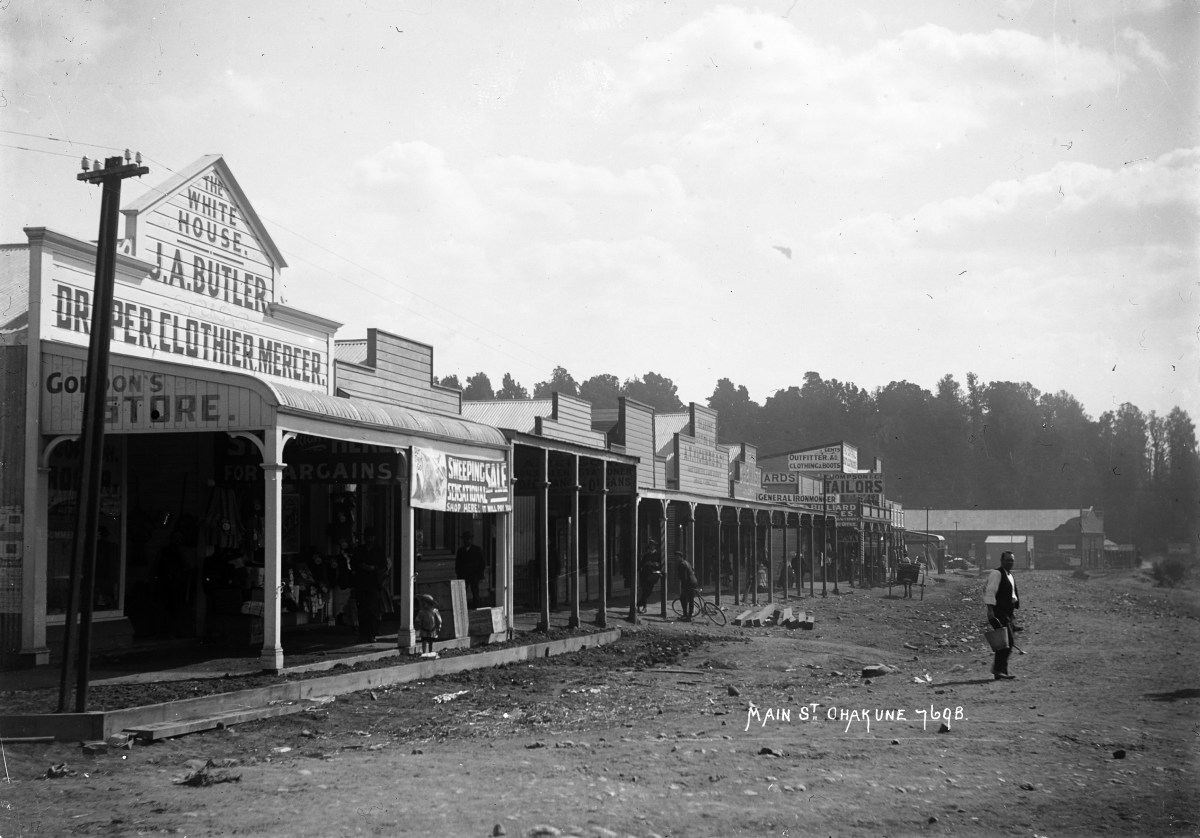
There’s been a lot of construction in Ohakune over the years.  This photo taken c1910 shows some construction work underway.  I wonder if the guy with the bucket is a LBP?

I met with a number of builders the first month after taking possession, but needed to get building consent approved before I could get pricing from them.  The delay has coincided with an upturn in construction in the district.  Good builders are very busy as I discovered when I sent my plans and requirements out for indicative pricing:

  • Option A doesn’t want to take on a renovation project
  • Option B isn’t available until April
  • Option C isn’t available for 18 months
  • Option D isn’t available until after Christmas
  • Option E is about to start a nine-month job
  • Option F hasn’t got back to me with pricing
  • Option G isn’t returning my messages

I need to get my first building inspection completed by early-January, otherwise I have to re-apply for building consent.  I knew it wouldn’t be easy, but I didn’t think it’d be this much of a challenge!

Next time:  Things aren’t always what they seem

Cleanliness is indeed next to godliness (John Wesley – 1791)

One of my design aesthetics is for the building to look as though it could be returned to it’s previous use without undoing all of the new elements.  The vestry was the area where the minister would get into their robes (vestments) prior to a service.  It was also used as an office for meetings.

For phase one of the conversion, I’m turning this area into a shower-room, kitchenette, and bedroom.  The bedroom and kitchenette are relatively straight-forward.  The shower-room is where most of the design and construction challenges lay.

There’s no water or sewerage connections to the church, so the nearest toilets were attached to the back of the church hall next door.  (I still have the tags that were on the keys for each toilet.)  The nearest available toilets are now at the park around the corner in Conway Street – a bit inconvenient.  Boom tish!

The new layout will see the shower to the left of the window, vanity straight ahead, and toilet to the right of the window.  I have a thing about noise so the toilet is as far away from my bedroom as possible!  I’ll also be using sound-deadening plasterboard to keep the noise levels down.

One of the early layout designs I was given had the vanity squished in next to the shower so that there was wall space for a mirror above it.  I’m not that vain!  Nor am I an exhibitionist.  As the locals have a tendency to use the grounds as a short-cut I’ll be putting a mirrored finish on the bottom half of the sash window for modesty purposes……………

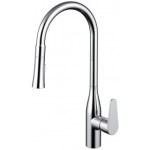
I like good design but that comes at a cost.  I’ve opted for bog-standard things like the hand basin, shower, and toilet which I’ll source from Trade Depot or TradeMe.  The vanity cabinet is coming from BespOak NZ and the granite top is secondhand.  However, I’ve struggled to find basin and shower mixers that I like.

Well, that’s not quite true.  I have found a brand of mixers that I like but the prices are eye-watering!  I’ve opted for an Italian brand priced between the cheap-and-cheerful Australian and well-engineered German products.  No surprises there.

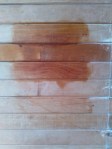
Yet-to-be-resolved is what type of oil finish to apply to the rimu sarking on the walls and ceiling.  My choices are an interior oil that gives a milky-white finish, tung oil, and danish oil.  I also need to decide whether or not to install a glass panel above the shower-room door to let more light into the kitchenette.  What do you think?

Next time:  The end of an era

Call me (call me) on the line. Call me, call me any, anytime………….

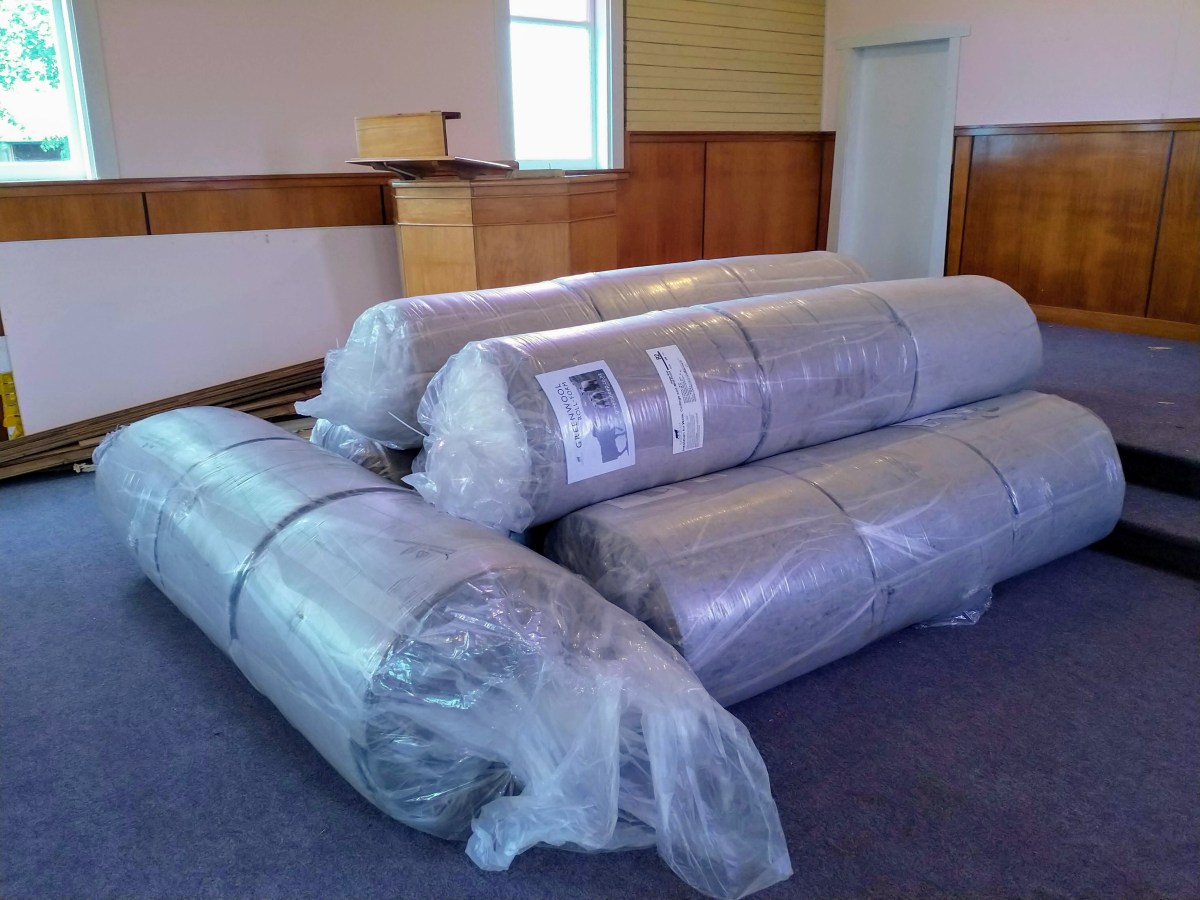
This is my pile of insulation made out of recycled wool.  It’s going under the floor and in the opened-up bathroom walls to keep everything toasty.  It’s my building’s equivalent of sheepskin boots and a woollen coat.

The tyranny of distance is one of the challenges of this project.  Most suppliers have their deliveries taking place during the week when I’m at work in Wellington.  Fortunately the door to the vestibule has a code on it so freight companies can put their deliveries inside without me having to be there.

Fairly straight forward you would have thought.  But no.  Suppliers don’t always think to obtain delivery instructions when you place your order.  Then you find out that the goods have been dispatched for delivery without delivery instructions.  You’re reassured that the freight company have been instructed to call you prior to delivering the goods.

Should be ok you think.  But no.  The tracking link you’re given shows the goods were out for delivery the day prior.  But you’re reassured that the freight company have been instructed to call you prior to delivering the goods.  You check the tracking link which shows the goods are back out for delivery so you wait for the call.  They don’t call.

So you check the tracking link again which shows that the goods were delivered and signed for by someone you’ve never heard of.  So you phone the supplier who suggests you call the freight company.  You call the freight company who confirm they had your contact number and promise to look into it and get back to you.  They don’t call you back.

You call the freight company a few hours later and get someone more helpful.  They put you through to the depot who say they didn’t have your number in their system.  They try to call the driver but can’t get hold of him.  They finally get hold of the driver who turns out is the person who signs as having ‘received’ the goods except they didn’t.  What they did is leave the products outside the building in public view.

So you contact your helpful neighbour to see if she can check it out when she gets home from work and put the products in the vestibule.  You get a text to say it’s all done.  Phew.

You decide you owe your neighbour so buy her a nice bottle of Central Otago Pinot Noir as a thank you.  When you give it to your neighbour you discover that the products were left outside the wrong building.  Not ok.  You let the supplier know what’s happened and trust they’ll sort it out with their freight company.  Radio silence ensues.

This is just the beginning of the project so I’ll have a lot more deliveries over the next few months.  It could end up costing me heaps in wine!  “You can call me any day or night.  Call me.”

Next time:  Cleanliness is indeed next to godliness