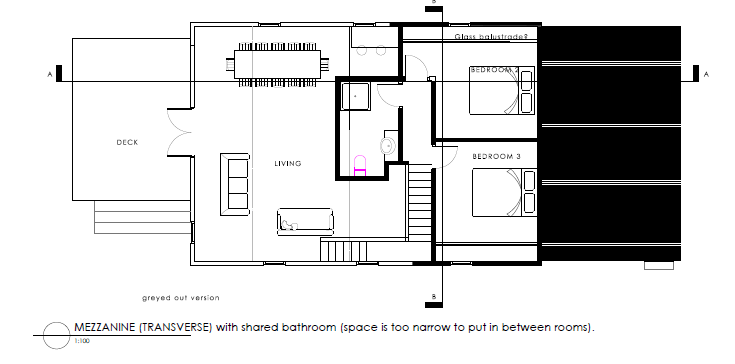
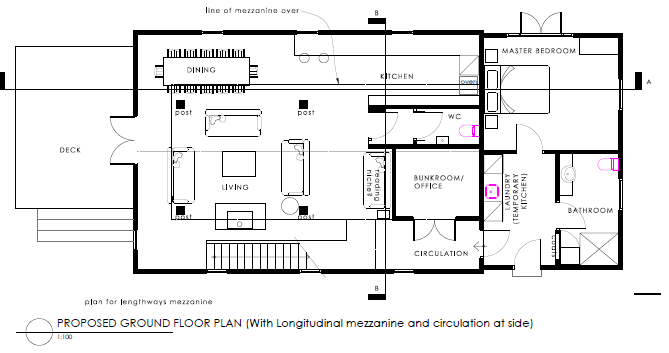
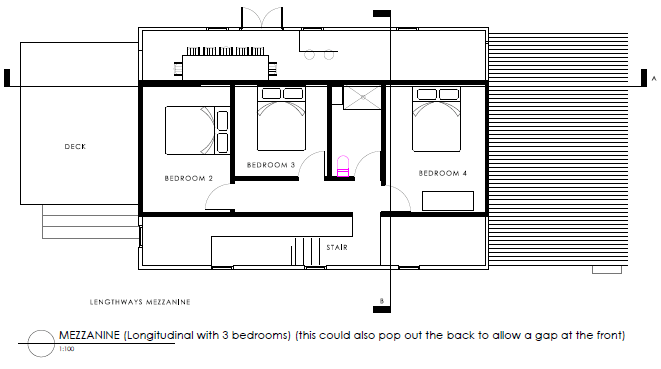
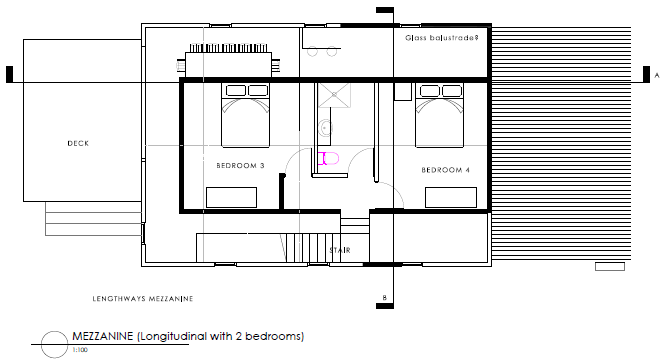
The big reveal – initial schemes emerge from the design process

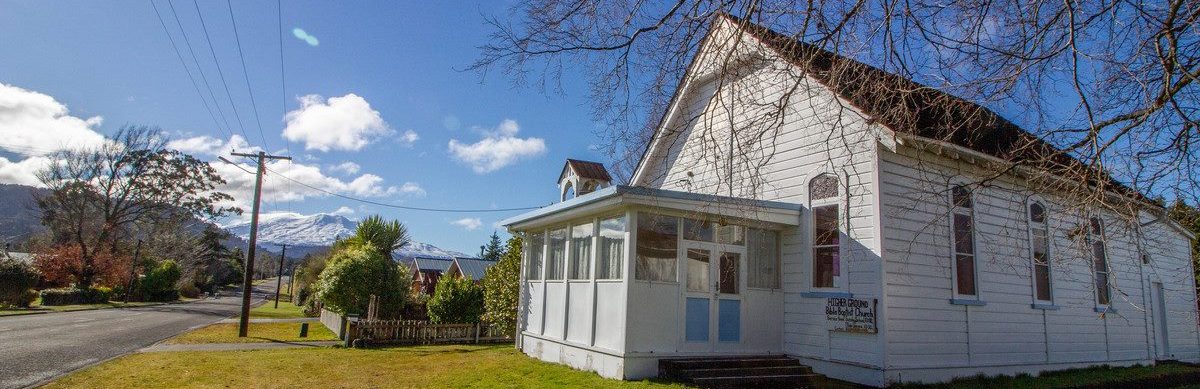
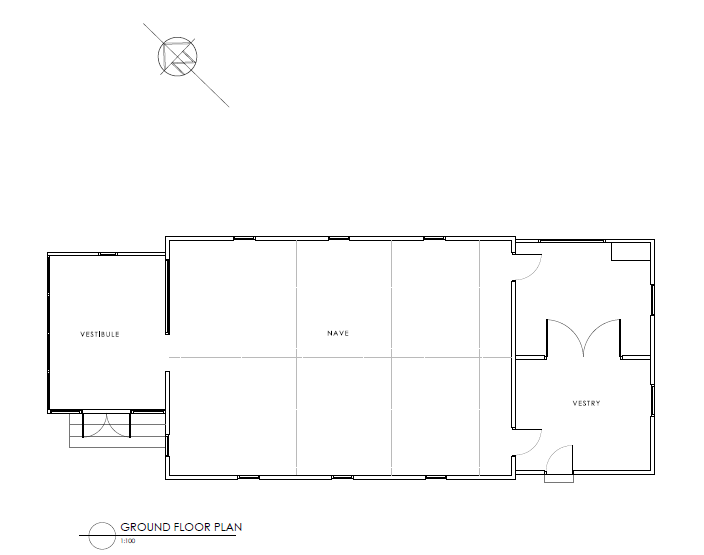
This graphic is of the existing floor plan from the south-west aspect.

It seems like it’s been a long time between the site visit and the first plans emerging from the design process.  In reality it was just over three weeks during which I kept myself busy by demolishing unsympathetic additions in the vestry, removing plasterboard, and uplifting the carpet.

I’d provided my architect with a written brief before the site visit at the end of August.  Due to my budget constraints, I’m planning to do the renovations in three phases:

Phase One – converting the vestry to contain one bedroom, a shower room, and kitchenette.

Phase Two – converting the nave to contain three more bedrooms, a bathroom, and the main living areas.

Phase Three – demolishing the 1970’s vestibule, re-instating the entrance porch, adding decking, garaging, fencing, and landscaping.

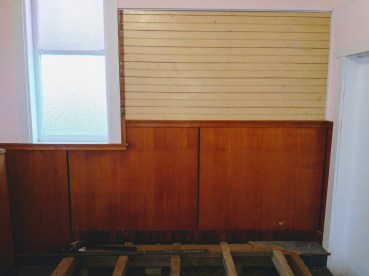
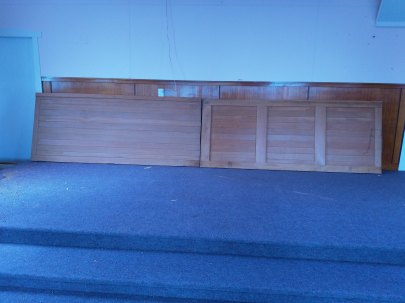
I want my visitors to have a strong sense of the church by stripping back the pinex and plywood to reveal the original rimu T&G sarking underneath.  You can see from this picture some of the original woodwork before it got suffocated by pink pinex.  Just below the plywood is the original vertical rimu T&G sarking.  (Those aren’t floor joists btw, but the framing of the raised platform in the alter area.)

1918 Church Nave wall linings1

I also want the additions and insertions such as the mezzanine floor to give the illusion that they could be removed and the essence of the church would remain.  I love open-plan spaces with defined zones for different activities.  Push back the furniture and it’s a large party space!

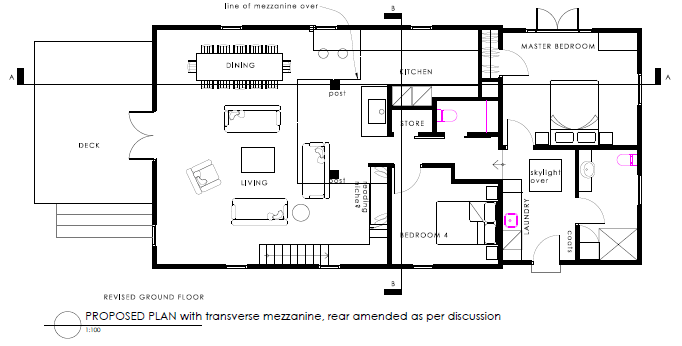
Scheme 1 – transverse mezzanine with two bedrooms and a bathroom upstairs.

Scheme 1 - ground floor

Scheme 1 - mezzanine

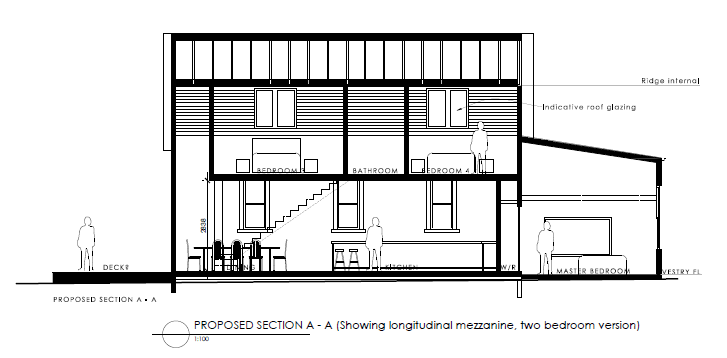
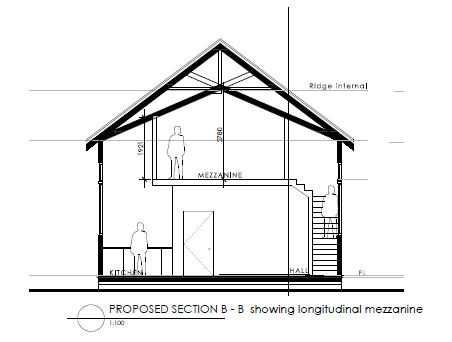
Scheme 2 – longitudinal mezzanine with two or three bedrooms and a bathroom upstairs.

Scheme 2 - ground floor

Scheme 2 - mezzanine option 1

Scheme 2 - mezzanine option 2Scheme 2 - cross section 2Scheme 2 - cross section 1

What do you think of the proposed schemes?  What do you think would work for me?  What changes would you make if it was your space?  I look forward to reading your comments!

Next time:  Why, why, why Delilah?

Money’s too tight to mention

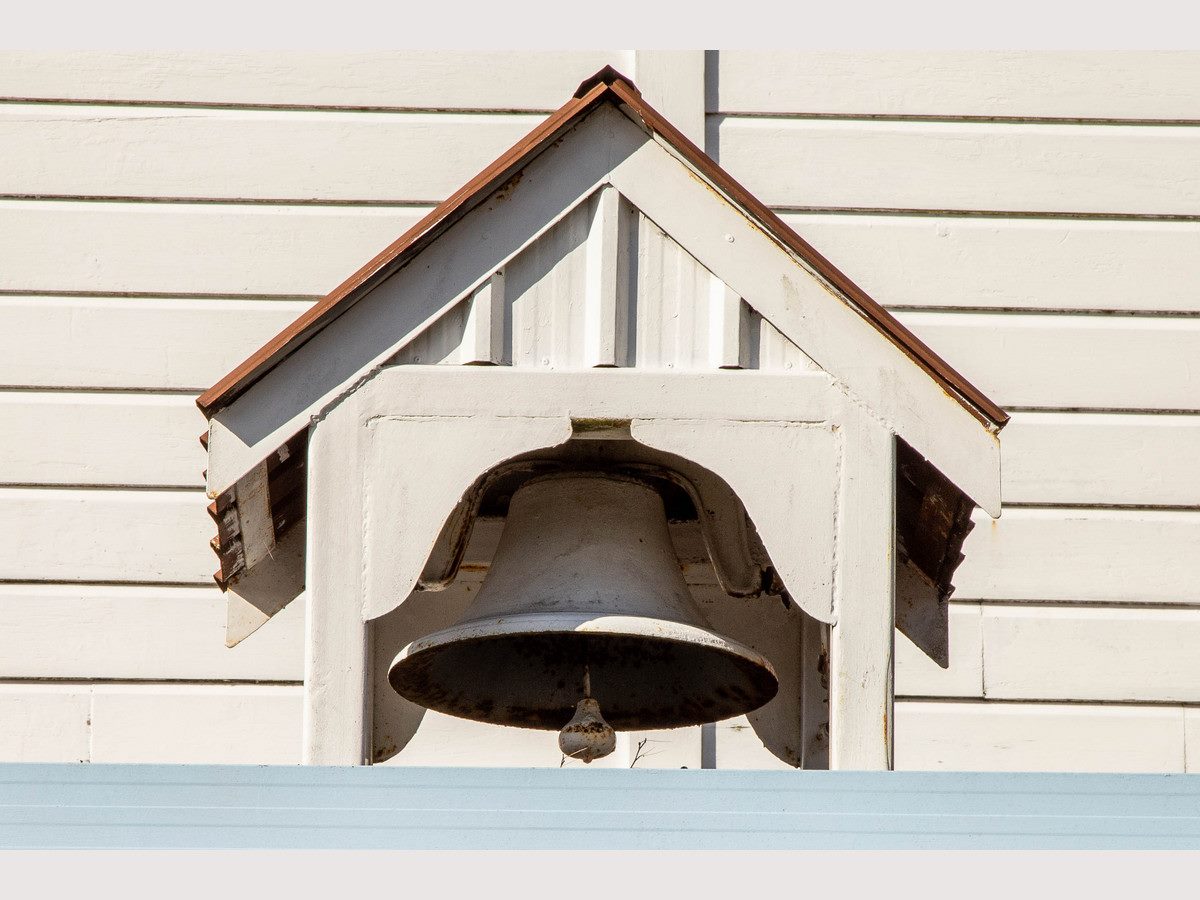
You can ring my bell if you’re a visitor but first you’ll have to get inside the vestibule!

Large wooden building on a flat-ish section close to town – check.  ‘Doorbell’ – check.  Living room – well if you count a space 10.6m x 7.3m  with a 5.8m ceiling height as a ‘living’ room, then yes – check. Bedroom, bathroom, kitchen?  Uh-oh.

Most of the things that make a building a house were absent in the church which had made getting a loan rather a challenge.  Having a good income made me ‘low risk’ as a borrower, but the property was still classified as ‘high-risk’ and unacceptable as security for a mortgage.  Many banks weren’t interested so there was a lot of scrambling around at the last minute to get a finance deal done in time.

One of the casualties was the distribution from the family trust that I was planning to use to finance the first phase of the renovation to make the church habitable.  Lenders want to minimise their risk by lending as little as possible, so my inheritance would be increasing my deposit instead.

Unfortunately that meant that I wouldn’t have the capital to make the church habitable.  I decided to withdraw my KiwiSaver funds to assist with the house deposit which would release some of my own savings for the renovation.

The first budget lines to go were the pitched gable roof, solar panels, and rainwater collection system.  What’s staying is the double-glazing, skylights, full insulation, and gas hot water system.  The other things not being compromised is the quality of the fixtures and fittings even if they are pre-loved or seconds.

P1 Vestry - internal doors

Last week’s discovery of the original internal doors in the ceiling cavity solved one budget item but added another.  Measuring 2.43m x 0.98m, they would be perfect as pocket doors from the kitchenette / laundry to the bedroom and bathroom.  I’ll need to remove some of the partitioning wall and add bracing to the doors as they were a bit too flexible – maybe the borer holes had something to do with that!

I want to keep the original wall linings but it will create a challenge to get plumbing and electrical services in without causing too much damage to the walls.  One option is to repeat the original trick to run conduits down the walls for the lights and power points.

P1 Vestry - light detail

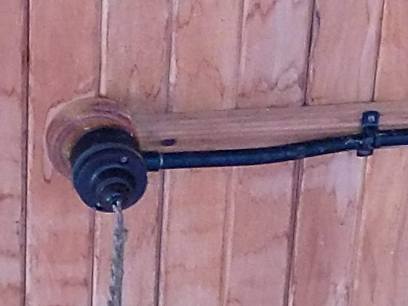
I love the detail of the turned wood the light fitting and conduit is attached to.  Note the less-than-safe two-phase wiring running down to the light socket.

Ruapehu District Council have some strict requirements when converting commercial buildings to residential use, including full insulation and double-glazing.  Fortunately there’s some things I can do without a building consent.  Unfortunately most of those things are out of order for the sequence I need to do things in.  At least one of the things I can do is to get the glazing in the original double-hung sash windows upgraded.

P1 Vestry - window3

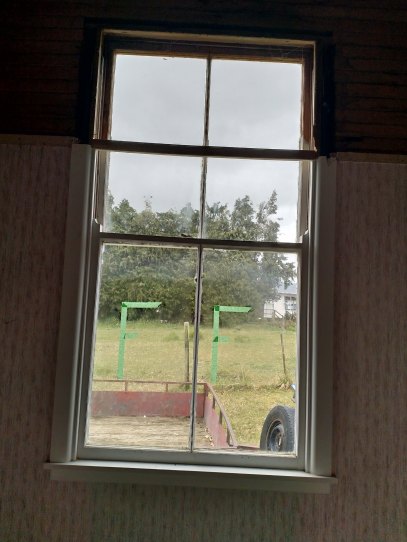
This is the window for what will be in the downstairs bathroom.  Note the wood across the window where the false ceiling came to.  The ‘F’ on the lower panes indicates the frosting needed to obscure the view.  With an empty section and the Catholic Church behind I want to maintain some privacy!

Next time:  The big reveal – the initial architectural schemes emerge from the design process.

Check yo’self before yo’ wreck yo’self

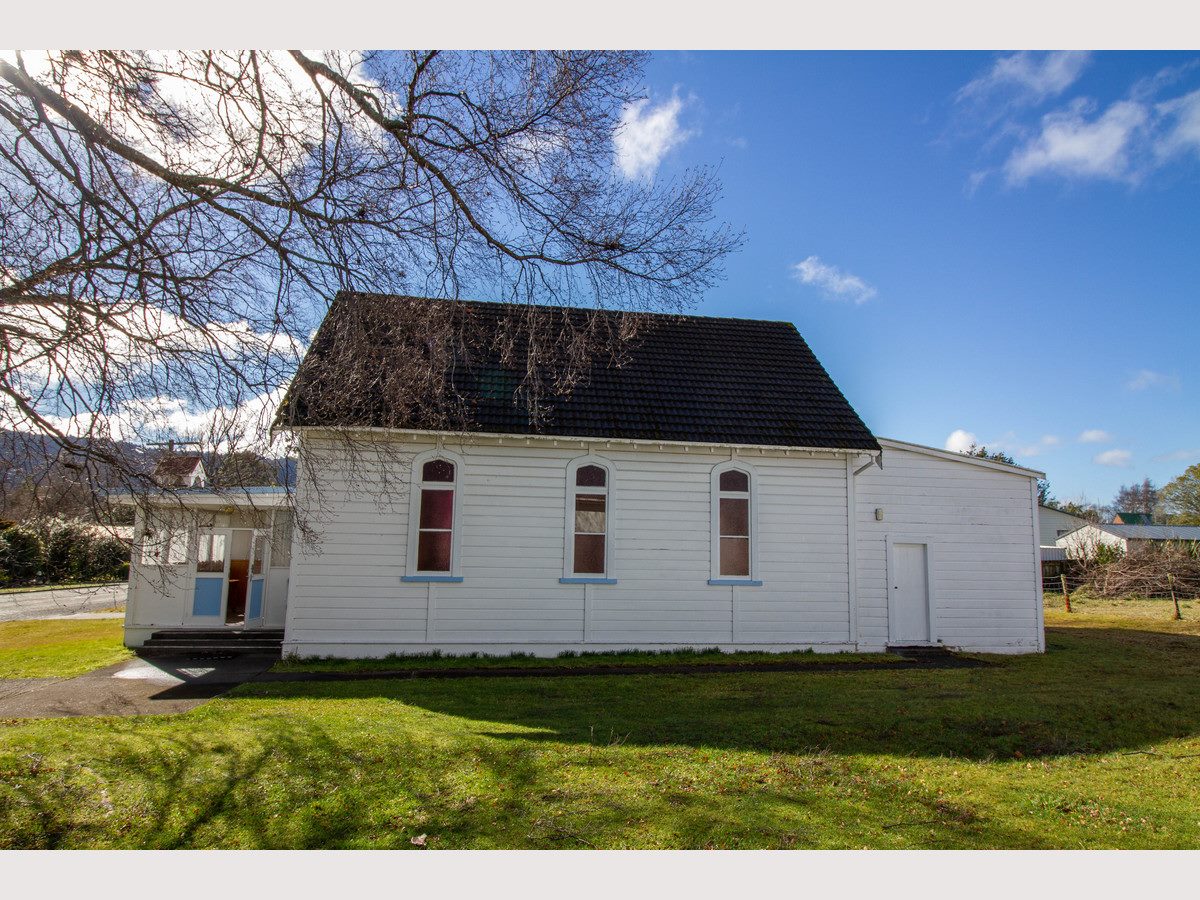
View of the church from the south-west aspect. Vestibule at the front, nave in the middle, and vestry at the back.

I’m a middle-aged woman who rents a townhouse with no lawn and doesn’t like gardening.  I am a stranger to strenuous activity, preferring gentle exercise like walking and cycling to maintain my fitness.  I’ve done strenuous exercise like fitness classes, running and weights and found I injure easily.

I’ve also been a health and safety manager on a brown-fields exhibition site so know the risks associated with old buildings and construction activities.  Taking on the renovation of a 144 m2 building could be injurious to my health and well-being if I’m not careful.  So early on I decided to get others into to do the ‘heavy lifting’ of my demolition and renovation project.

The first cab off the rank was the removal of the false ceiling in the vestry.  I knew from the building inspection report that it hid a reasonably-sized space with the original ceiling and walls lined in native timber.  It also covered the top part of the original double-hung sash windows on the south-eastern wall.  I’m all for using professionals so called in a Licensed Building Practitioner to remove the false ceiling and remove the rubbish.

P1 Vestry - chimney detail1

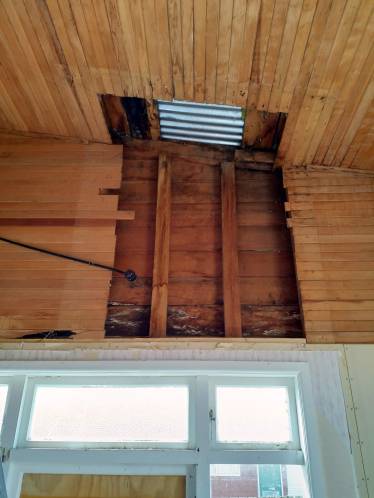
Removing the false ceiling revealed the space where this window is was a previously a fireplace – you can see where the chimney went through the roof.  You can also see where the window hasn’t been sealed properly by the wet weatherboards and white mould.  The original electrical wiring in black metal conduits was thoughtfully bent up out of the way of the false ceiling.  The central window pane was the only casualty of the ceiling removal.

Also on show was the original ceiling height of 4.15m at the nave wall and 3.5m at the external wall – plenty of ceiling height for the architect to work with!  The other bonus was the discovery of the original internal doors in the ceiling cavity.  Made of native timber complete with borer holes, they would create an interesting addition to the vestry space.

My return to the church the second weekend was accompanied by my brother and a wallpaper steamer.  My brother is used to hard physical work having worked in orchards during his school years, and more recently establishing and maintaining his own garden on the Kapiti Coast.  I’d identified in my first weekend that working above my head and going up and down ladders was too difficult for me, so I needed someone else to do that work.

We quickly set to work, with me stripping wallpaper from the floor up, whilst he worked from the top of the plasterboard down.  We were paid a visit during the afternoon by a guy who had tried to buy the church when it came back onto the market in early August.  Despite me introducing myself as the owner he appeared to ignore me and address my brother.  What is it with some people who assume that it’s the male who’s in charge?

Sunday saw another visitor looking for a church service.  My knowledge of local services was no further advanced, and I’d been unsuccessful at removing the signage near the vestibule.  Orange duct tape didn’t obliterate the details, but at least it indicated that they weren’t current.

The final priority for the weekend was removing the plasterboard in the area that would form the downstairs bathroom, and lift the old carpet.

P1 Vestry - external door

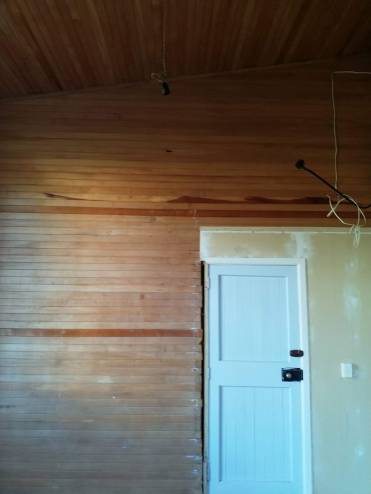
This picture shows the external door with the original light switch in it’s black metal conduit bent up out of the way.  You may be able to just make out the original black light fitting hanging down against the background of the rimu wall lining.  As the wall to the left will form part of the bathroom, I’ll be removing the original timber and using it to patch other sections that will be on show.

P1 Vestry - partition1

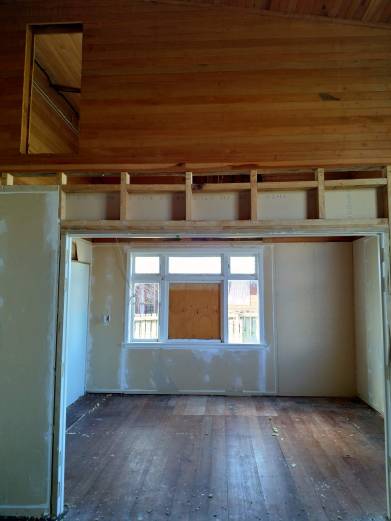
Removing the carpet revealed where the floorboards have probably been patched after the fireplace was removed.  You can make out the different colour of the floorboards in the photo above.   The builder who removed the false ceiling identified that there were floorboards missing from under the raised platform in the nave.  Hopefully the hole and the patched floor match and the boards can be re-instated to their rightful place in the future.  I’ll be leaving it to my architect to work out how to do that!

Next time:  Money’s too tight to mention

Taking possession, possessing, being possessed….

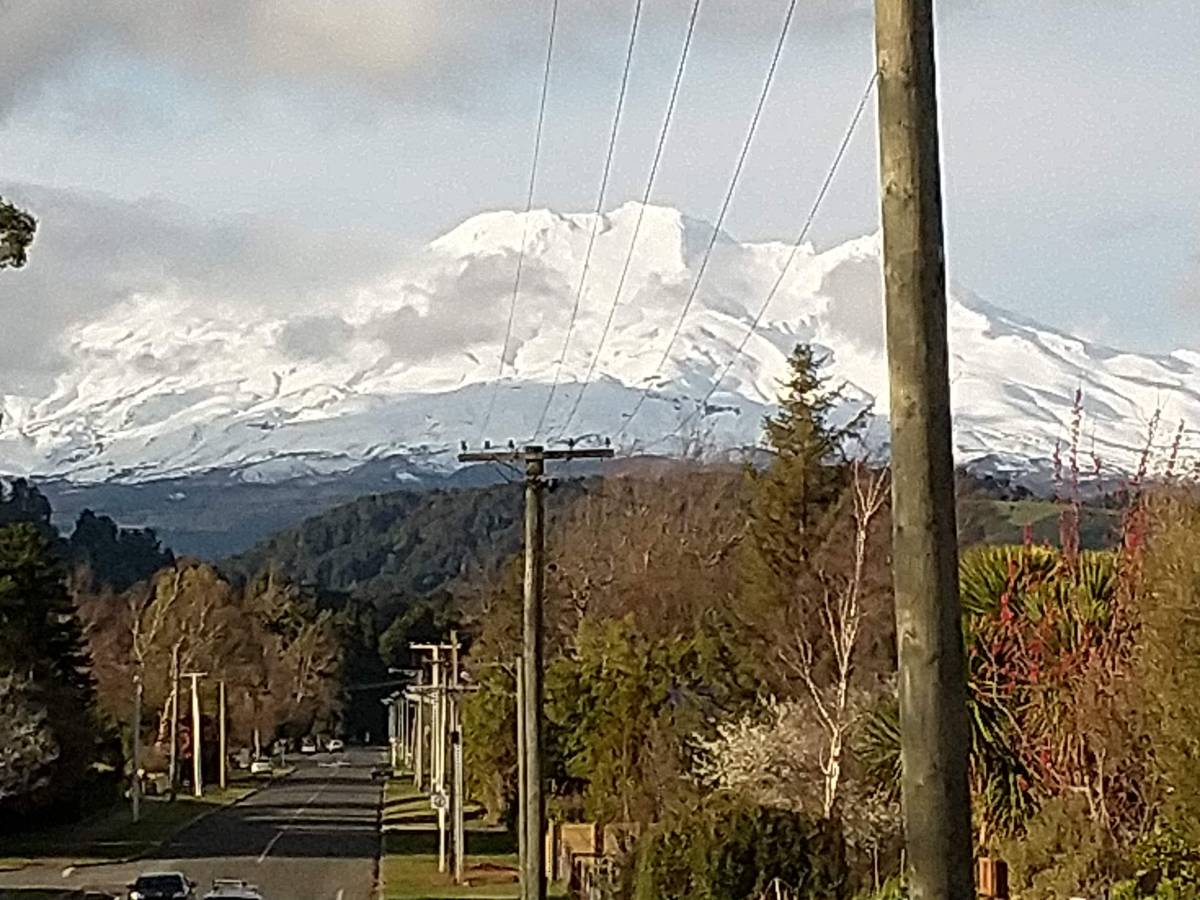
The above view is taken from the berm outside of the church.  The maunga dominates the landscape.

One of the advantages of buying at auction is that the settlement process is truncated so the date for possession comes around pretty quickly!  I’d arranged to meet my architect onsite at 11am so it was an early start to the day with a drive from my rented townhouse in Wellington.  I’d refueled the car the night before so all I needed was a coffee refuel at Sublime Coffee in Bulls to be at the church with plenty of time to spare.

I’ve never worked with an architect before, so the extensiveness of the site visit and survey was a bit of an eye-opener.  Andy from Alpine Security Services saw me at the building and stopped by to discuss panel and sensor placement.  Patrick who looks after the grounds of the beautifully restored St Joseph’s Catholic Church on Arawa Street called in to say hello en-route to his church.  I quickly figured out that they’re a friendly bunch here – with a permanent population of about 1,100 it seems like everyone knows each other.

With the site visit and building survey done, I waved goodbye to Elinor and headed to Utopia Cafe for a late lunch and to await confirmation of settlement. It was now later than the estimated time given by my lawyers.  The last working day of the month being a Friday probably didn’t help!  I finally got the call just before 3pm, and went into the real estate agents to collect the keys.  But there were no keys to be found!  Fortunately I still had the code for the front door from the site visit, so let myself in for a ceremonial ringing of the church bell.

I’d planned to spend the afternoon moving the left-over furniture out of the vestry and removing the shelves, cupboard and internal doors added in the 80s or 90s.  I’d achieved the first task and was celebrating with a late afternoon tea when my sister called to say that the vet nurse couldn’t get access to my townhouse.  After 30 minutes trying to track down my spare house keys I gave up, packed up, and headed back to Wellington for the night.

Owning an old building is liking owning an aging cat.  There are some things that are inherently flawed based on the genetics of the building or breed.  In the case of my Burmese they are prone to lots of (expensive) health issues with a shorter life-expectancy than other breeds.  One of them needs twice-daily medication so I have the expense of a vet nurse to keep an eye on them when I’m away in the weekends.  Working in Wellington during the week and being in Ohakune in the weekends is going to be an expensive necessity.

Possessing a 100-year-old church also comes with  some expensive necessities.  From the borer-invested native timbers to the pinex and plywood-clad nave – most of the recent ‘improvements’ will need to be carefully unpicked to reveal the beauty of the original structure and construction methods.  Not having any water or sewerage connected is going to prove another expensive necessity.

My return to Ohakune the following morning saw me stripping out the shelves, cupboard and internal doors.  I’d borrowed a girly-drill from my sister but it was no match for the efforts of the builders and parish workers who’d put the units together.  I managed to get the screws out that secured the bookshelves to the wall, measured it up, and posted it in the Ohakune Buy & Sell group for removal.  Fingers crossed I’d be able to find someone willing to take it.

Feeling a bit tired after my drive I amused myself by removing all the blinds, hooks and other bits and bobs in the vestry.  I also removed the trim around the ‘false’ doorway in the vestry to discover it was blocked rather than false.  I also discovered ‘customwood’ and thus my obsession started.

What’s with ‘customwood’?  It’s neither custom nor wood but some mass-produced abomination of a by-product that appears to have infested the vestry.  Ok, I get that it’s cheap and looks like wood once painted.  But it’s full of chemicals and a bugger to remove when you’re trying to restore the original character of a building.  Removing it from the scene of a slater cemetery was a particularly disgusting experience.

A lovely couple from Tangiwai had contacted me about the bookshelves and I’d arranged to meet them at the church on Sunday morning.  They came with a large trailer, a friend, and a large drill so I offered the cupboards and internal doors to them as well.  Fortunately they were keen and after about 30 minutes all three items were loaded onto the trailer.  What was left was the following inscription on the plasterboard behind the cupboard:

Lined Oct 1994: N Black, P Chapman, C Bradley, & N and I Horne.  Terry Cowland Parish Assistant, Terry Sua Minister for Combined Waimarino Taihape Parish.

I celebrated the revelation of the inscription with a coffee and a sit-down.  A visitor from out of town knocked on the door and asked about services at the church.  From my neighbour Janelle I was aware that there had been weekly services held there until the church was sold in May.  Unfortunately my knowledge of current church services were limited to my neighbouring Catholic church which didn’t seem to appeal to my visitor.

Coffee and chat done, it was back to the customwood removal and seeing what lay beneath.  Removing the plasterboard above the blocked doorway revealed what I has suspected – native rimu tongue and groove wall boards lined the walls below the false ceiling.  I knew from the property inspection report that the walls and ceiling above the false ceiling were of the same materials.  Phase 1 Vestry boards and gib above blocked door
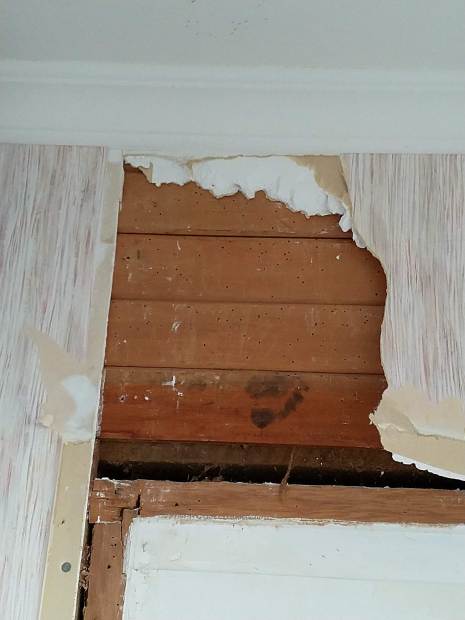
The shelves and cupboard had hidden wide native timber floorboards.  With the false ceiling to be removed during the week, I would have a good sense of the space next weekend.

Next time:  Check yo’self before yo’ wreck yo’self